Jordan
Jordan — Red Sea, Desert, and Ancient Stone
Jordan packs more contrast into a single itinerary than almost anywhere else: an intact Red Sea reef at the northernmost point of the coral world, the carved city of Petra, the silence of Wadi Rum, and the Dead Sea at the lowest point on earth. The diving is the least-known part and possibly the best.
A country built on contrast
Jordan's range is vertical as much as geographical. At the western border, the Dead Sea sits 430 metres below sea level — the lowest point on Earth, its water nine times saltier than the ocean and dense enough that nothing lives in it and no one sinks. Drive three hours south and Aqaba opens onto the Red Sea with a coral reef beginning directly offshore — one of the healthiest in the world and among the northernmost. Between the two: Petra, a city carved from rose-red sandstone by the Nabataeans two thousand years ago, and Wadi Rum, a desert of pink rock and silence that NASA has used as a stand-in for Mars.
Four environments. One week. Not many countries make that possible.
Petra
Petra is two hours north of Aqaba by road through the desert interior. The Nabataean city was carved directly into the rose-red sandstone cliffs of a narrow canyon system between the 4th century BC and the 2nd century AD — the facades cut into the rock face with a precision and scale that remains difficult to process in person.
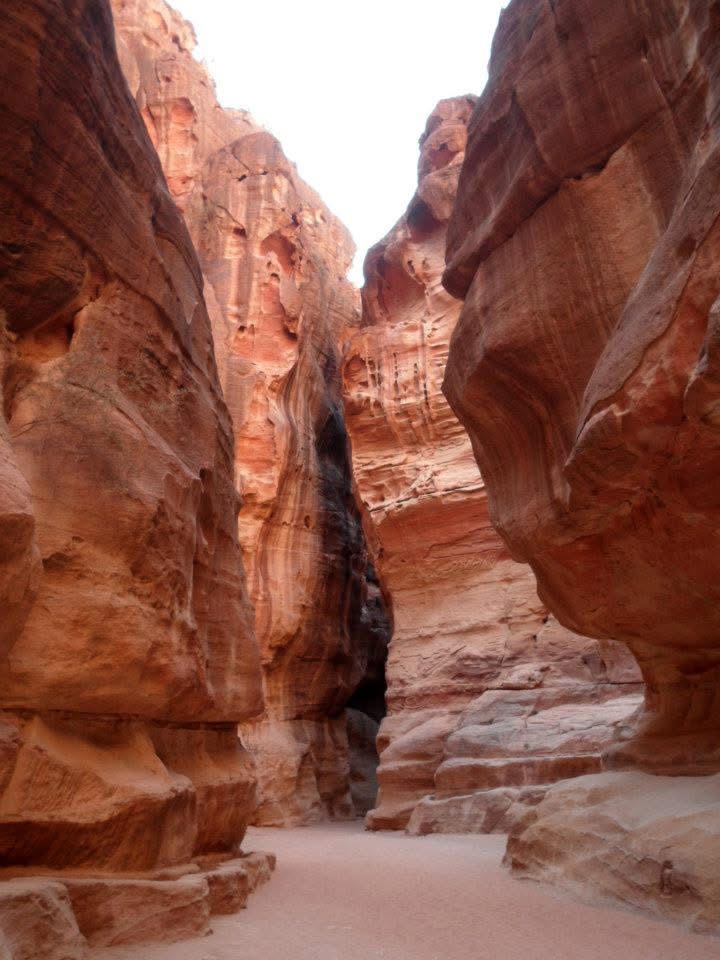
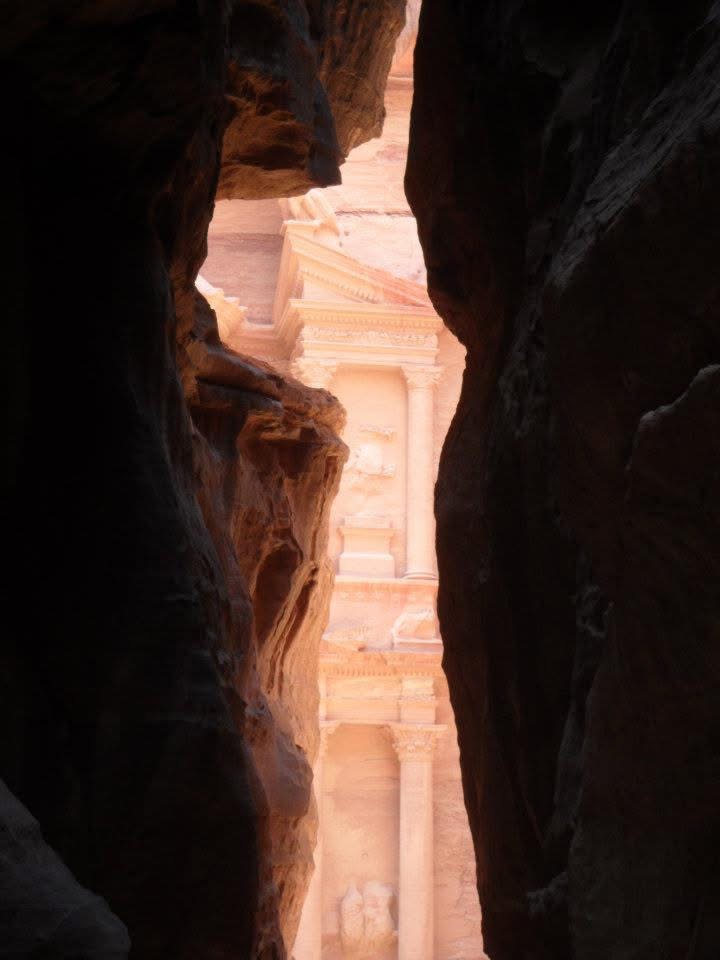
The Siq, the kilometre-long entrance gorge, narrows to two metres in places before opening suddenly onto the Treasury — the most photographed façade, 43 metres high, carved in such detail that the bas-relief figures retain their features two thousand years on. Beyond the Treasury the city continues: colonnaded streets, a Roman amphitheatre, high-place sacrificial altars reachable by steep rock-cut stairs. Most visitors see the Treasury and turn back. The monastery at the top of 800 steps is better.
The site is large enough that a single day is inadequate. Two days allows time for the outlying areas and the changed light conditions — the rock face shifts colour as the sun moves, from pale gold at dawn to deep ochre at midday to something approaching red in the late afternoon.
Wadi Rum
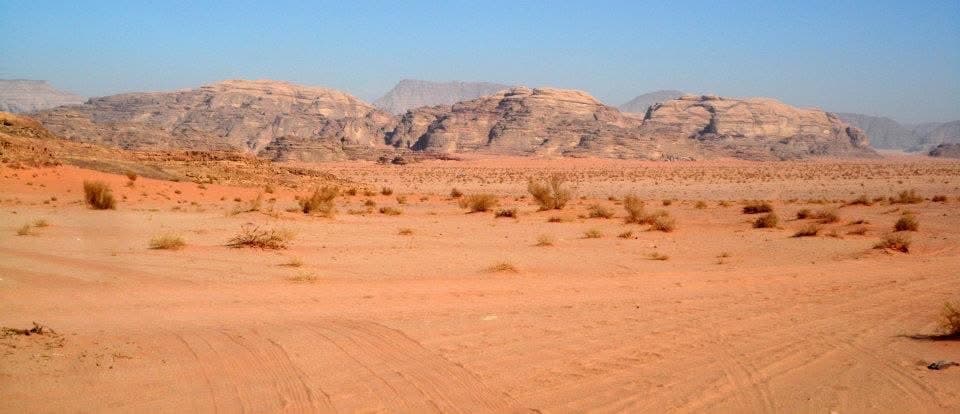
Wadi Rum is a protected desert valley an hour east of Aqaba — 720 square kilometres of sandstone and granite formations rising from a pink and orange sand floor. The scale is disproportionate in a way that photographs don't convey: the rock formations run to 1,750 metres and the valley floor is wide enough that distances are consistently underestimated.
Lawrence of Arabia passed through Wadi Rum during the Arab Revolt and wrote about it at length. The Bedouin communities who have inhabited the valley for centuries still operate there, and the overnight camps — permanent structures in the desert — allow time in the valley after the day-visit groups have left. At night the sky is unobstructed by light pollution; the Milky Way is visible to the naked eye from horizon to horizon.
The desert and the Red Sea are a 90-minute drive apart. Combining a night in Wadi Rum with diving from Aqaba on either end is a standard itinerary and works well — the contrast between the two environments is part of the point.
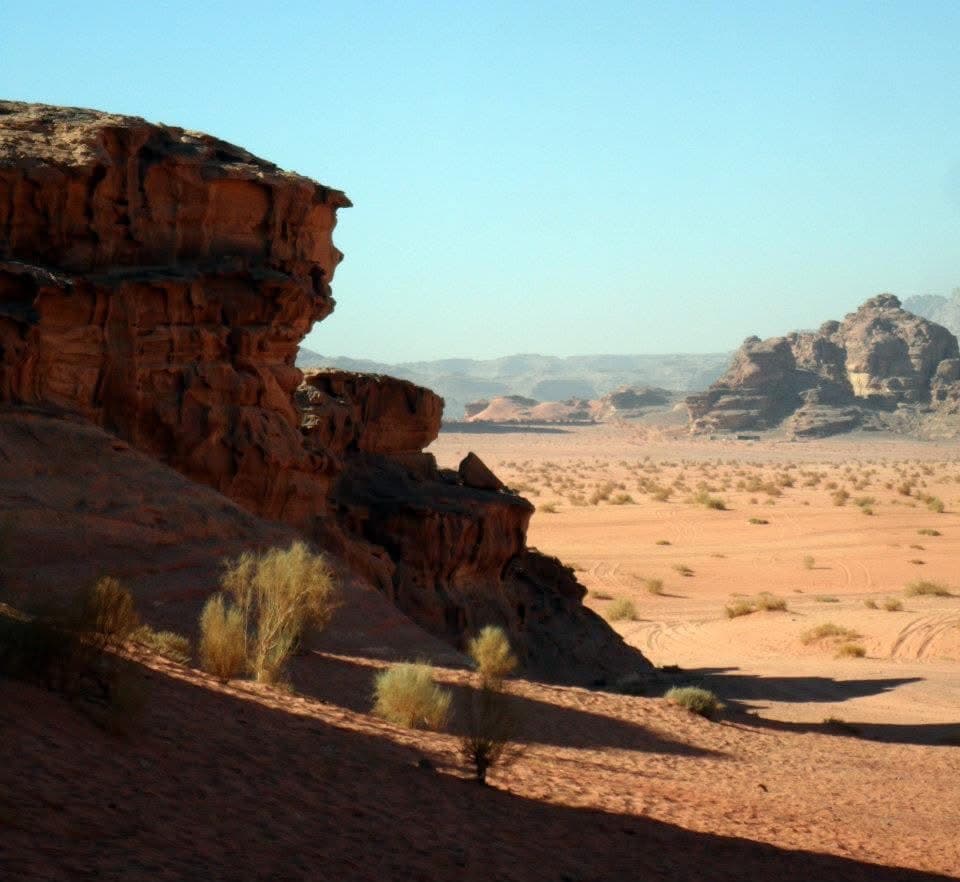 Red sandstone cliff face above the Wadi Rum desert floor — rock formations receding into the valley behind, the scale of the landscape consistently underestimated
The Dead Sea
The Dead Sea sits on Jordan's western border with Israel and the Palestinian territories, at 430 metres below sea level. The water is nine times saltier than ocean water — concentrated by evaporation in a basin with no outflow — and the resulting density makes it physically impossible to sink. Floating requires no effort and no movement; the body sits on the surface with stability.
The experience is unusual enough to be worth the drive from Aqaba or from Petra: roughly three hours in either case, through the King's Highway or the Desert Highway. The Dead Sea has been shrinking for decades — the water level drops approximately one metre per year as upstream diversion reduces inflow — and the visible recession line on the shoreline is striking. What remains is still extraordinary.
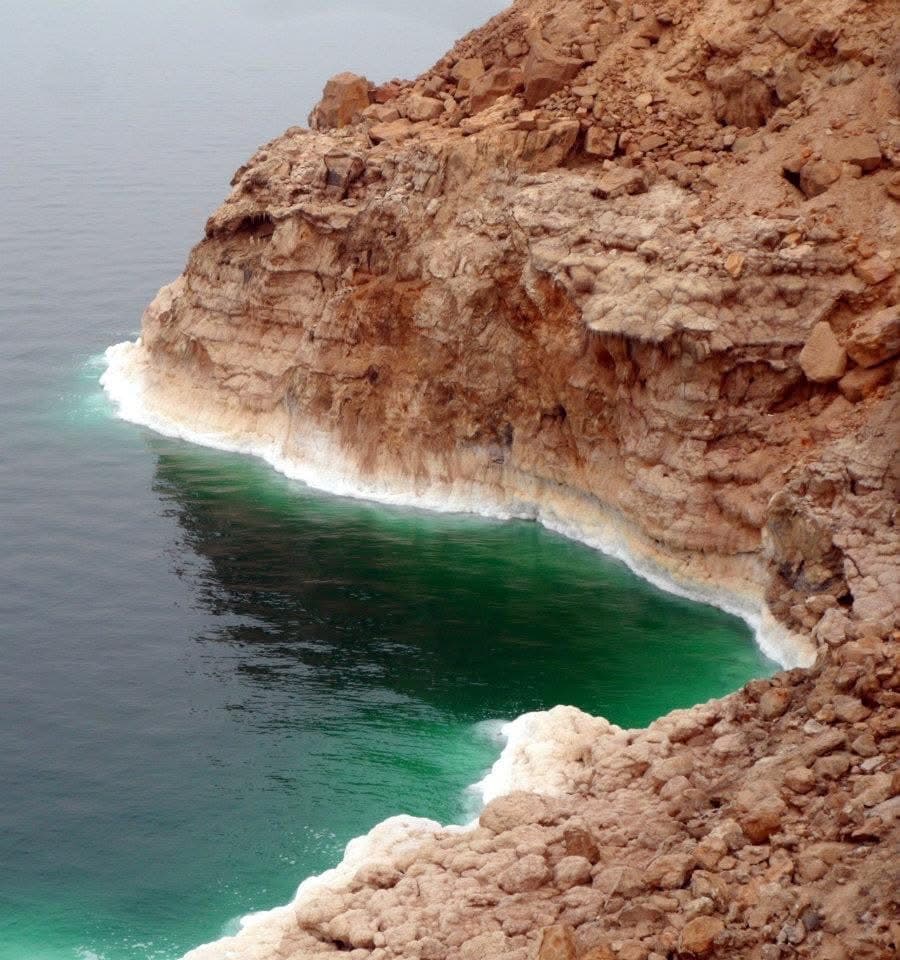 Salt-encrusted rock face dropping to the turquoise-green water of the Dead Sea — the colour a product of extreme salinity and mineral content
Aqaba — the Red Sea's northernmost reef
Jordan has 27 kilometres of Red Sea coast — all of it in Aqaba, wedged between the Saudi border to the south and the Israeli border to the north. From the dive boat you can see four countries simultaneously.
The reef begins within metres of the shoreline. Shore entries along the marine park are marked and accessible; the underwater terrain runs from shallow coral gardens to deliberately sunk wrecks and military equipment that now serve as artificial reef. Aqaba's isolation from the main Red Sea dive circuit — Egypt's Sinai draws the volume — means the sites are consistently uncrowded. The Cedar Pride wreck, a 70-metre Lebanese cargo ship sunk in 1985 with King Hussein reportedly at the controls, is the standout dive: colonised so thoroughly by soft coral, sea fans, and hard coral growth that the steel hull has largely disappeared under biology.
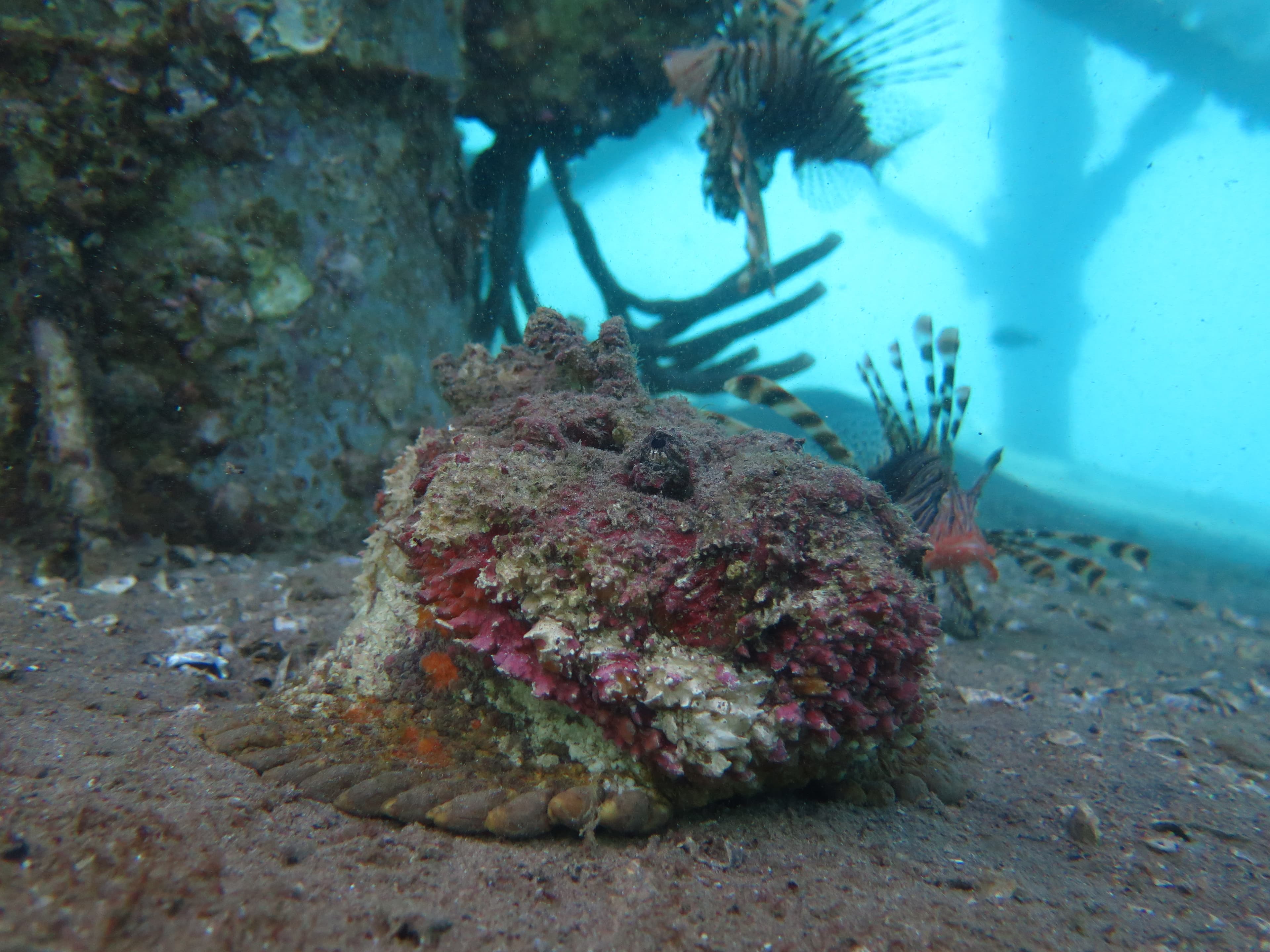 Scorpionfish on the Cedar Pride wreck floor — a lionfish behind it, both using the wreck structure as permanent territory
The reef's macro life is dense and unhurried — lionfish occupy every wreck site at predictable positions, scorpionfish disappear into colonised deck plates, and clams settle into soft coral polyps on the garden reefs. The water in spring runs to 25-metre visibility and 22 degrees — cool by Red Sea standards, and luminous with the desert-latitude morning light.
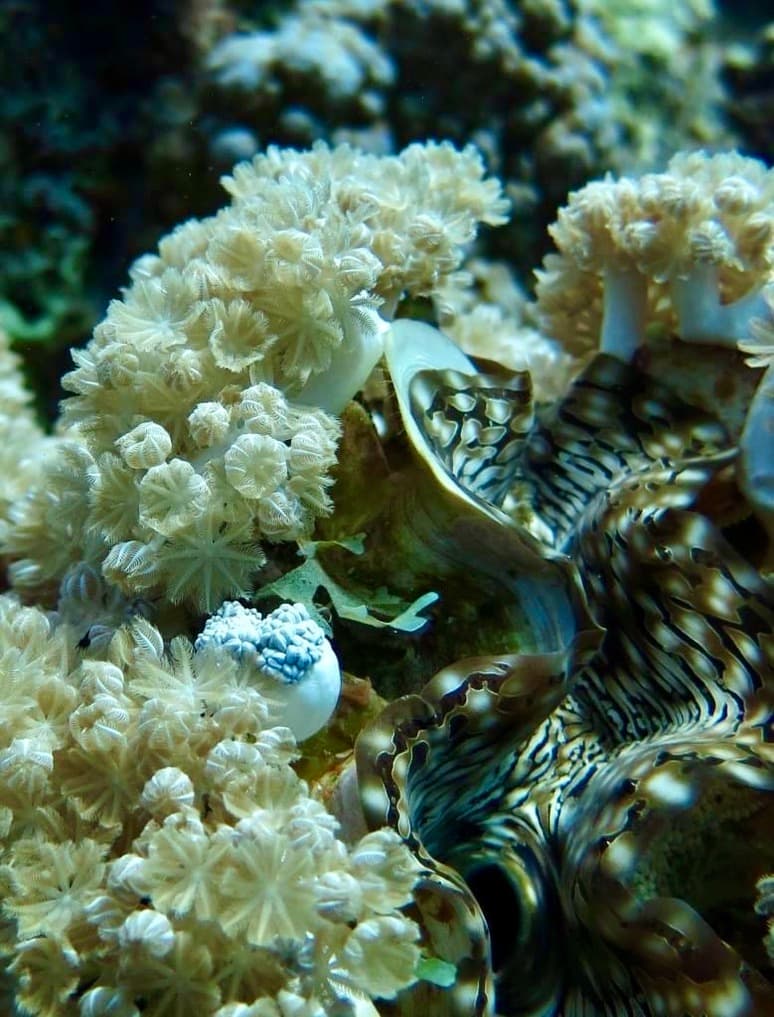 Clam in soft coral polyps at Yellow Stone Reef — the density of macro life on Aqaba's reefs rewards slow, patient diving
What Aqaba teaches you
The coral here is some of the northernmost in the world. It survives in water that drops to 18 degrees in winter — temperatures that would bleach most tropical reef systems within weeks. It has adapted, slowly, over millennia, to a thermal range that coral in the Indo-Pacific or the Caribbean has never had to solve.
The Red Sea adds another pressure. It is one of the saltiest bodies of water connected to the open ocean — roughly 40 to 43 parts per thousand compared to the Atlantic's 35 — because it sits in a near-enclosed basin with high evaporation and almost no freshwater inflow. The Gulf of Aqaba, at the northern tip, reaches the upper end of that range. The reef here has layered salt tolerance on top of cold-water resilience: two adaptations that most coral systems have developed separately, if at all.
That specificity — a reef that has solved problems most reefs haven't encountered — is why Aqaba's coral is studied by researchers working on climate adaptation. It already lives in the conditions that other reefs are heading toward.
Jordan in Pictures
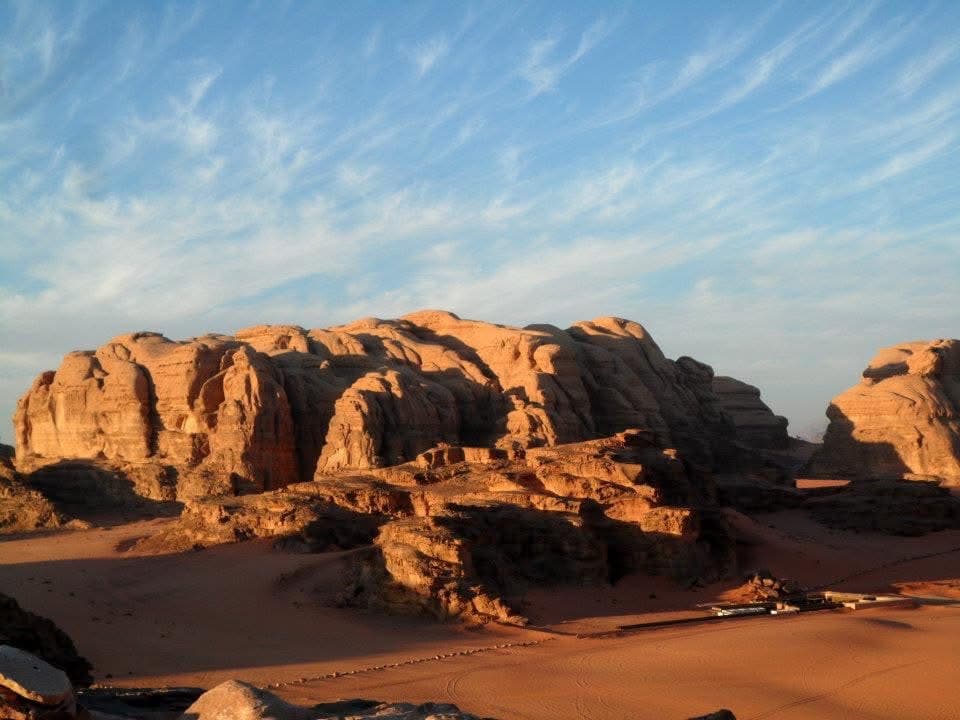
Wadi Rum at golden hour — layered sandstone formations rising from the desert floor, a Bedouin camp at the base of the rock
Red sandstone cliff face above the desert valley — the scale of the rock formations consistently underestimated from the valley floor
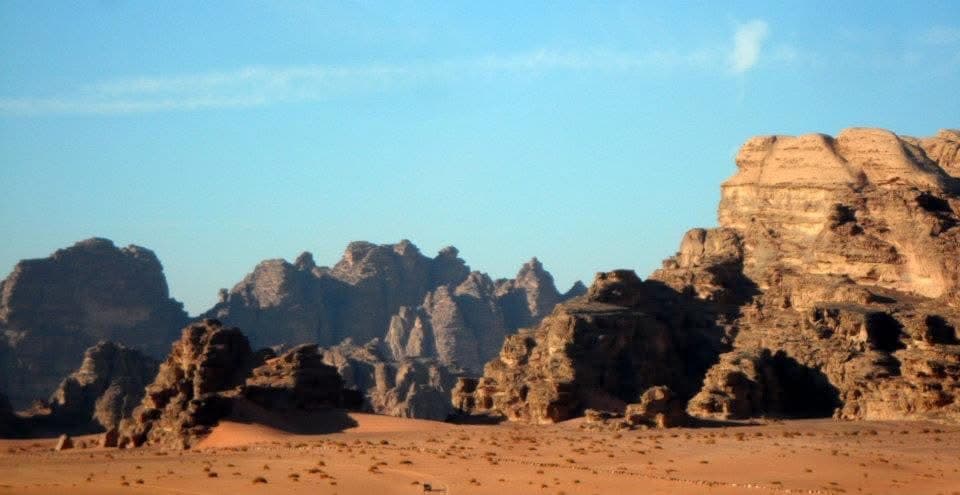
Wadi Rum at dusk — the jagged granite and sandstone skyline catching the last of the day's light
The open desert floor of Wadi Rum — pink and orange sand extending to the rock formations on the horizon
The Dead Sea from above — salt-encrusted rock face dropping to turquoise-green water, the colour a product of extreme salinity
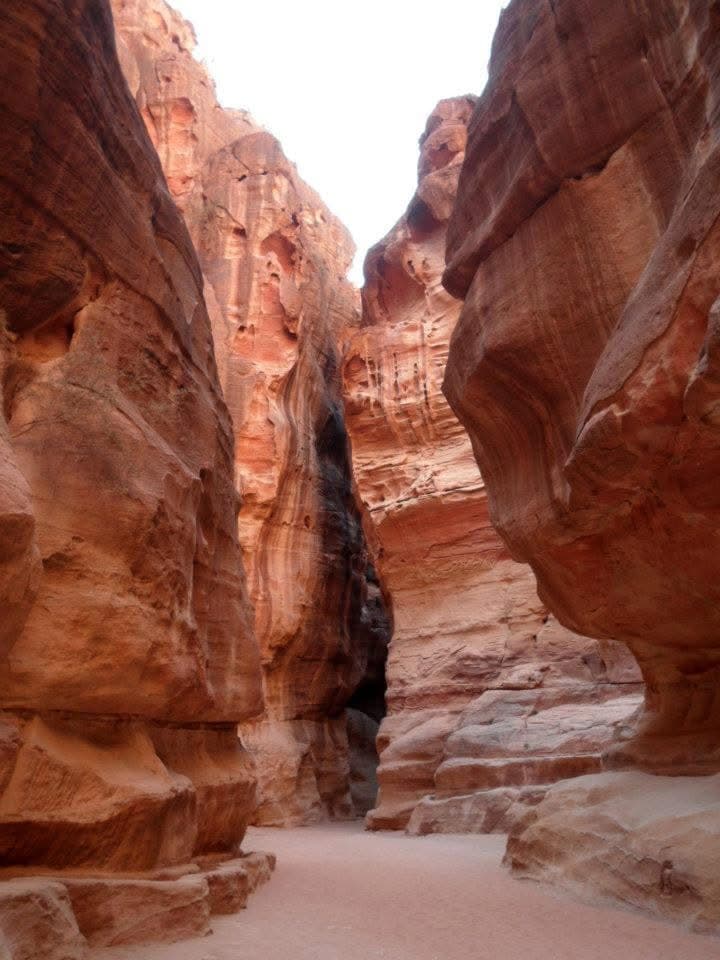
The Siq — the kilometre-long entrance canyon, sandstone walls narrowing to two metres before opening onto the Treasury
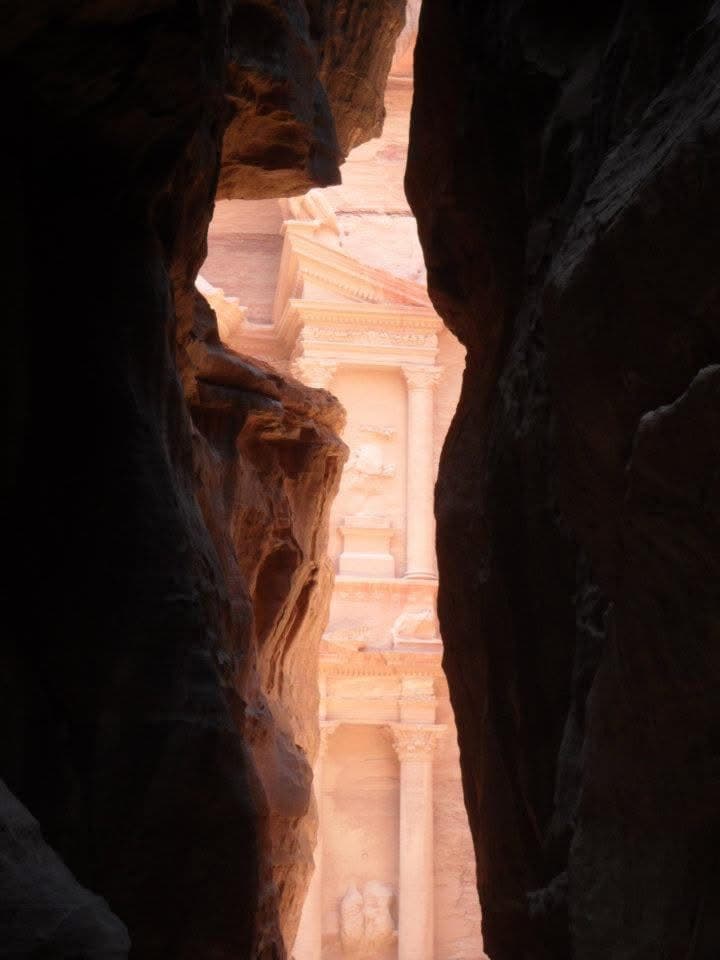
The Treasury glimpsed through the final narrows of the Siq — the carved façade visible as the canyon opens