Bonaire
Bonaire — Caribbean Shore Diving and Coral Restoration
A small Dutch island in the southern Caribbean with one of the most accessible and well-preserved reef systems in the Atlantic. Yellow-painted rocks mark entry points along the entire leeward coast — park, kit up, and wade in. No boat, no briefing, no waiting.
The island that runs on diving
The first sign you notice is the triangular warning sign on the leeward coast road: a diver silhouette, tank and fins, crossing. It appears every few hundred metres. It is Bonaire's clearest statement of what the island is — not a beach destination, not a resort strip, but a place organised entirely around the act of getting underwater.
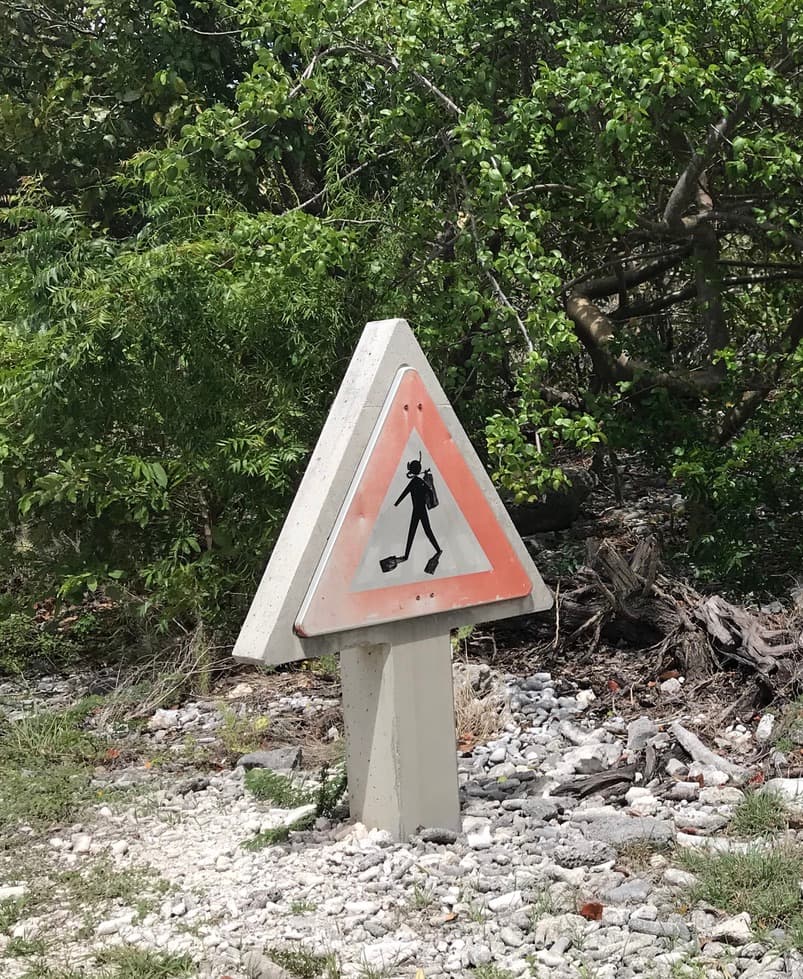 The diver crossing sign on the leeward coast road — repeated the entire length of the leeward coast
Yellow-painted rocks mark every shore entry along the leeward coast. Pull over, kit up, and you're in the water in ten minutes. No boat, no briefing, no waiting. The truck rental and a week of unlimited air fills from a Kralendijk dive shop is the standard operating procedure. The plan is always to dive twice a day. The plan never survives.
The terrain
Above water, Bonaire is semi-arid. The trade winds arrive from the northeast with enough consistency to have shaped every tree on the island — branches lean southwest, trunks bent at the same angle. Cacti line the ridgelines. The soil is red-brown, the rock is limestone and basalt, and the vegetation is scrub except where the rains have been good.
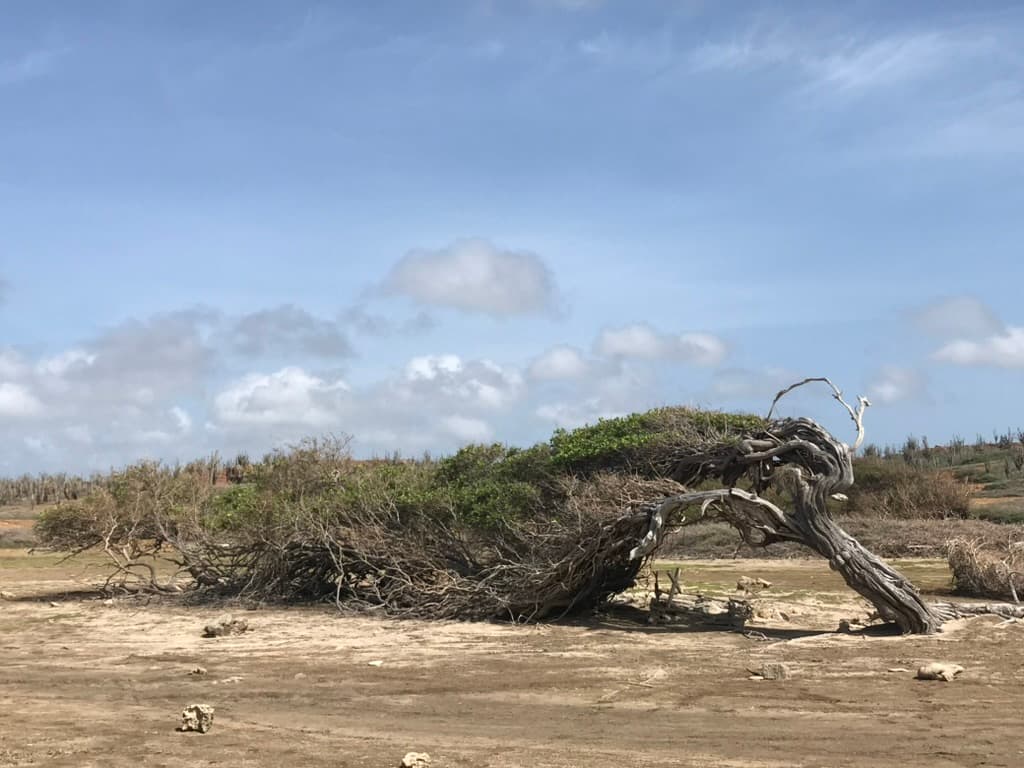 A tree bent horizontal by the trade winds — every tree on the island leans the same way, shaped by the constant northeast wind
After the first rains of the season, the kibrahacha flowers. The tree is otherwise bare — a tangle of dry branches — and the sudden appearance of yellow blooms against the blue sky is startling. It lasts a week or two and then it's gone.
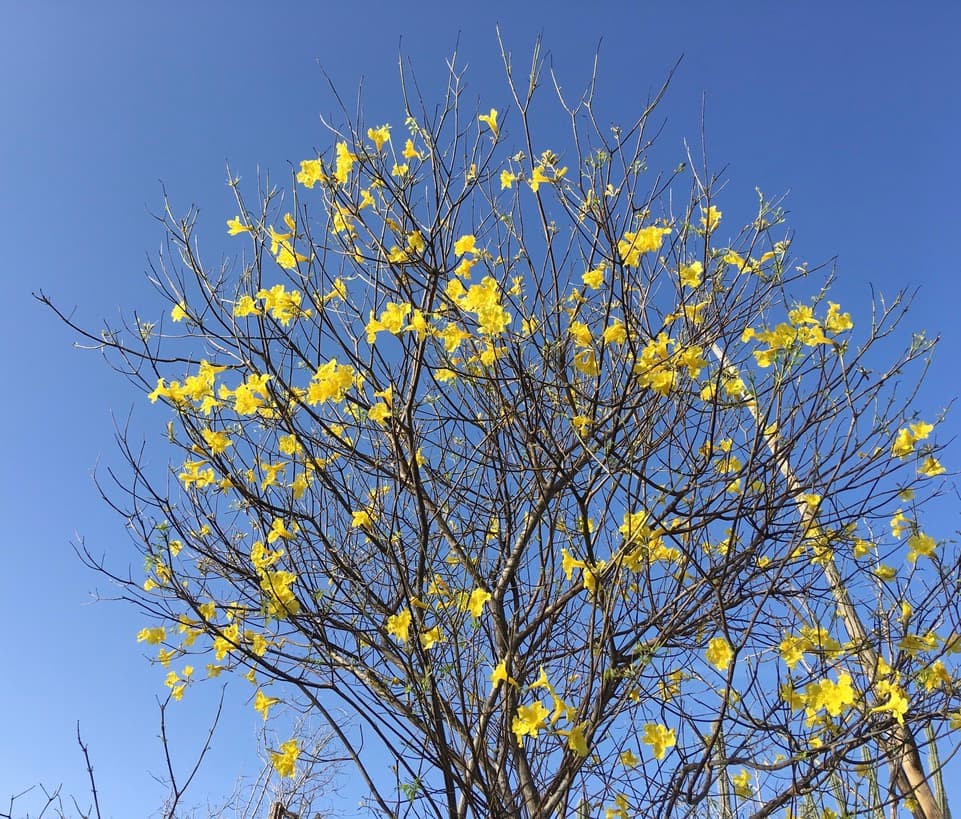 Kibrahacha in bloom against a clear blue sky — the yellow-flowering tree is a brief and striking feature of the Bonaire landscape
The salt pans
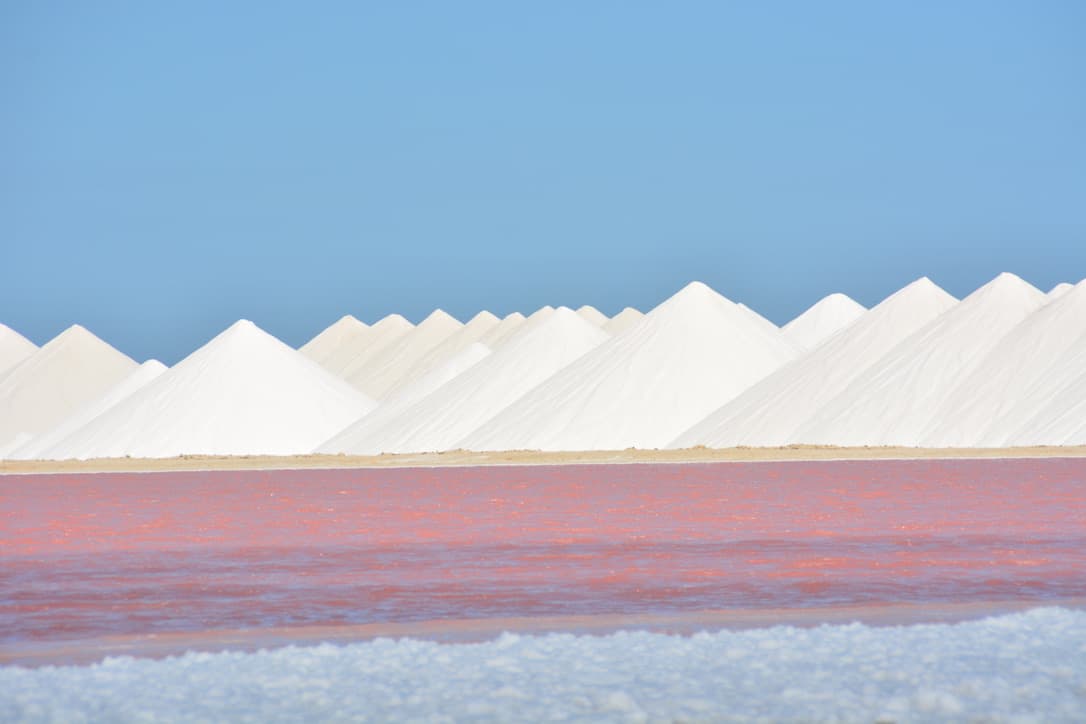
The southern quarter of the island is occupied by the Cargill salt works — a series of evaporation ponds where seawater is concentrated by sun and wind until the salt crystallises out. The brine pans turn pink from halophilic algae; the harvested salt is raked into pyramids that line the edge of the pans in a row against the sky. The combination of colours — hot pink water, white pyramids, pale blue above — is unlike anything else in the Caribbean.
The flamingos feed here. The hypersaline conditions concentrate the brine shrimp and algae the birds depend on, and Bonaire's population is one of the largest breeding colonies in the region. They are approachable before the morning wind builds — standing in the shallow brine on legs that seem to bend the wrong way, feeding with their beaks inverted.
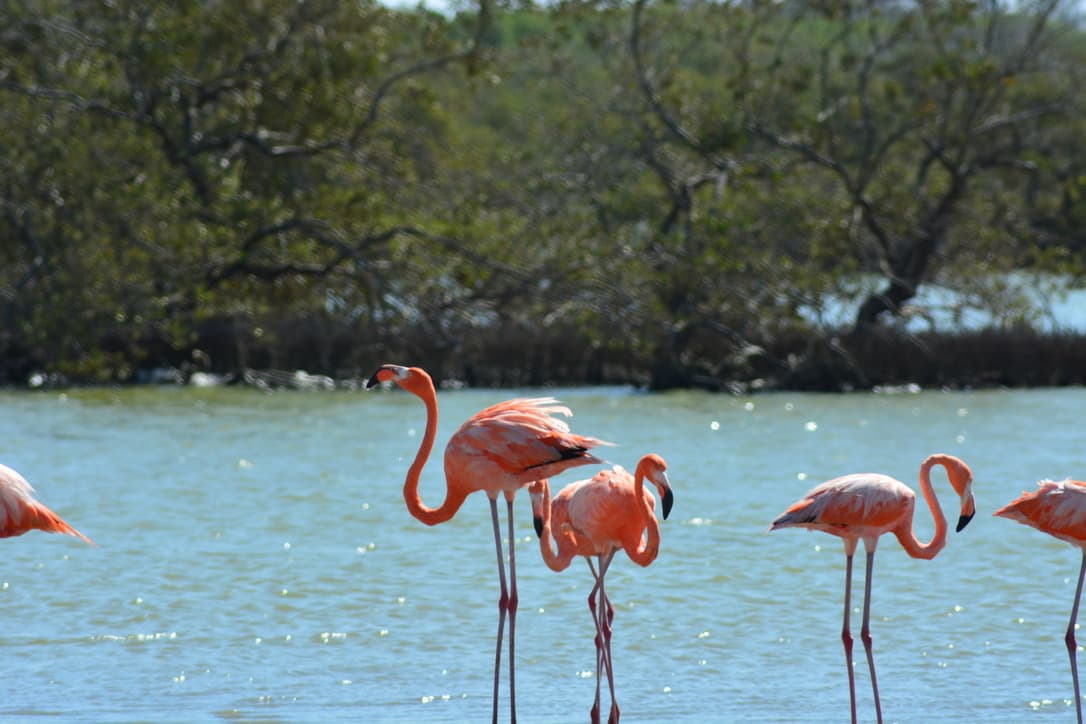 Flamingos wading in the lagoon near the salt flats — the population feeds on brine shrimp concentrated by the hypersaline conditions
Washington Slagbaai
The northern third of the island is Washington Slagbaai National Park — 5,600 hectares of protected land and coastline, accessible by four-wheel drive on dirt tracks that wind through the interior. The landscape here is less manicured than the leeward coast dive strip: thorny scrub, aloe, and bromeliads; iguanas on the road; the occasional flock of parakeets moving between cactus stands.
The bays on the park's western edge are sheltered and clear, the water visible from the track above. Playa Chikitu and Boka Slagbaai are reachable on foot from the park road — isolated, rarely busy, and backed by the same green hills that hold what little rainfall the island receives.
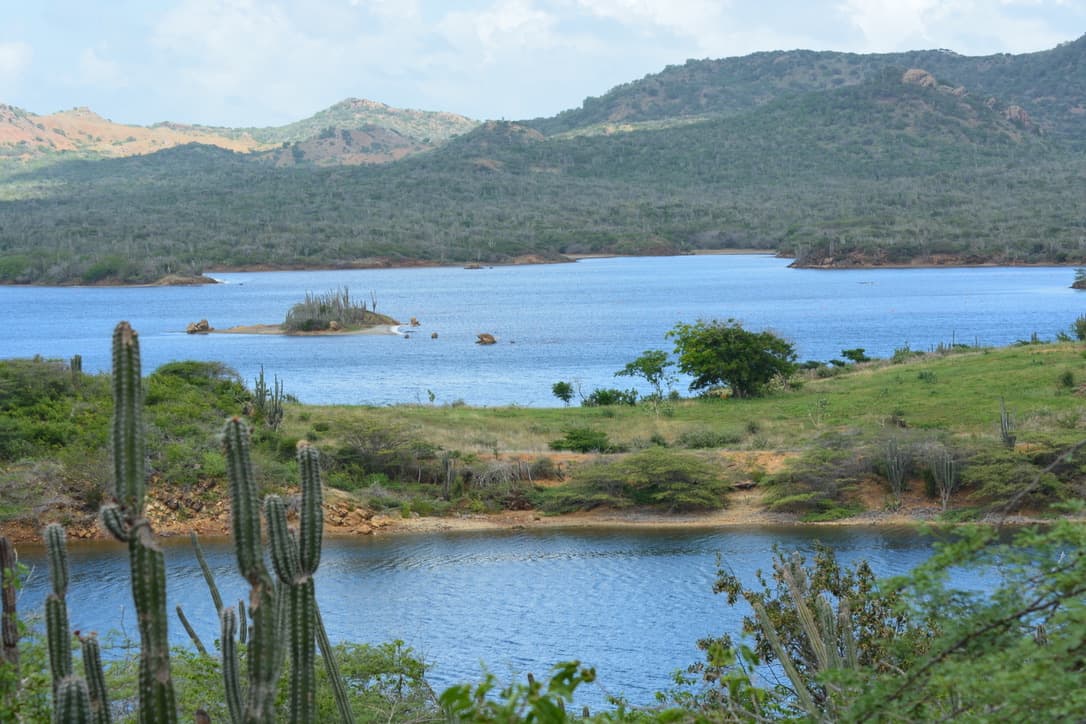 Washington Slagbaai National Park — a sheltered bay in the island's north, columnar cacti in the foreground, green hills rising behind
Below the surface
The reef begins within metres of the shore. The leeward wall drops from a shallow sand flat at three to five metres to a steep slope that reaches recreational depth by fifteen metres — sea fans, brain coral, and the steady background motion of reef fish at every level. The visibility on a calm morning runs to thirty metres or more.
STINAPA, Bonaire's national parks foundation, runs a coral restoration programme in partnership with the Coral Restoration Foundation. The nursery sits at eight metres: a grid of pipe-and-rope trees hung with fragments of staghorn and elkhorn coral, each tagged and tracked through its growth cycle. Snappers and small reef fish shelter in the structure while the coral grows toward transplant size.
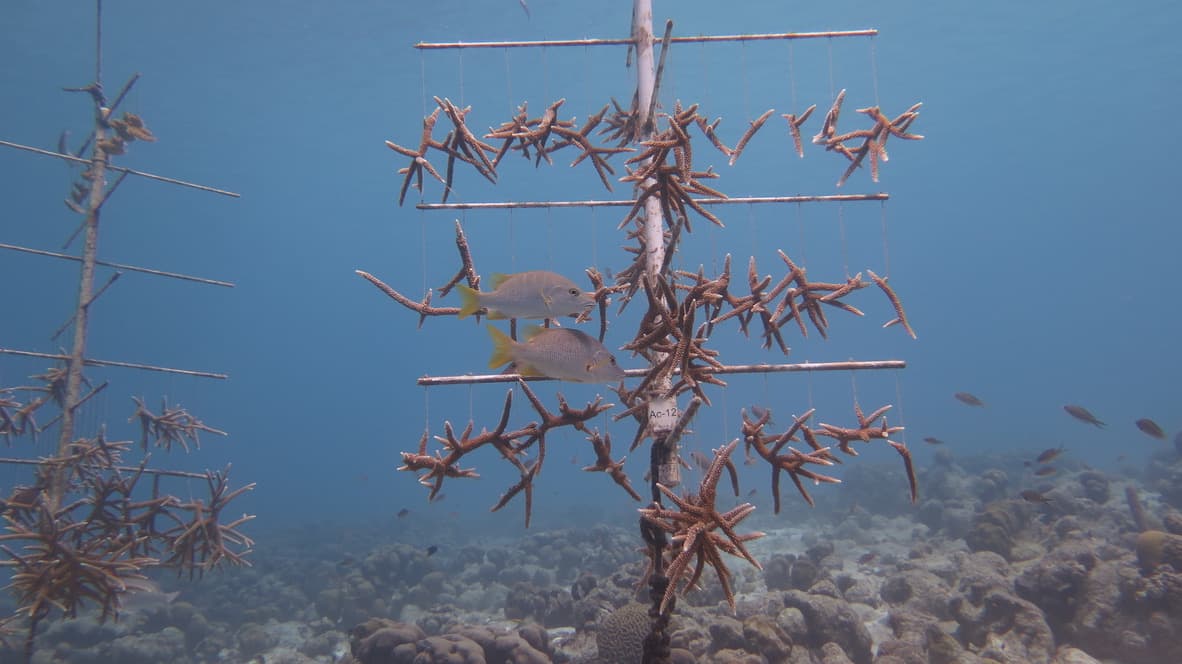 STINAPA coral nursery tree at 8 metres — staghorn fragments on ropes, tagged and growing, snappers already treating the structure as habitat
The fragments grow here for six to eight months before being transplanted to degraded sections of the leeward reef. Survival rates in the nursery are well above eighty percent. What happens once they return to the reef — bleaching seasons, water temperature, herbivore pressure — is the harder, longer problem.
Bonaire in Pictures
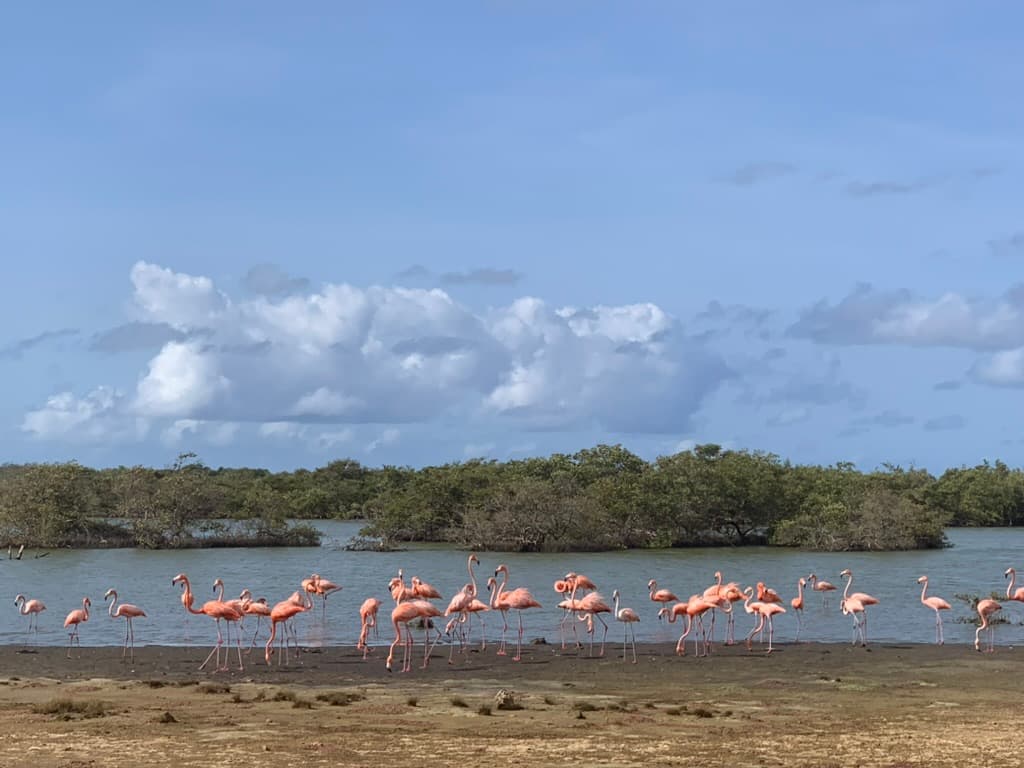
A large flock of flamingos standing in the lagoon — Bonaire holds one of the largest breeding colonies in the region
Flamingos wading in the lagoon near the salt flats — the population feeds on brine shrimp concentrated by the hypersaline conditions
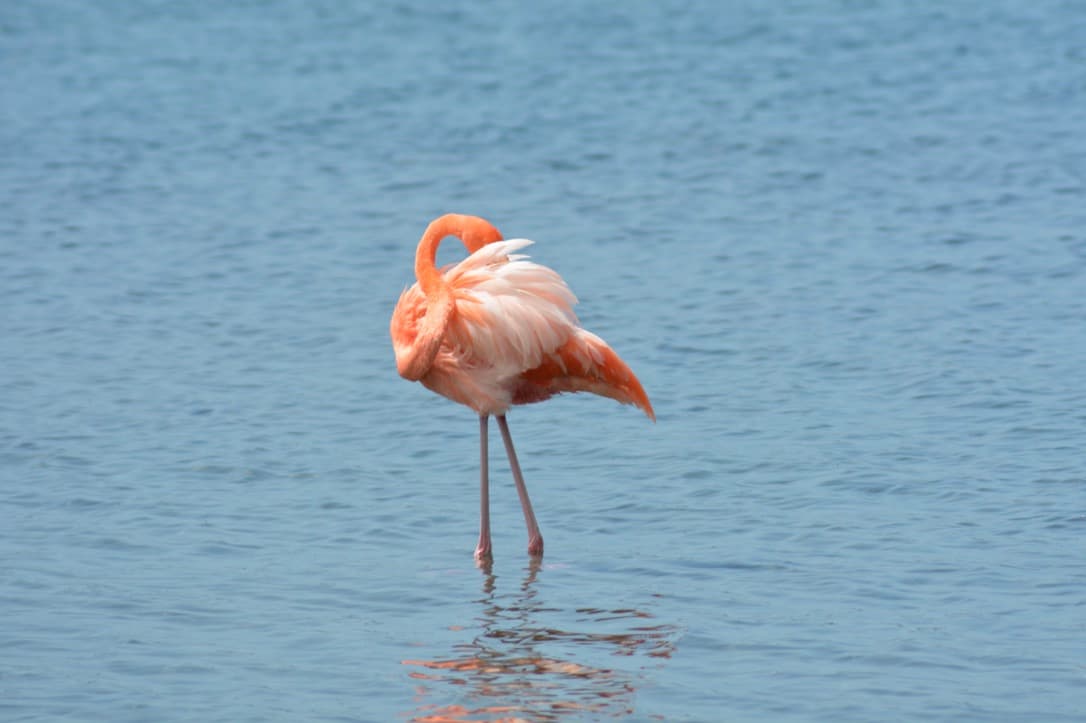
Flamingo on the salt flats — the hypersaline conditions support the crustacean population the birds depend on
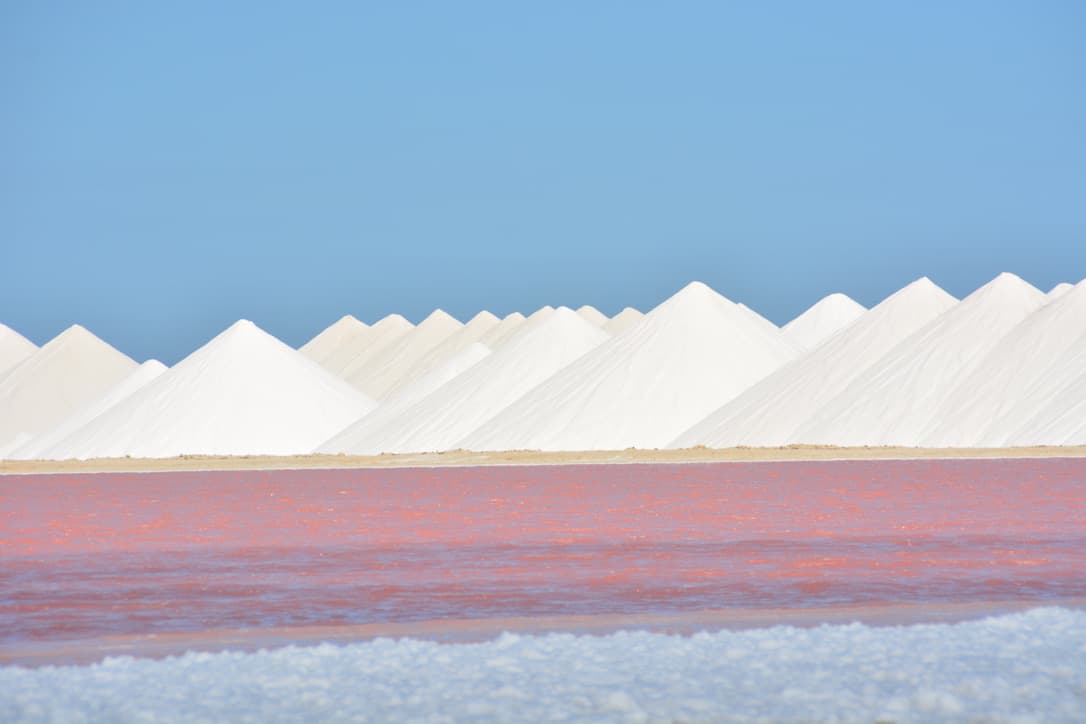
The salt pans in the island's south — the pink water coloured by halophilic algae, white pyramids of harvested salt behind
Washington Slagbaai National Park — cacti in the foreground, a sheltered bay and green hills behind
The diver crossing sign on the leeward coast road — Bonaire's clearest statement of what the island is for
A tree bent horizontal by the trade winds — every tree on the island leans the same way, shaped by the constant northeast wind
Kibrahacha in bloom — the yellow-flowering tree appears across the island after the first rains
STINAPA coral nursery tree at 8 metres — staghorn fragments suspended on ropes, each tagged, snappers already sheltering in the structure