Egypt
Egypt — Red Sea Walls, Desert Coast, and Living Coral
The Egyptian Red Sea is one of the last places on earth where you can reliably encounter large aggregations of reef fish, healthy hard coral, and abundant pelagic life within a short boat ride of shore. Two distinct regions — the northern resorts and the far south wilderness — offer completely different encounters within the same country.
The Red Sea
The Red Sea is a narrow, enclosed inland sea between Africa and the Arabian Peninsula, connected to the Indian Ocean through the Bab-el-Mandeb Strait in the south and the Suez Canal to the Mediterranean in the north. It is 2,250 kilometres long, averages 300 kilometres wide, and in places exceeds 3,000 metres depth. The enclosure creates conditions unusual in tropical seas: high salinity, warm temperatures year-round, and extremely clear water with visibility often exceeding 30 metres.
Egyptian territorial waters cover the western coastline and most of the northern section, including the Sinai Peninsula. The reefs here are old, structurally complex, and — in the protected southern zones — largely intact. The Red Sea holds over 1,000 fish species, roughly 10% of which are found nowhere else on earth.
El Gouna and the northern coast
El Gouna is a purpose-built resort town constructed on a series of lagoon islands 22 kilometres north of Hurghada. It functions as a comfortable base for northern Red Sea diving without the scale or noise of Hurghada itself. The town has a coherent character — low-rise Nubian architecture, pedestrian streets, water channels between the islands — that makes it liveable rather than merely functional.
The northern dive sites concentrate around the Giftun Islands, a protected national park 8 kilometres offshore. The reef structure here is shallow enough for snorkelling on the outer edge and drops to wall diving at 15 to 30 metres on the ocean-facing sides. Napoleonfish, lionfish, and dense shoals of anthias are present on every dive; the reef sharks are occasional but reliable at the right sites.
The SS Thistlegorm, a British WWII supply ship sunk by German aircraft in 1941, lies 90 kilometres north of Hurghada at 18 to 32 metres. The cargo hold contains motorcycles, trucks, rifles, and railway wagons — the wreck is the most fully documented dive site in the Red Sea and one of the most historically significant in the world.
Marsa Alam and the far south
Marsa Alam sits 220 kilometres south of Hurghada and represents a different Egypt: quieter, less developed, with access to the reef systems and offshore sites of the southern Red Sea that most northern-based divers do not reach. The dive sites here — Elphinstone Reef, Sataya, Daedalus — require longer transfers or liveaboard access, which keeps visitor numbers manageable.
Elphinstone is a long reef plateau 60 kilometres north of Marsa Alam, dropping vertically on all sides to beyond sport diving depth. The north and south tips are where oceanic whitetip sharks aggregate — genuine open-ocean apex predators, 2 metres in length, that approach with the unhurried confidence of animals not accustomed to being avoided. The encounters are not guaranteed but regular enough that the site has become specifically associated with them.
Sataya Reef, 65 kilometres south of Marsa Alam, holds a resident pod of several hundred spinner dolphins that use the lagoon for rest and socialising during the day. Snorkelling into a pod of 200 resting dolphins in clear 28-degree water is among the more disorienting encounters the Red Sea offers.
Dugongs — sea cows — are occasionally spotted in the seagrass beds between Marsa Alam and the Sudanese border. They are shy and the encounters are unpredictable, but the Marsa Alam area has one of the highest dugong concentrations in the northern Red Sea.
Above the water
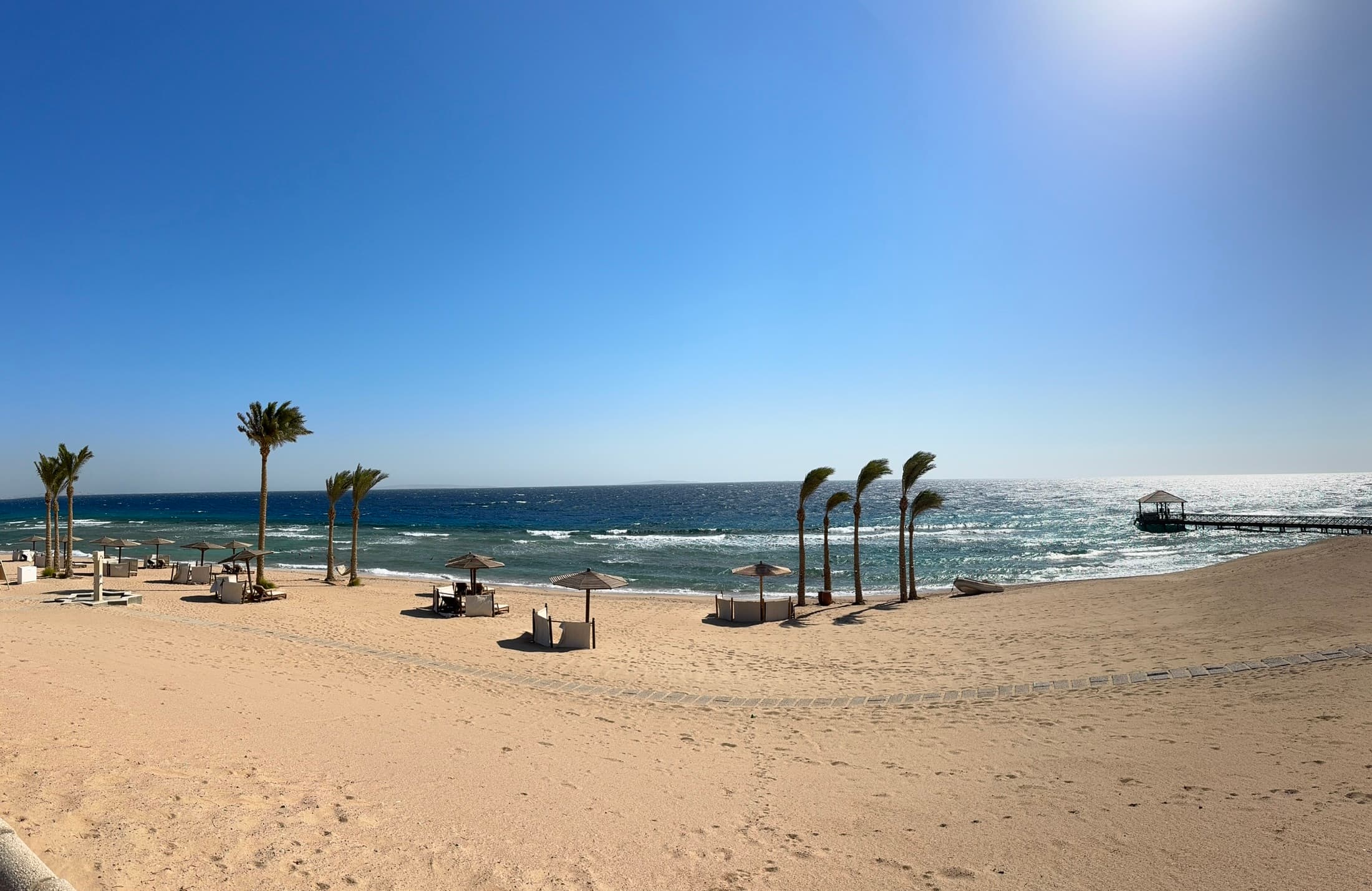
The Egyptian coast is desert — the Eastern Desert runs directly to the shoreline, and the mountains of the Sinai are visible from the northern coast on clear days. The landscape is stark and elemental: red rock, white sand, blue water, nothing else. This is not a destination for dense cultural tourism, but the desert itself is worth a day.
Luxor and the Valley of the Kings are a 45-minute flight from Hurghada — one of the more practical combinations in adventure travel. Three days in Upper Egypt between dive trips gives access to the Karnak temple complex, the tomb of Tutankhamun, and the Colossi of Memnon without significantly disrupting a two-week dive itinerary.
Seasons
March through November offers the best diving conditions across both regions. Summer (June to August) brings the hottest air temperatures (40°C+) and the warmest water (28–30°C) with the best visibility. Winter (December to February) is cooler and windier; the water drops to 22°C in the north and conditions on exposed sites become unpredictable. Liveaboard season for the far south and offshore sites runs April through October.
Egypt in Pictures
El Gouna lagoon — the resort town built on a series of interconnected islands north of Hurghada
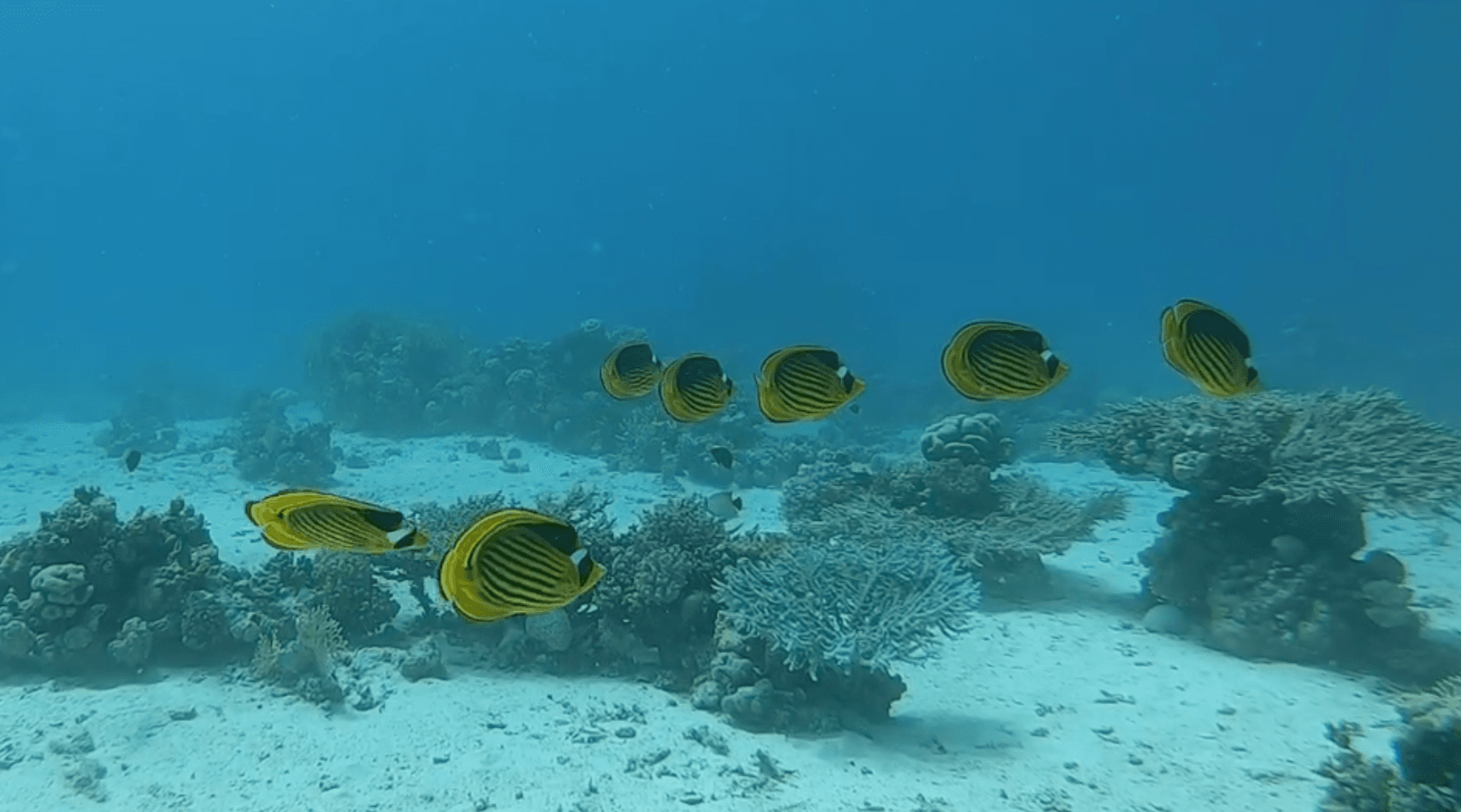
Hard coral reef structure in the northern Red Sea — unusually intact compared to most global reef systems
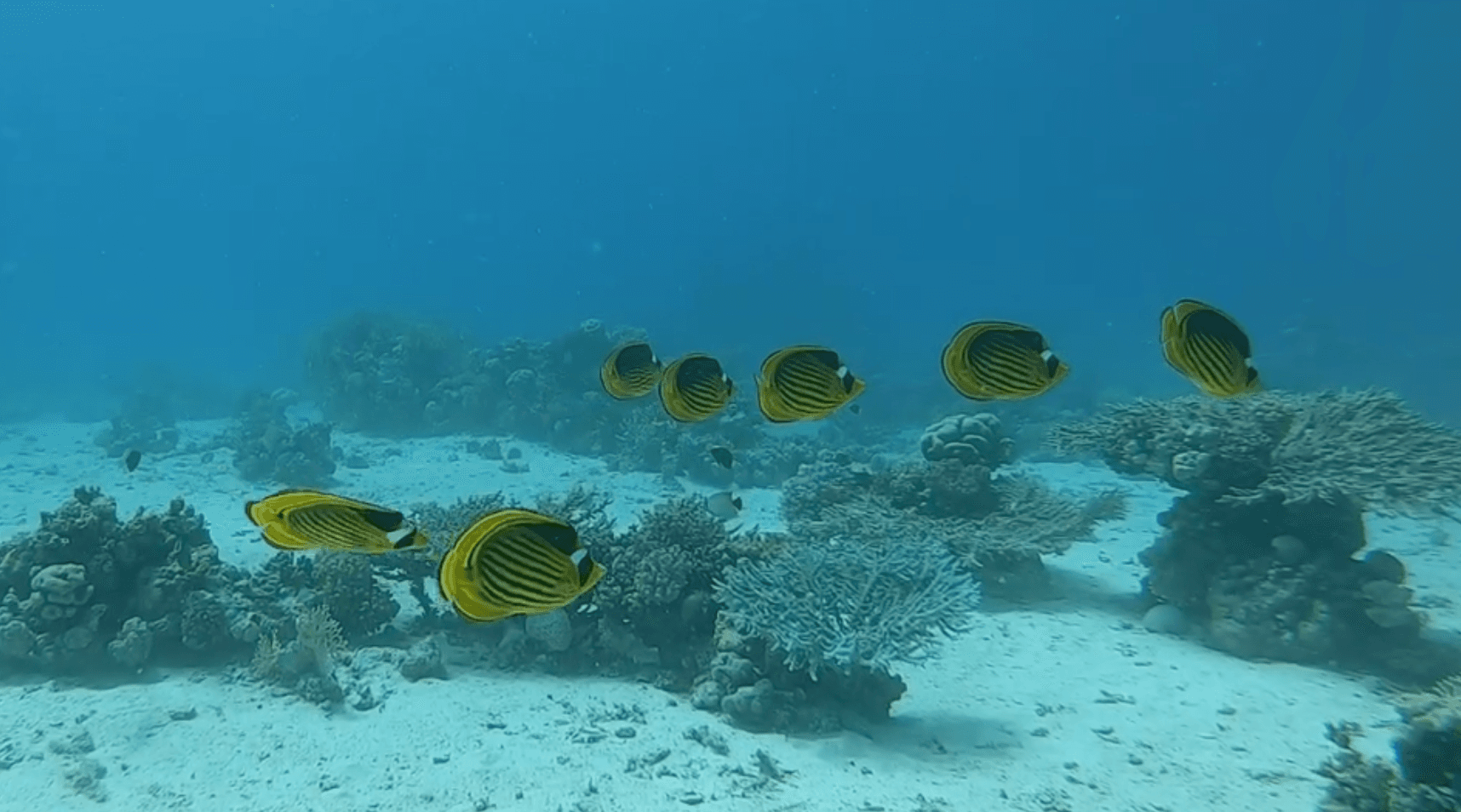
Masked butterflyfish over coral — one of dozens of species endemic to or concentrated in the Red Sea