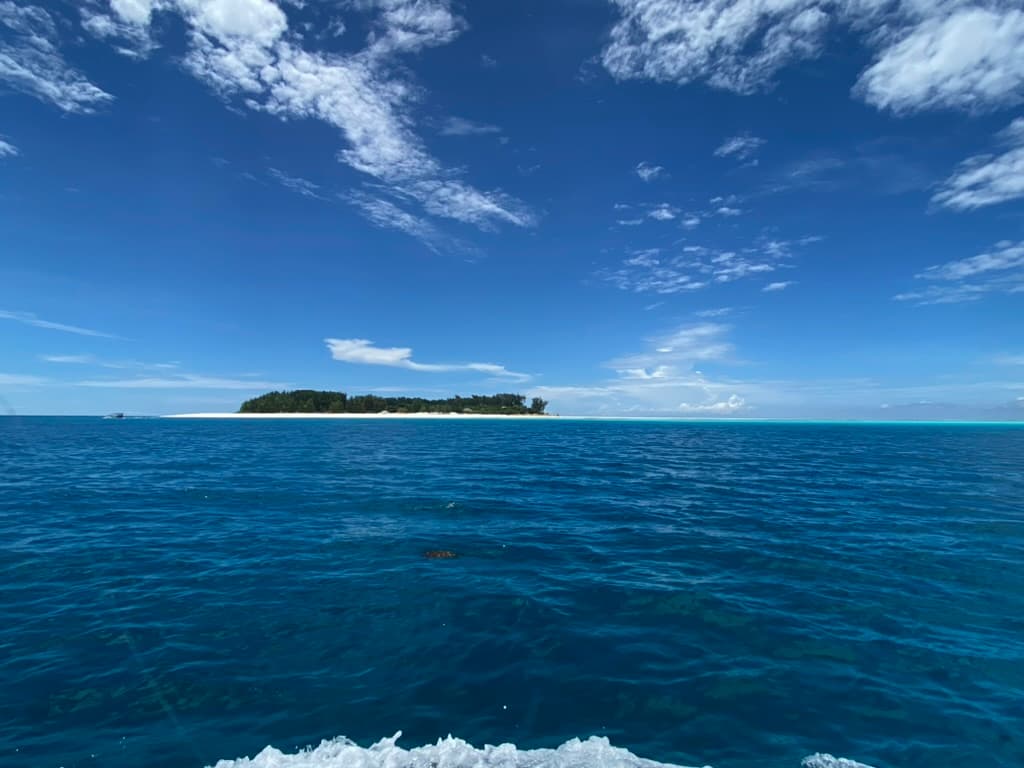
Tanzania · April 2024
Zanzibar and Mnemba Atoll – Indian Ocean Drift
Mnemba Atoll sits 3 kilometres off Zanzibar's northeast tip, protected and unhurried — a no-take zone where hawksbill turtles commute between coral heads like they're late for something.
Mnemba Atoll as ecosystem
Mnemba Atoll is a coral atoll system located 3 kilometres off Zanzibar's northeast coast, within a marine protected area designated as a no-take zone since 1993. The atoll encloses a shallow lagoon and is ringed by a continuous reef structure that drops steeply on the eastern and southern margins. The protection status has allowed fish populations and coral cover to recover significantly compared to surrounding unprotected reef systems — making it one of the most ecologically intact reef environments in the western Indian Ocean.
The atoll functions as a keystone habitat for several threatened species. Hawksbill sea turtles (Eretmochelys imbricata) use the atoll's coral heads as foraging and resting grounds year-round; green turtles (Chelonia mydas) are also regularly present. The outer wall and channel between the atoll and the mainland serve as a seasonal transit corridor for whale sharks (Rhincodon typus), with peak aggregations recorded October through February corresponding to plankton productivity cycles in the Indian Ocean.
Coral assemblages span a range of growth forms across the depth gradient — branching Acropora and plate coral dominate the shallow reef gardens on the atoll's south side; massive brain and star corals become increasingly prevalent on the deeper wall structures. Sponge growth on the vertical wall faces at 15–23 metres is structurally significant and supports high densities of invertebrate and fish fauna. The relative health of the coral here is a direct function of the no-take zone — anchor damage, collection pressure, and sedimentation from fishing activity are all substantially lower than on surrounding reefs.
The outer wall
Mnemba Atoll's eastern edge catches the incoming tide and concentrates fish at depth. Surgeonfish, snappers, and goatfish are present in high density; grouper hold position in overhangs throughout the wall.
Small Wall to Kichwami
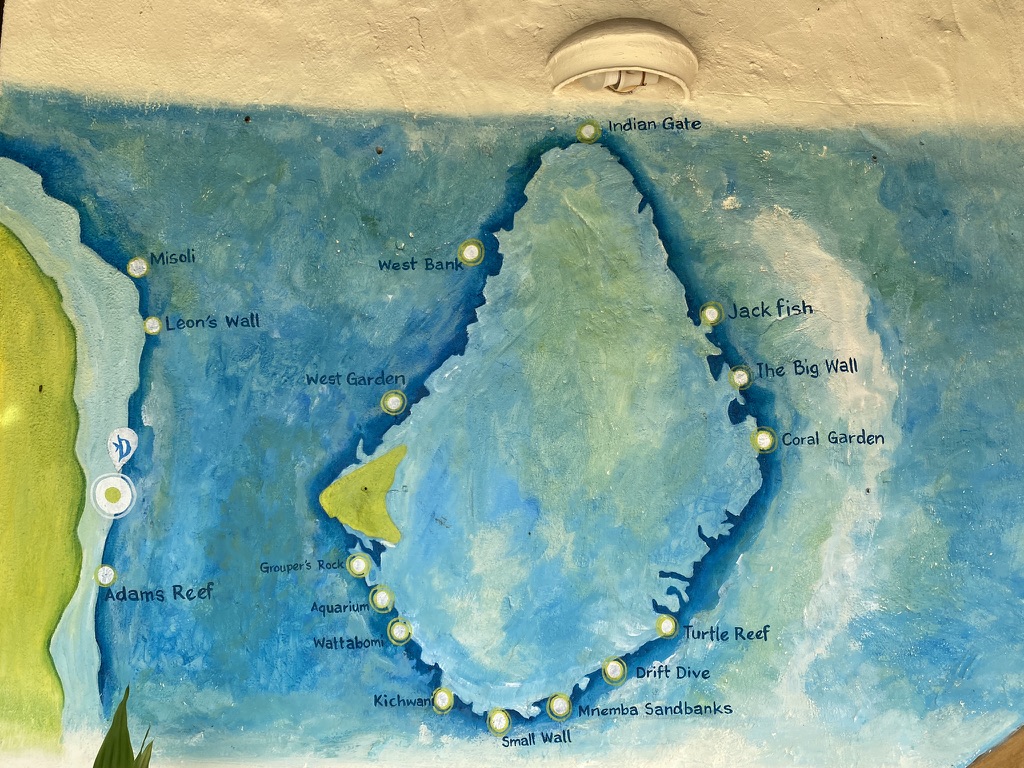
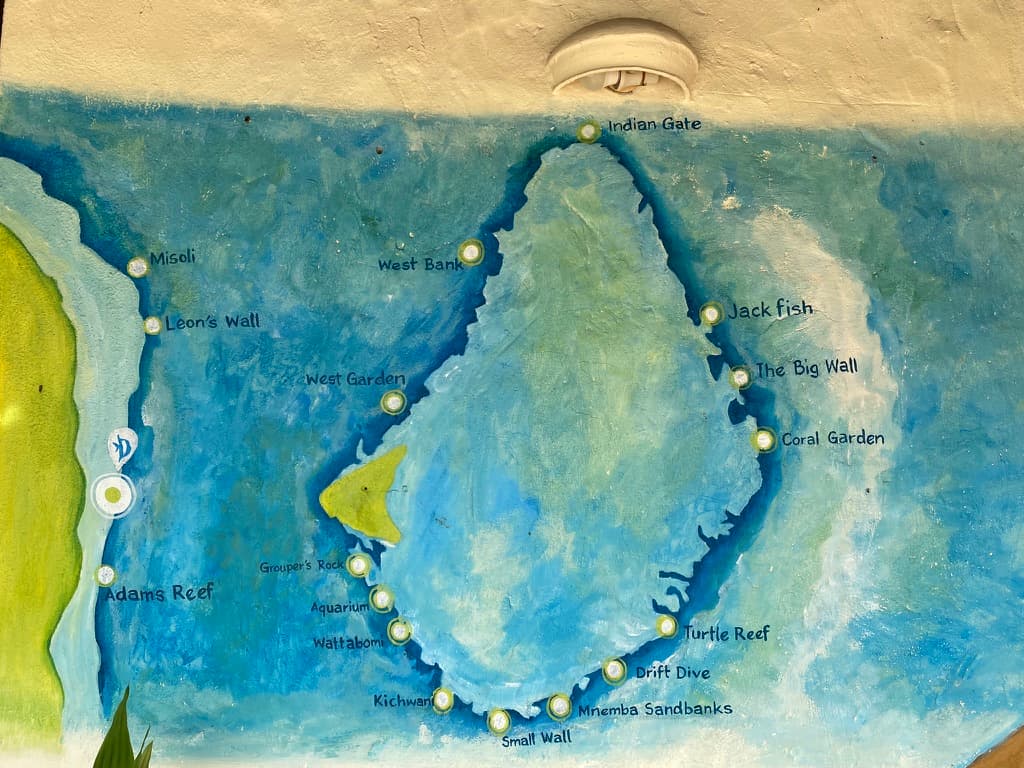
A drift site running the Small Wall north to Kichwami along a series of coral ridges at 18 metres. The wall transitions to a reef garden at Kichwami, flattening to 5–6 metres of plate coral. Lionfish are resident in the overhangs; Napoleon wrasse and active cleaning stations observed throughout. One of the stronger current sites on the atoll — entry timing to the tidal window is required.
Nungwi
Reef diving off the island's north tip at 16–20 metres. Shallower profile than the outer atoll with higher current variation across the tidal cycle. Coral cover is dense and structurally intact; barracuda present in the water column. Conditions here differ from Mnemba — less dramatic topography, higher fish density in the shallows.
Leon's Wall and Adam's Reef
Two sites on the atoll's southeast margin, both logged at 19 metres. Leon's Wall is a clean vertical drop with consistent current and notable sponge growth on the wall face. Adam's Reef sits immediately adjacent — a broader, flatter structure with continuous coral carpet and good macro diversity at depth.
Whale shark observations
Whale shark aggregations off Zanzibar peak October through February. July marks the early transition — scouts appear ahead of the main shoal. A 7-metre juvenile was recorded crossing the channel between Mnemba and the mainland during this expedition, surface-visible for approximately three minutes before submerging.
Tanzania in Pictures
Reef structure at Mnemba Atoll — branching coral at depth
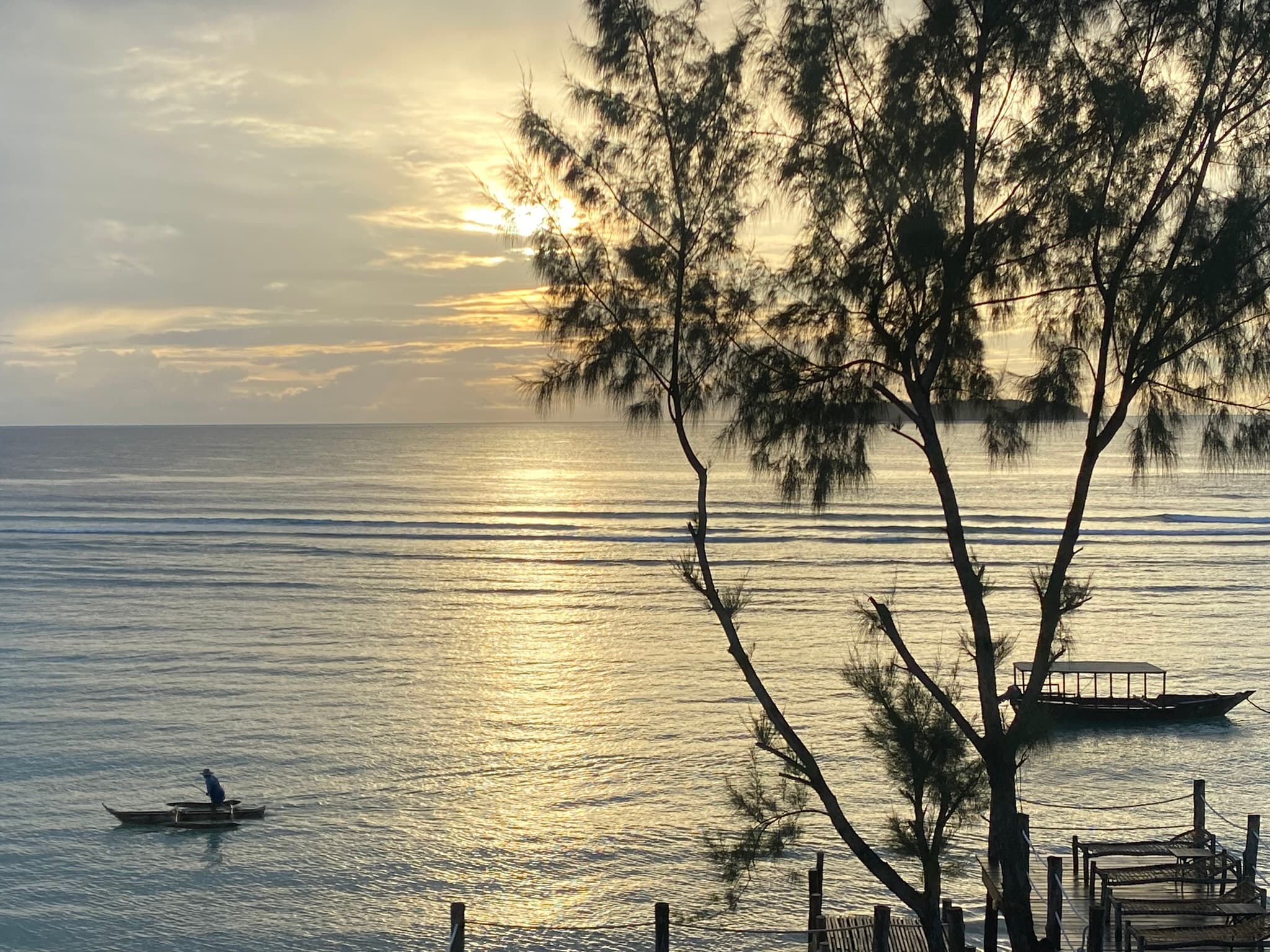
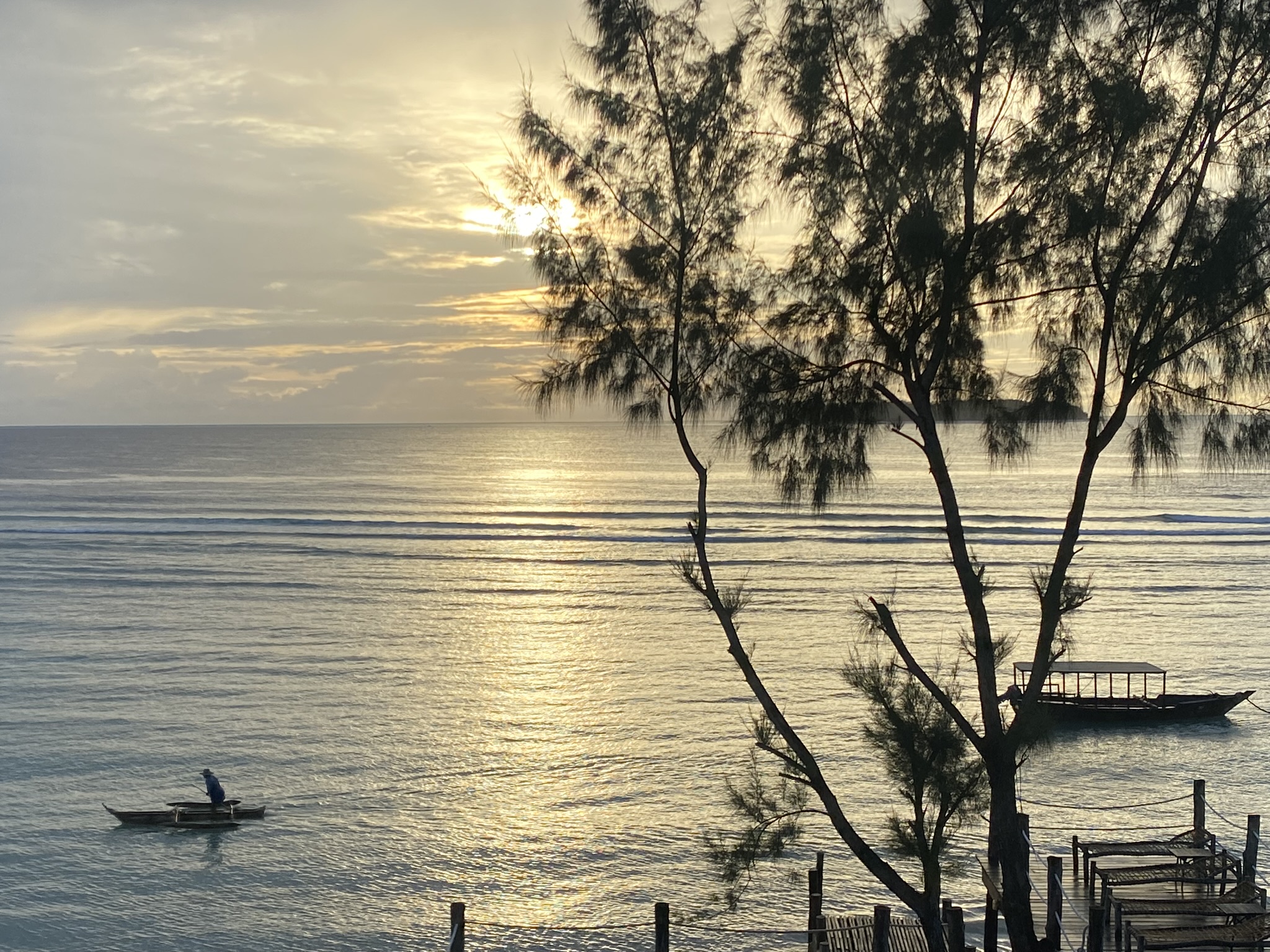
Sunrise over the Indian Ocean — Mnemba Atoll