The Maldives · March 2026
Below the Equator: Fuvahmulah, Huvadhoo and Addu
The deep south runs 500 kilometres below Malé across three distinct locations — Fuvahmulah's tiger shark walls, Huvadhoo's channel aggregations, and Addu's WWII wreck — each driven by the same Indian Ocean upwelling that keeps the water cold and the predators close.
Fuvahmulah
Fuvahmulah sits alone — a single island with no surrounding atoll structure, no lagoon, no sheltered inner reef. Open ocean presses directly against the wall on all sides. The island drops vertically from the reef flat to 30 metres and beyond, and the equatorial counter-current that moves west through this latitude year-round keeps the water cold, clear, and dense with pelagic life. It is the most exposed piece of reef in the southern Maldives and, by some measures, the most productive.
Fuvahmulah West
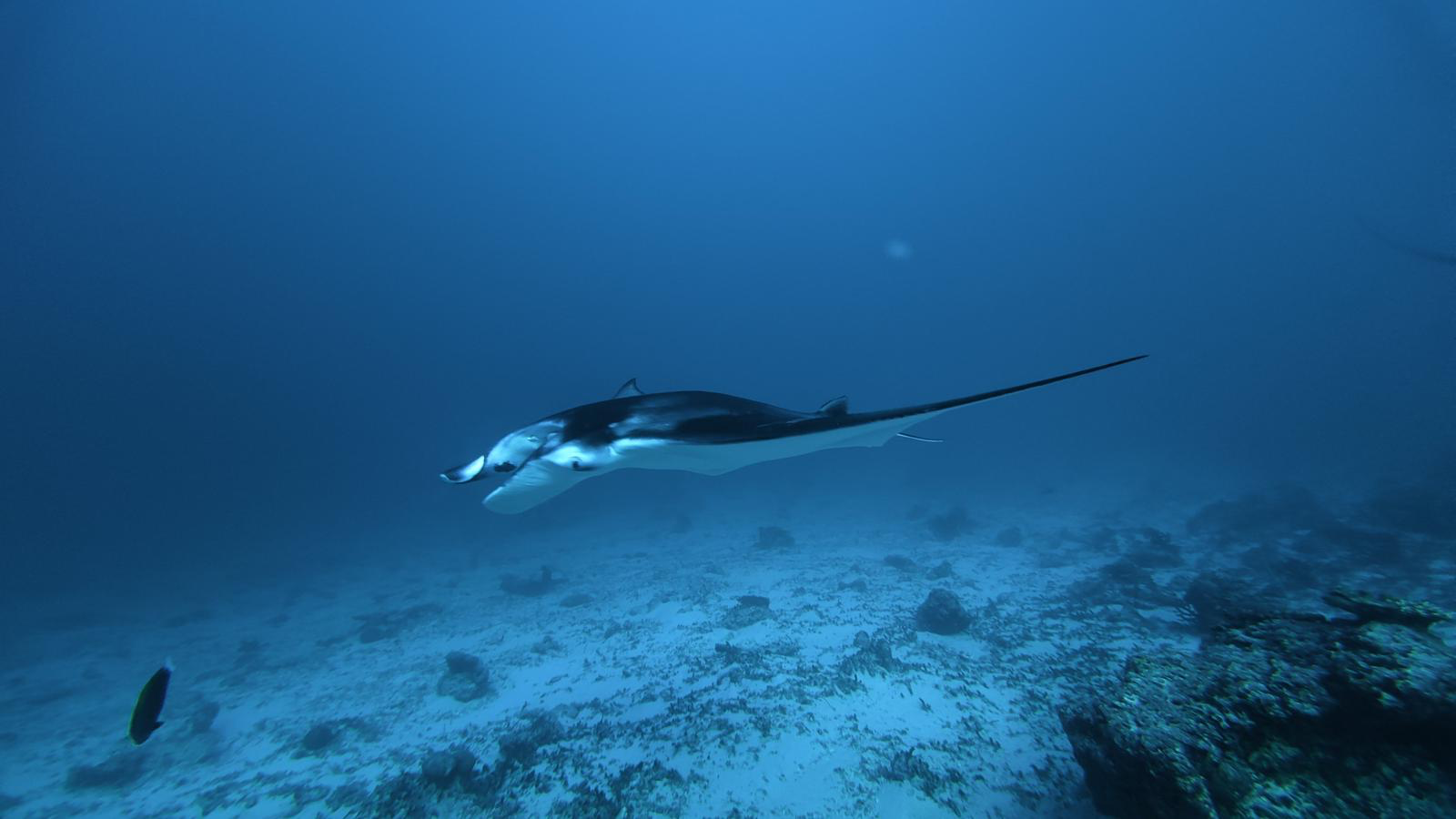
The western wall is the quieter face — less traffic, more manta. The reef drops from 5 metres to beyond 40 on a near-vertical face, and an oceanic manta cleaning station sits at 18 metres where the wall shelves briefly before dropping again. The mantas here are distinct from the tiger shark aggregation to the southeast: they arrive on the morning current, hold at the cleaning station while small wrasses work their skin and gills, and then drift west into open water.
The current runs along the wall from north to south during the flood tide. Entry upcurrent of the cleaning station, drift down to depth, and let the flow carry you past. Hammerheads appear in the blue on early morning dives when the thermocline is sharpest.
Tiger Wall
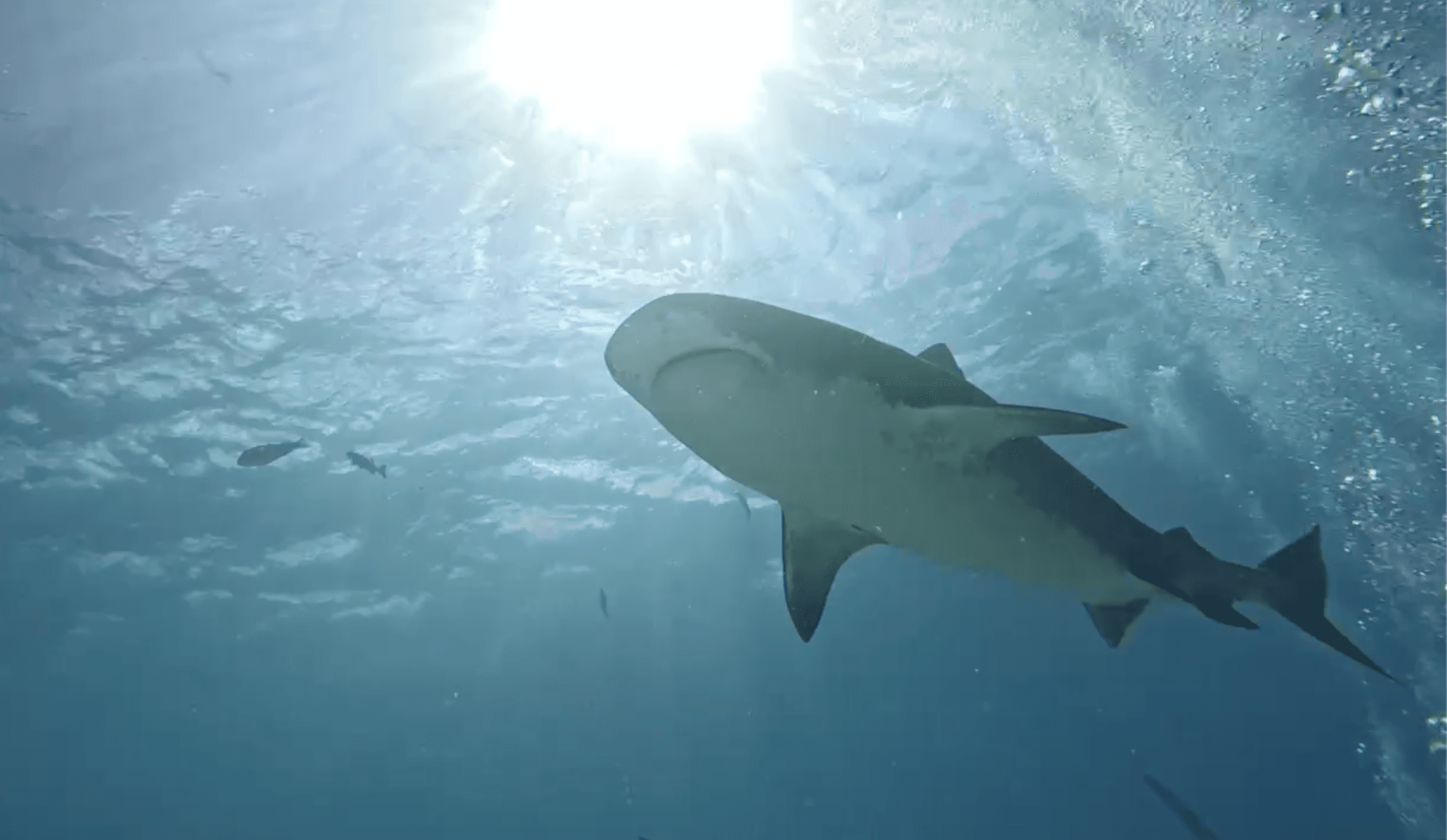
The southeast face is where the trip is built. A cleaning station at 25 metres draws tiger sharks in from open water — large females, 3–4 metres, patient and deliberate. They approach, hold position while wrasses work their skin, then continue their circuit along the base of the wall. The briefing is short because the protocol is simple: descend to 25 metres, kneel on the sand, reduce your profile, and wait.
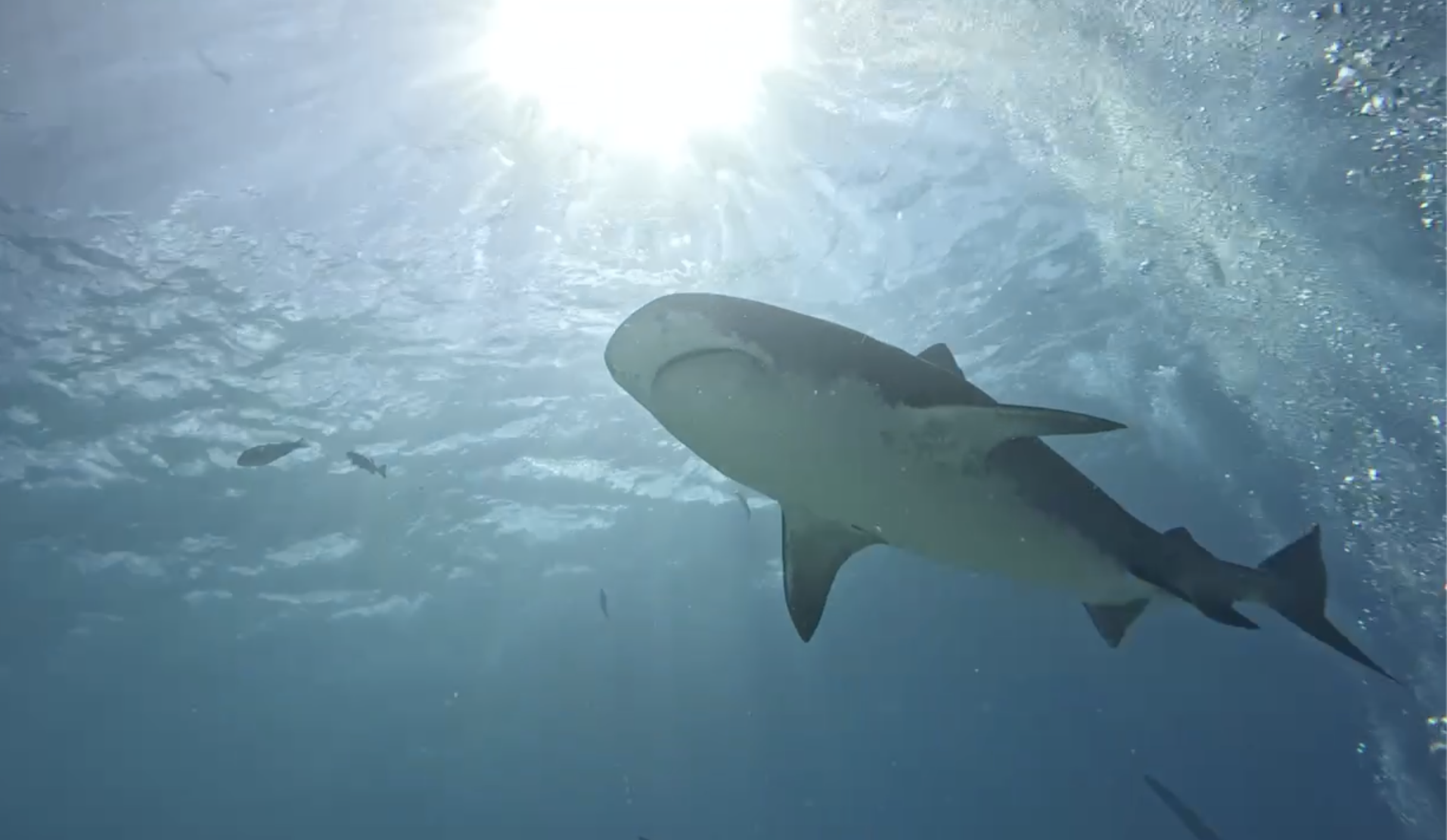
The sharks are not fast here. They move with the unhurried certainty of animals that are not prey. They pass within two metres on a typical dive, closer on a quiet one. Movement brings them in; stillness keeps the interaction calm. In two dives we logged four individual tigers and counted two distinct cleaning station circuits.
Tiger Zoo
The northern point of the island is where the local guides use the word "zoo" with a dark accuracy. The sharks here are more active — tighter circuits, more animals simultaneously, the kind of overlap that suggests genuine competition for cleaning station access. On the second dive three tigers were in frame at the same time, and an oceanic manta made a brief pass through the blue beyond them before turning south.
The current at the north point runs harder than at Tiger Wall, and buoyancy control on the sand at 25 metres requires attention. The reward is correspondingly higher.
Huvadhoo Atoll
Huvadhoo is one of the largest atolls in the Maldives — 70 kilometres north to south — and one of the least visited. The handful of channels that pierce the northern and eastern rim run with the Indian Ocean upwelling current in exactly the same way as the channels further north, but without the resort infrastructure to concentrate divers. The sites are intact.
Gemanafushi Blue
The outer face of the reef off Gemanafushi drops into open water, and the dive is less about the wall than about what moves through the blue beyond it. Silvertip sharks patrol the outer margin at 20–30 metres. On a strong incoming tide the current concentrates against the corner and the fish life — fusiliers, trevally, a running school of barracuda — stacks against the reef edge while the larger predators work the periphery.
Nilandhoo Kandu
One of the principal channels on the northern rim and the most consistent for grey reef shark aggregations. On the incoming tide the current presses hard through the channel mouth, and the sharks — groups of fifteen and twenty — hold station on the corner wall in a configuration that mirrors the better-known sites further north. The depth is 18–25 metres on the corner. Positioning before the current builds is everything; the divemasters run this site in detail.
Koodoo Kandu
The eastern entrance to the atoll. The current through Koodoo Kandu is stronger than at Nilandhoo, and the visibility that comes with it is exceptional — 40 metres on a clean day. Grey reef sharks and the occasional hammerhead in the blue beyond the channel mouth. The dive runs along the southern wall of the passage, tucking behind coral heads when the current builds past a comfortable drift.
Vilingili Kandu
A narrow channel where the tidal compression effect is most pronounced — the flow accelerates as it enters the channel mouth and creates an upwelling at the outer edge that concentrates nutrients and the fish that follow them. Grey reef sharks and whitetips hold the corners. A shorter dive than the wider channels, but more intense.
Koodoo Shark Point
A coral pinnacle extending from the reef at Koodoo, exposed on the upcurrent side, that draws grey reef sharks on every tidal cycle with enough predictability that it functions as the fallback site when the channel conditions are not right. The sharks hold close to the structure, bodies angled into the flow, in the characteristic resting posture of a species that needs to keep moving to breathe.
Kondey Coral Garden
The sheltered side of the atoll, where the coral coverage is what the channel sites are not: dense, varied, and largely undamaged. Brain corals and table corals at 8–18 metres, gorgonians beginning at 20, a resident hawksbill turtle that uses the garden as a resting site. The pace is different from the channel dives — slower, closer, a reminder that the deep south is not only about pelagics.
Maareha Kandu
A mid-atoll passage with complex current patterns — counter-flows and eddies that concentrate fish at specific corners in ways that require local knowledge to read correctly. The dive runs along the southern wall where the eddies create pockets of reduced flow. On the best dives the convergence of currents pushes a wall of food and fish against the reef corner and everything that eats comes to it.
Mafzu Thila
A submerged pinnacle in the atoll interior, its top at 12 metres and its base at 32. The upper sections carry dense soft coral coverage, and the deeper flanks hold gorgonian sea fans beginning at 22 metres. Whitetip reef sharks rest on the sand at the base. A calmer counterpoint to the channel dives — the same atoll, a different energy entirely.
Fuvahmulah
The return to Fuvahmulah gives the sites that were skipped in the rush to reach Tiger Wall. The plateau and the northern point are different dives from the southeastern aggregation sites — shallower, more varied, and useful for building a complete picture of what the island actually holds.
Fuvahmulah Plateau
The shallow reef platform at 6–15 metres on the leeward side of the island. Dense juvenile fish populations — butterflyfish, angelfish, parrotfish in juvenile colouration — and the kind of coral garden that the deep sites ride on top of. A decompression stop at 6 metres in a visibility of 35 metres and a current that barely registers is not a punishment.
Fuvahmulah North
The exposed northern point where the open ocean swell arrives unimpeded. Silvertip sharks on the deeper corners at 25–30 metres, barracuda schools in the mid-water, occasional hammerheads visible in the blue during morning dives when the current is building from the northeast. The topography is more complex than the southeast face — ridges and cuts in the reef wall that create shelter and ambush points in equal measure.
Addu Atoll
The southernmost atoll in the Maldives and the largest. The outer wall drops to extreme depth, the lagoon is one of the biggest in the country, and the RAF left a runway and a wreck.
Vilingili Reef
The outer wall of Vilingili island on the western rim of the atoll begins at 5 metres and drops to beyond 40. A resident Napoleon wrasse of around a metre and a half appears on almost every dive, grey reef sharks on the deeper corners, and the occasional hammerhead visible in the blue during early morning dives before the current eases. The reef coverage is dense by Maldivian standards — a wall that has not been dived heavily and shows it.
Maakandu Manta
Maa Kandu — the big channel — is the main passage on the eastern side of the atoll. During the incoming tide the current runs hard from the open ocean, visibility stacks to forty metres, and the corner wall becomes a stationary point for everything the current carries past it. Grey reef sharks hold station in groups of fifteen and twenty, bodies angled into the flow. Mantas appear at the channel mouth on the strongest incoming tides, their wingspan backlit against the pale column of light from the surface.
On the third dive a hammerhead came through at 18 metres — a large female, unhurried, indifferent to the four divers anchored to the wall below her. She turned west at the channel mouth and was gone in thirty seconds.
British Loyalty
The British Loyalty is an oil tanker torpedoed by a Japanese submarine in May 1944. She settled at 30 metres, listing slightly to port, her hull intact from bow to stern. Eighty years of coral growth have turned the upper decks into a reef: table corals across the bridge structure, wire coral on the railings, a resident Napoleon wrasse of implausible size that regards the wreck as personal property.
The standard entry is a descent to the propeller — four metres in diameter, still clean of heavy encrustation — and then a slow cruise along the starboard side to the bow, ascending gradually along the hull. At 20 metres, where the light still reaches the upper deck, the silhouette of the superstructure against the surface takes time to frame properly.
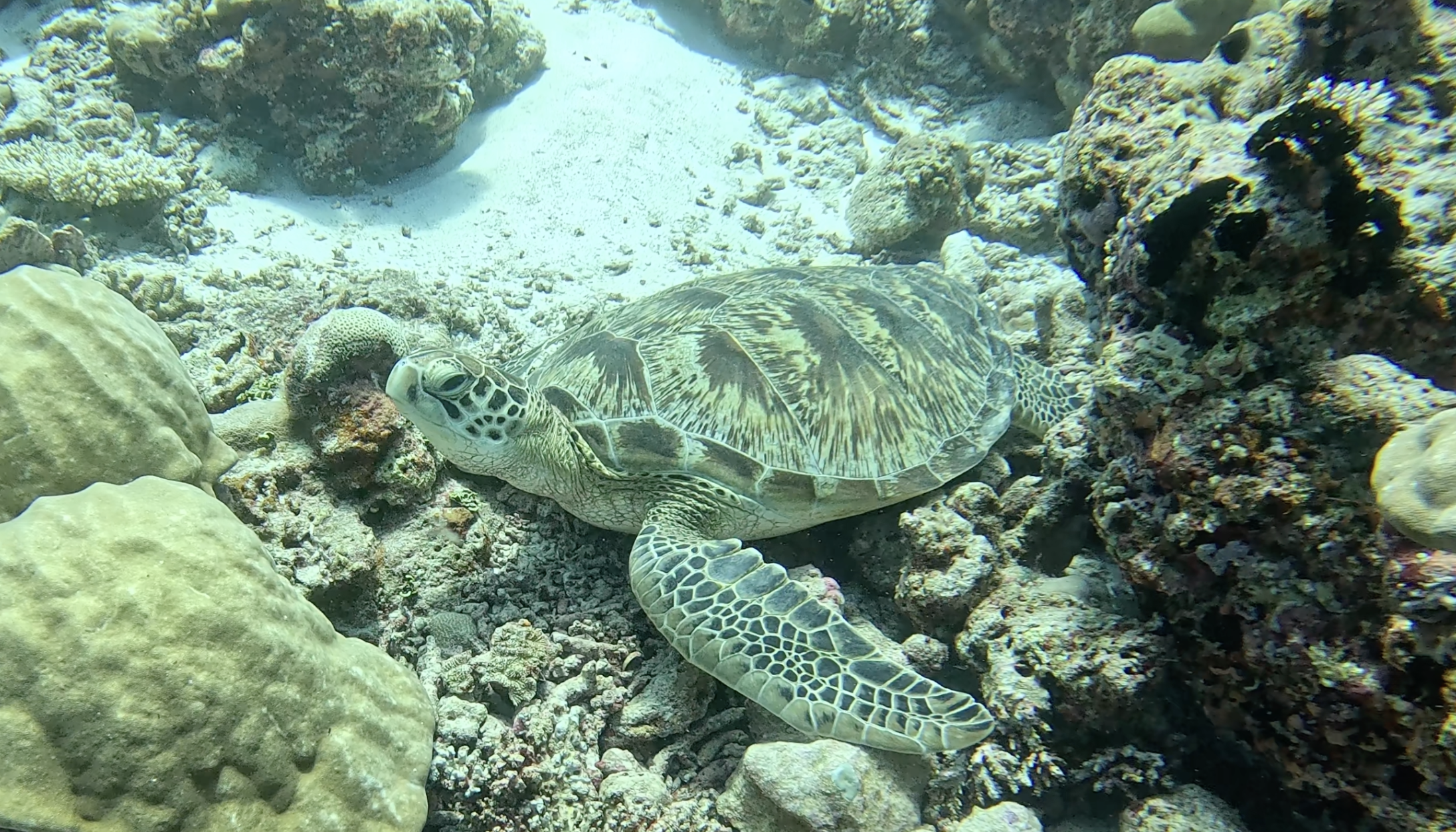
Grey reef sharks patrol the hull perimeter throughout the dive. On the second visit we counted eleven. A hawksbill turtle had established herself in a section of burst cargo hold midship and showed no interest in moving.
The Maldives in Pictures
Tiger shark silhouetted against the sunlit surface — looking up from 25 metres at the Fuvahmulah cleaning station
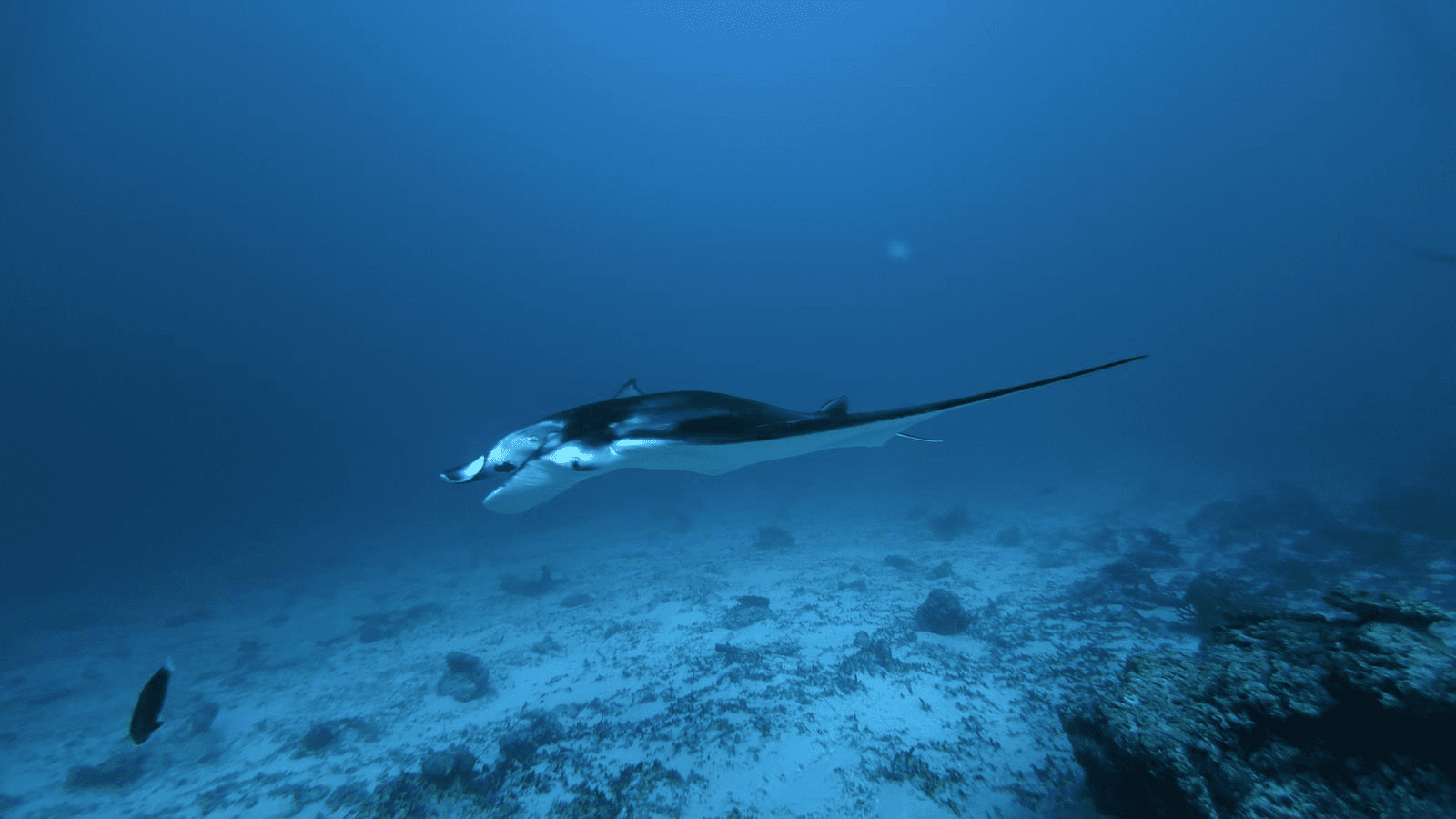
Oceanic manta gliding low over the sandy seafloor at Fuvahmulah — approaching the cleaning station at 25 metres
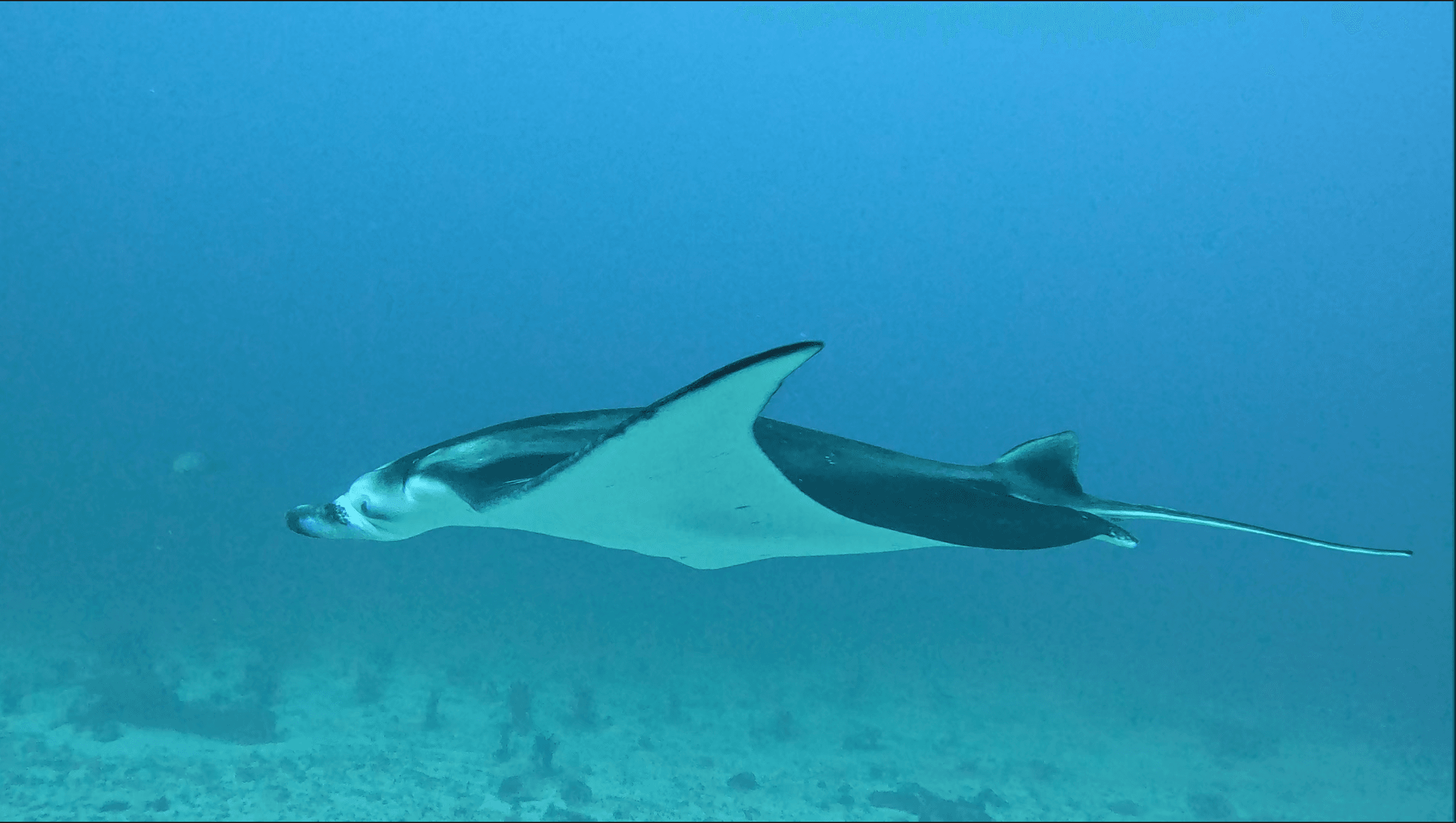
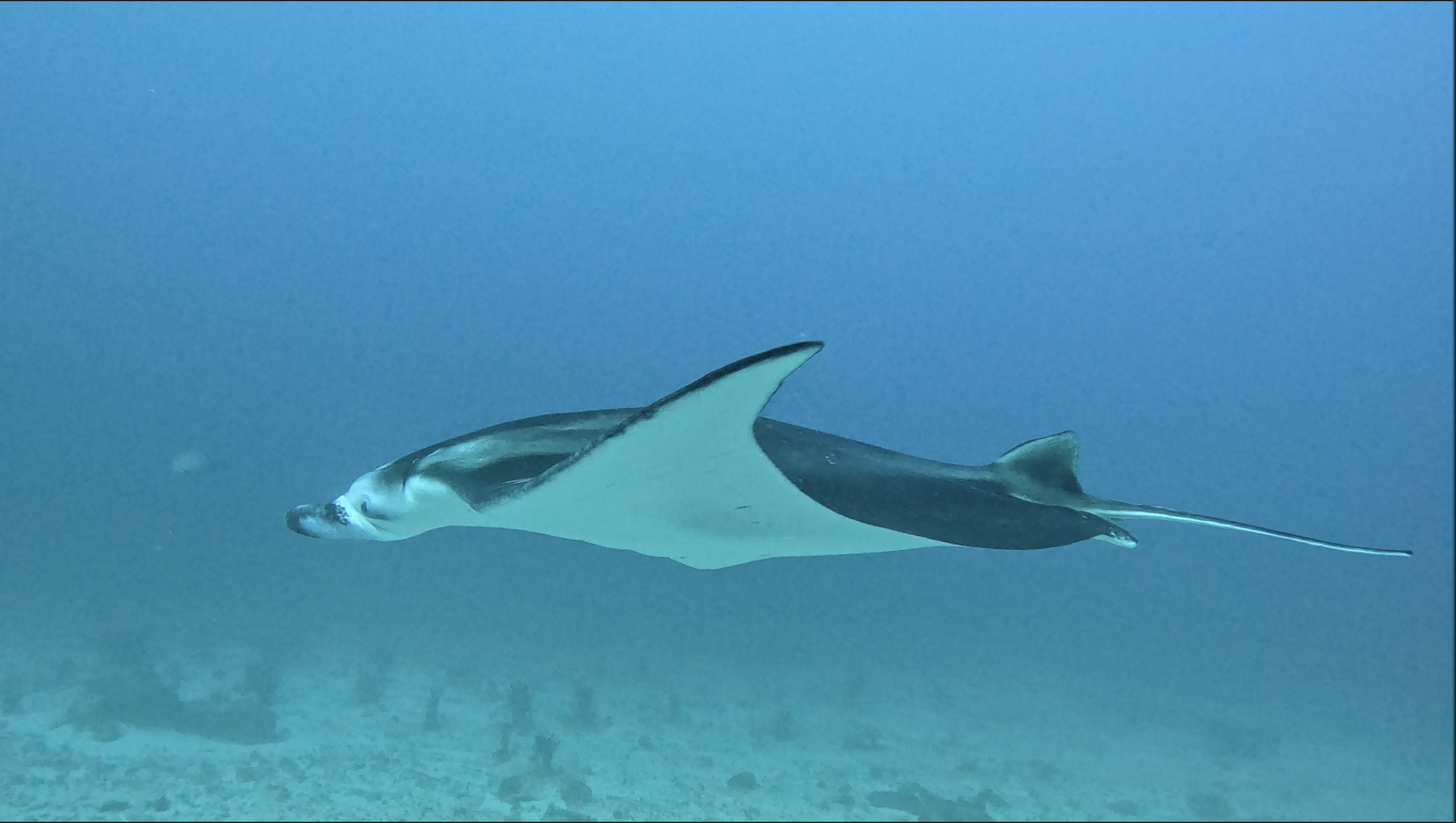
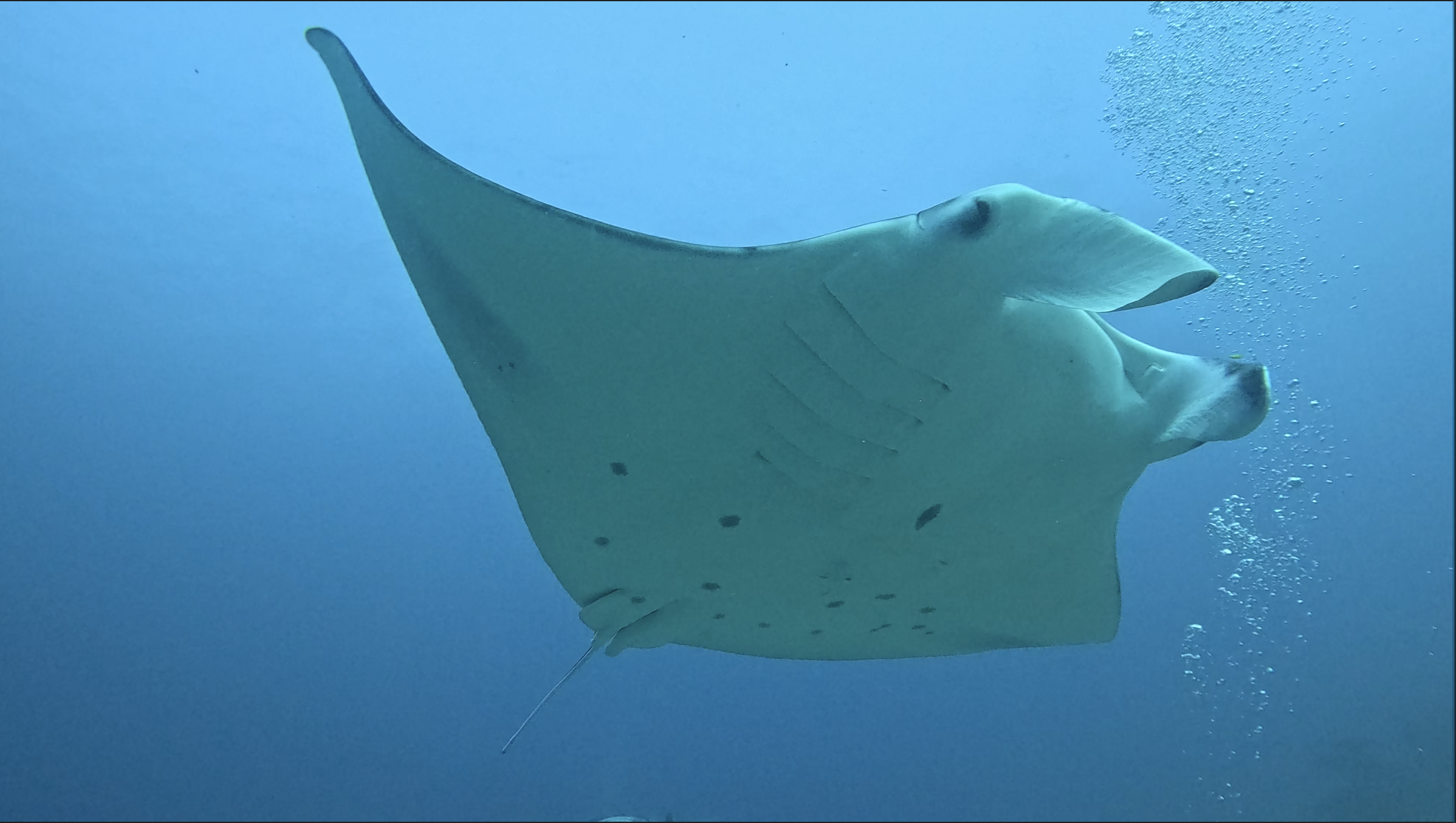
Manta passing in close review — ventral markings visible from below, the wingspan nearly filling the frame
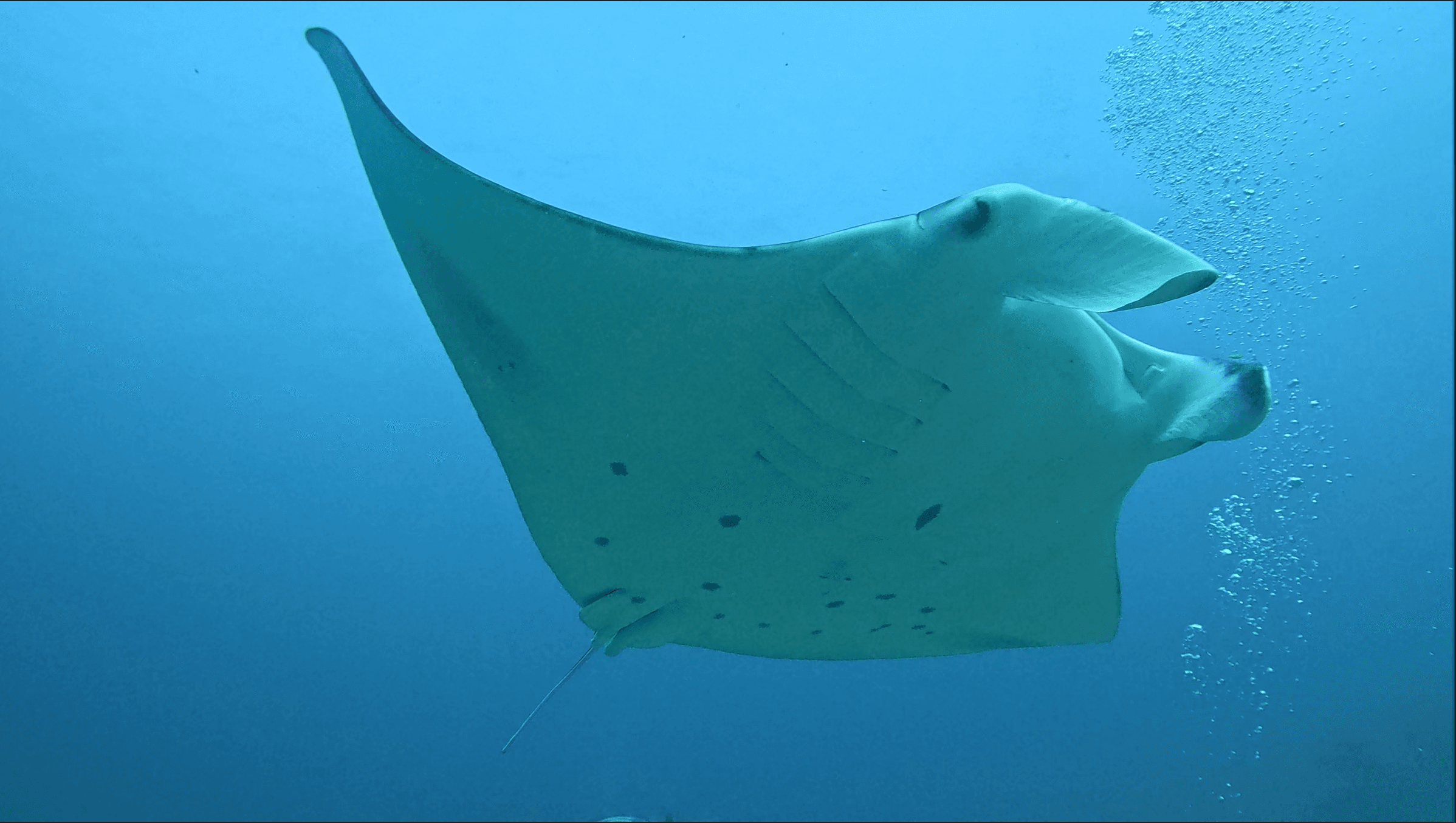
Manta on the overhead flyover — white ventral surface catching the light column as it banks toward the surface
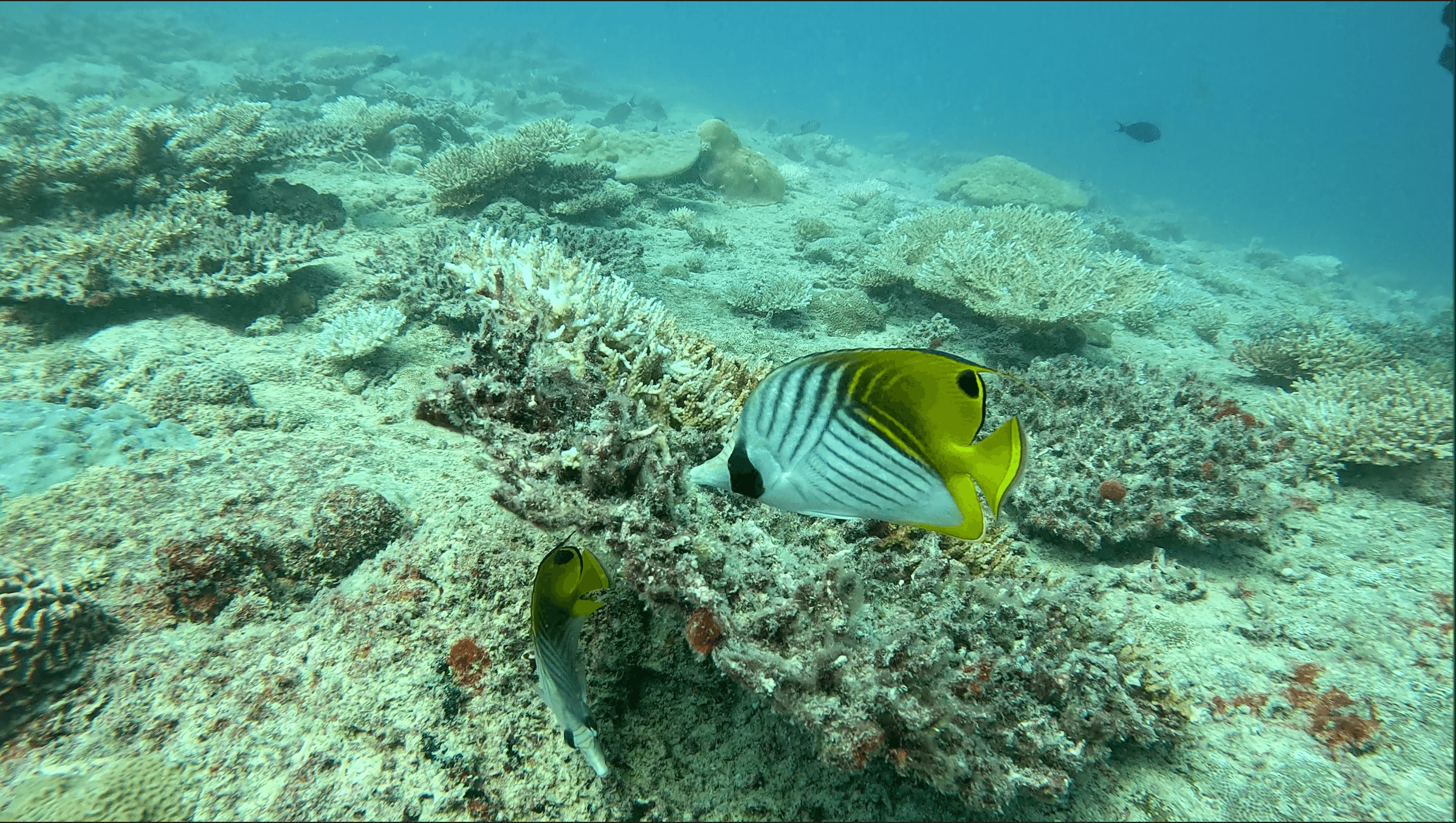
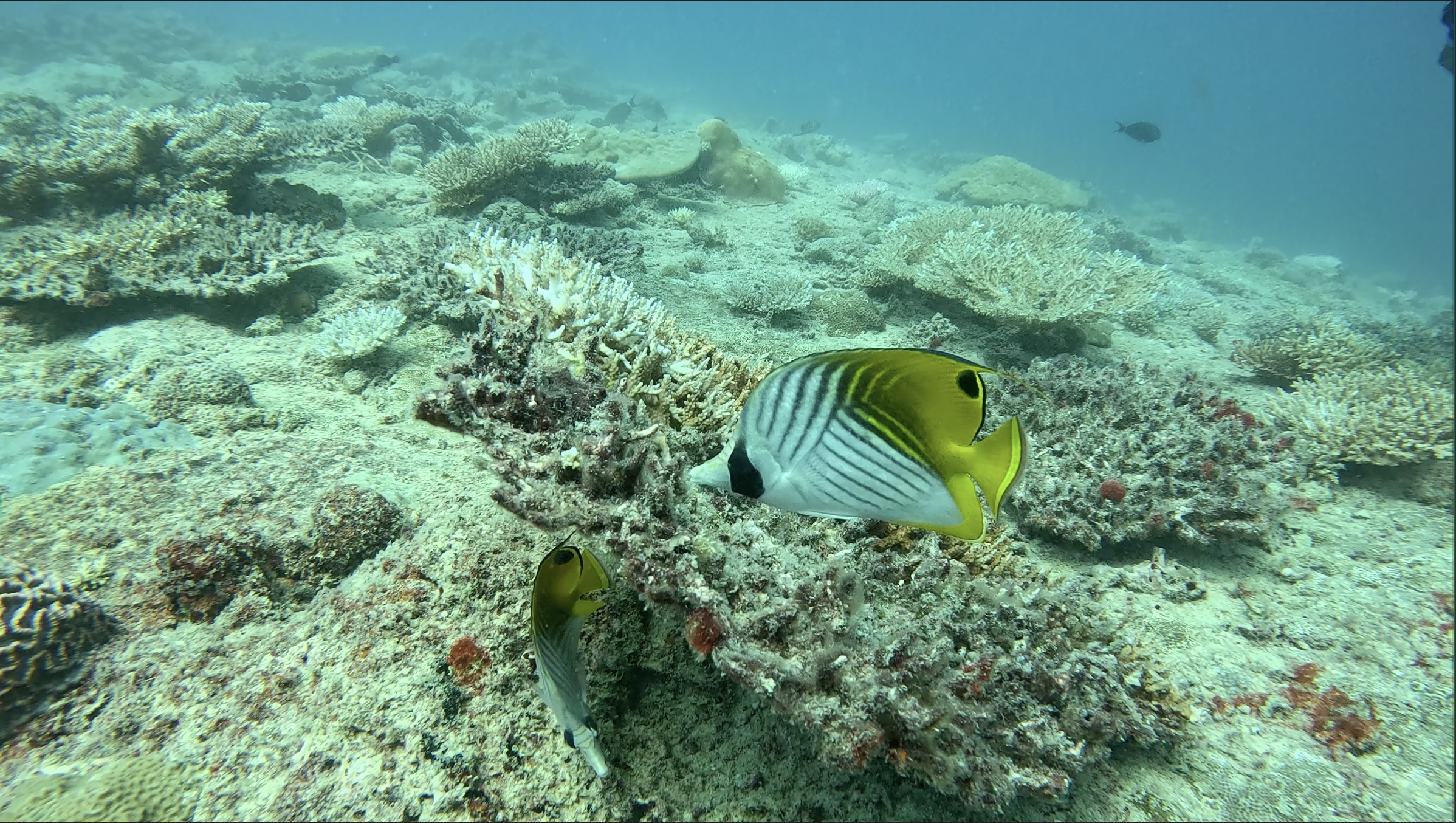
Threadfin butterflyfish picking over the coral growth on the British Loyalty's upper deck — eighty years of reef succession over steel
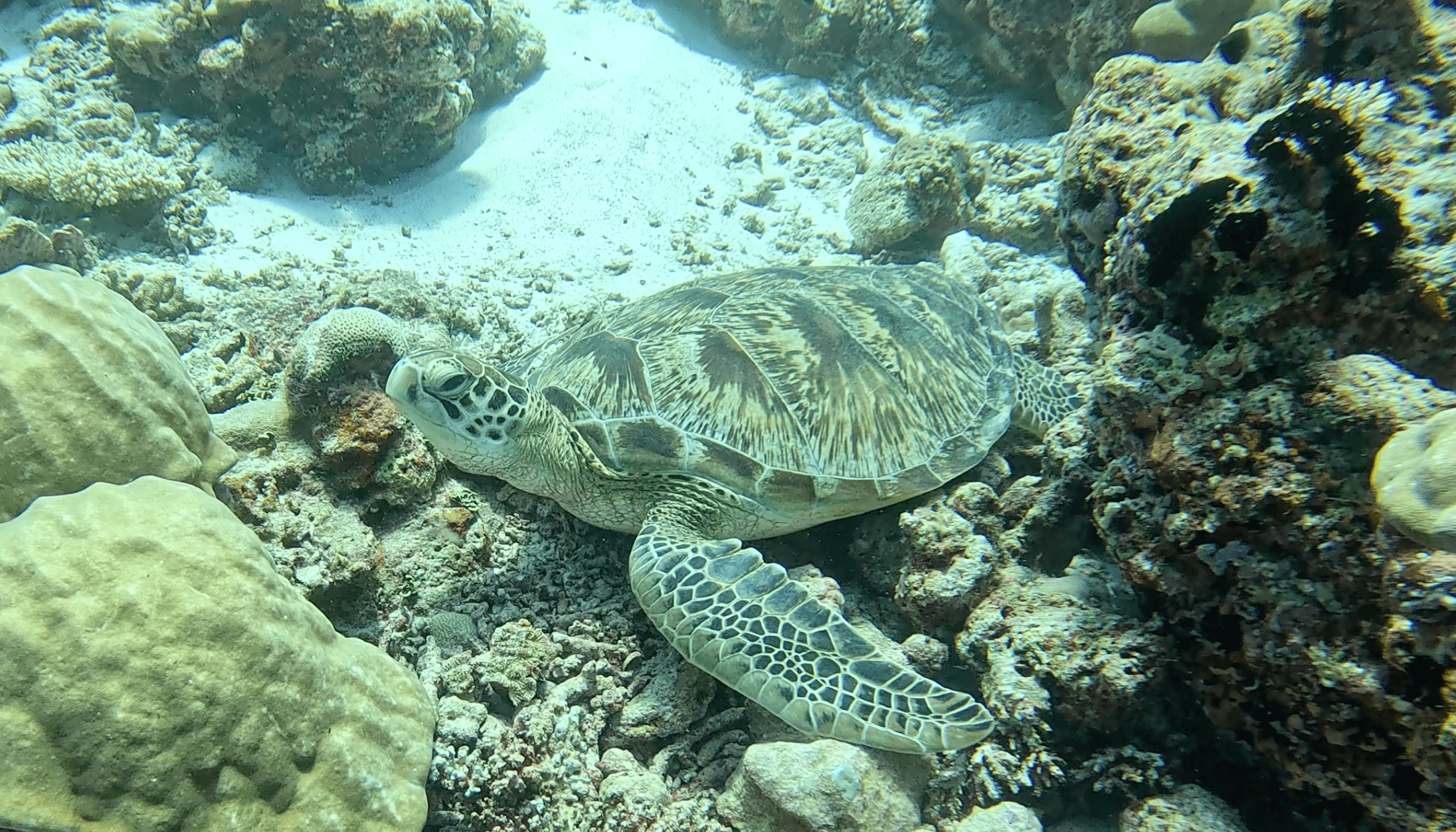
Green turtle resting among the coral rubble in the British Loyalty's burst cargo hold — a permanent resident of the wreck