The Maldives · March 2026
Thila Country: South Ari Atoll from Omadhoo
Eight dives across South Ari Atoll's thila systems from a base on Omadhoo — Fish Head's grey reef shark aggregations, Mahaana Thila's split pinnacle, Banana Reef's crescent wall, and the house reef at night.
Omadhoo
Omadhoo is an inhabited local island at the southern end of South Ari Atoll — not a resort island, not a liveaboard hub, a working Maldivian community of a few hundred people with a small dive centre operating from a concrete jetty on the lagoon side. A speedboat transfer from Malé takes around two hours across open water before the atoll comes into view.
The eastern side of South Ari Atoll faces the Ari Channel — a deep-water passage between the atoll and Felidhu Atoll. During the northeast monsoon the current sets westward through the channel, carrying cold water up against the atoll wall and creating the upwelling that keeps the reef productive. The thilas along the channel edge are current dives: you enter upcurrent, descend to depth, and let the water move you through the pinnacle circuit while you watch the fish work the flow.
Fish Head (Mushimasmingili Thila)
Fish Head is a protected marine reserve and one of the most consistently cited shark dives in the Indian Ocean. The pinnacle rises from 30 metres to a top at 16, and on the incoming tide the corner walls hold grey reef sharks in numbers that are difficult to process accurately — groups of forty and fifty simultaneously, holding station with their bodies angled into the flow, their positions so stable that the sensation is of drifting through a stationary aggregation rather than watching scattered individuals.
The sharks are entirely habituated to divers and do not adjust their circuits to avoid them. This is not incidental — it is the product of decades of protection and the absence of extraction. The behaviour you see is baseline: predators occupying their ecological position without displacement. On the best dives you are simply inside the aggregation, watching the water darken with fins.
Banana Reef
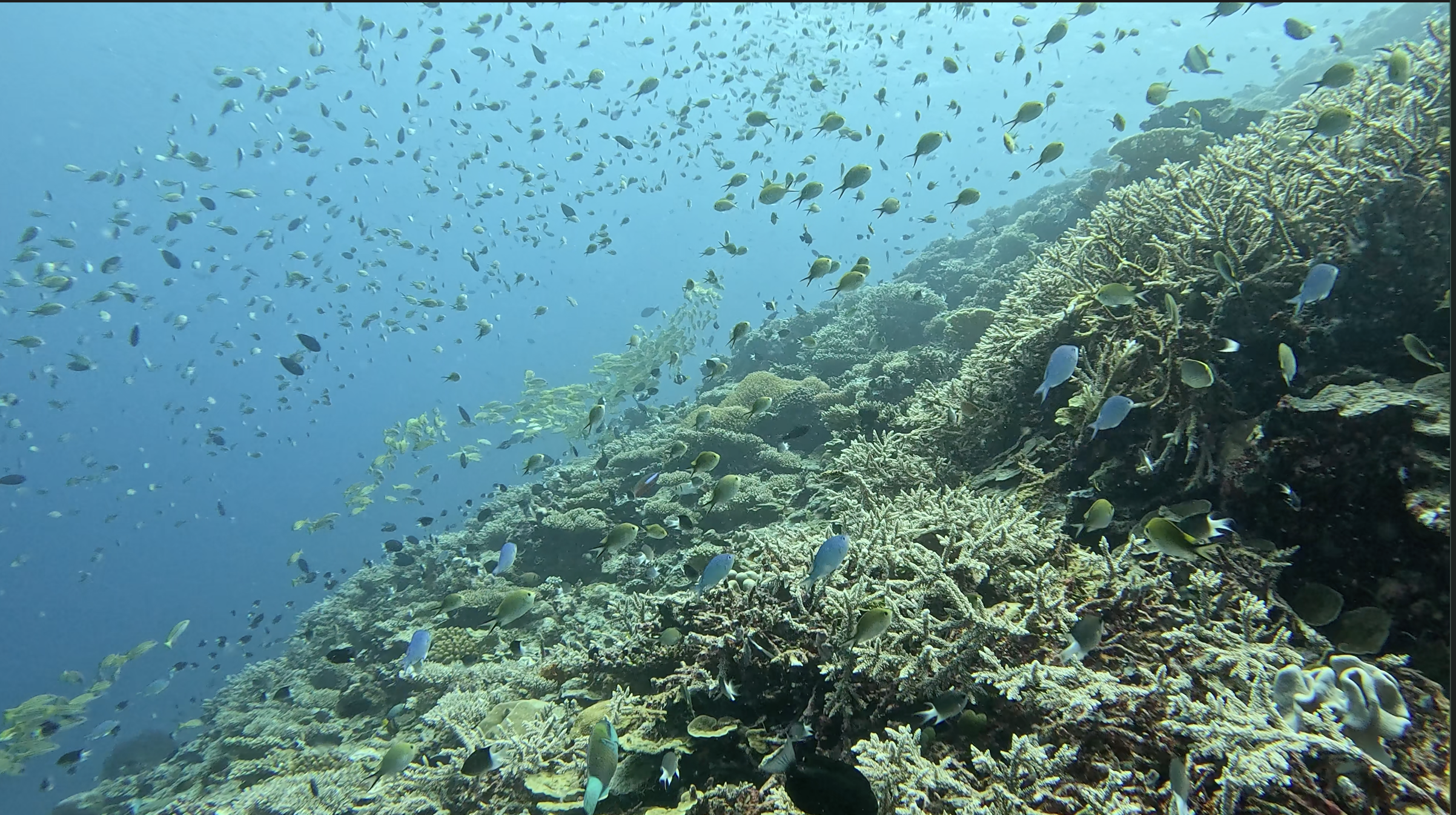
A crescent-shaped reef wall on the outer atoll, its distinctive curve running north to south against the open ocean current. The shape concentrates fish life differently at each point of the arc: the windward tip holds the largest Napoleon wrasse, using the corner current as a hunting position; the inner concavity shelters juvenile reef fish in the calmer water; the leeward end drops on a near-vertical wall to beyond sport diving depth, with gorgonian sea fans beginning at 20 metres and table corals dense on the upper sections at 8–15 metres.
More varied in character than the pinnacle dives — the reef structure itself is the feature rather than a single aggregation, and moving along the curve reveals distinct micro-habitats within a short dive.
Thila Beyru
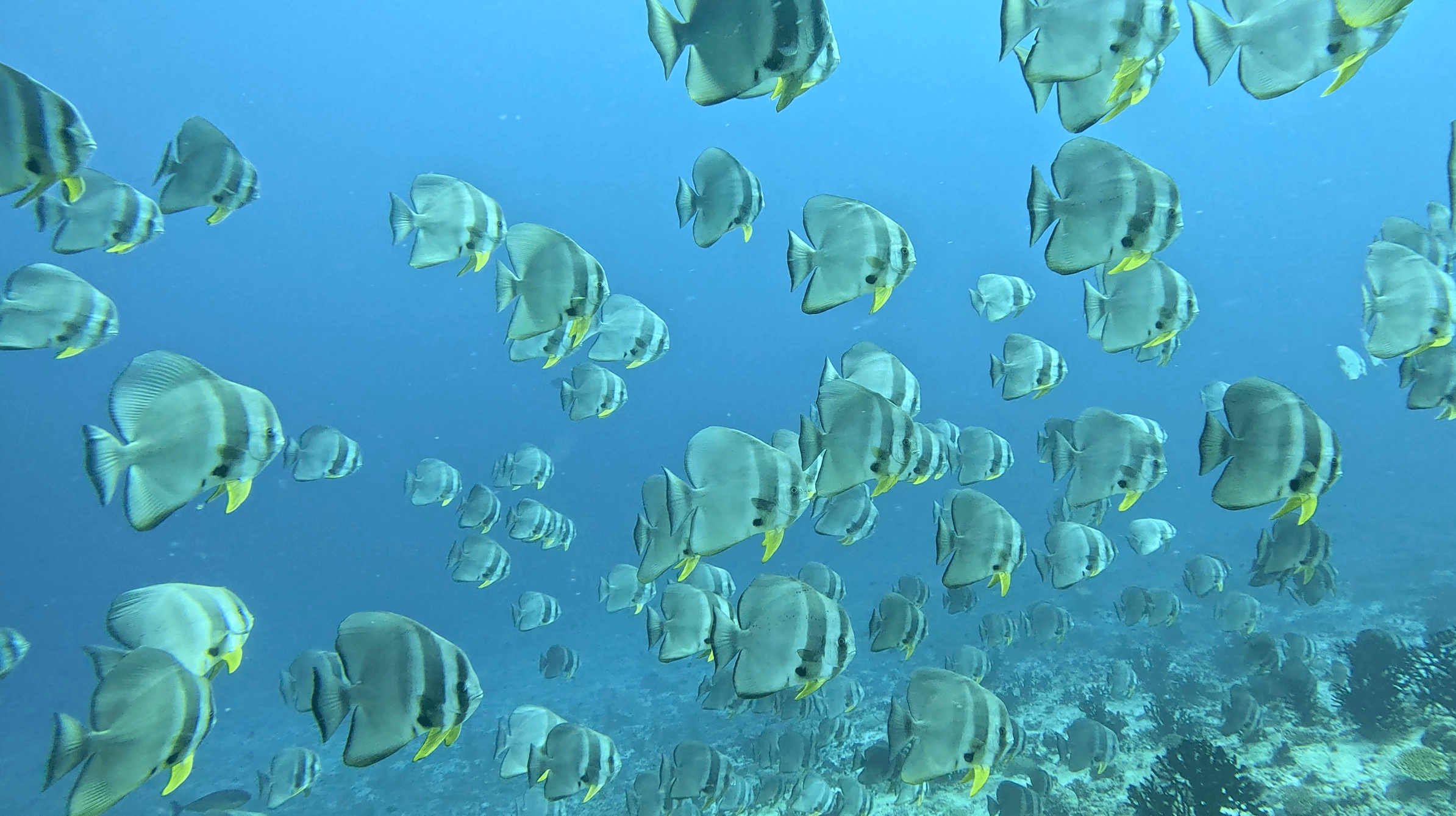
The thila on the outer reef edge closest to Omadhoo, its top at 10 metres and base at 30. The shallow summit carries dense hard coral coverage — table corals and branching staghorn — that transitions to soft corals on the deeper flanks where the current diminishes. Groupers occupy the overhangs at depth; a school of batfish holds the northeast corner in numbers that appear to be independent of current state, using the same position across multiple dives.
The reef on this thila is in noticeably good condition for a site close to an inhabited island — dense coverage, minimal bleaching visible, the fish communities intact. Protected status is the probable cause.
Omadhoo House Reef
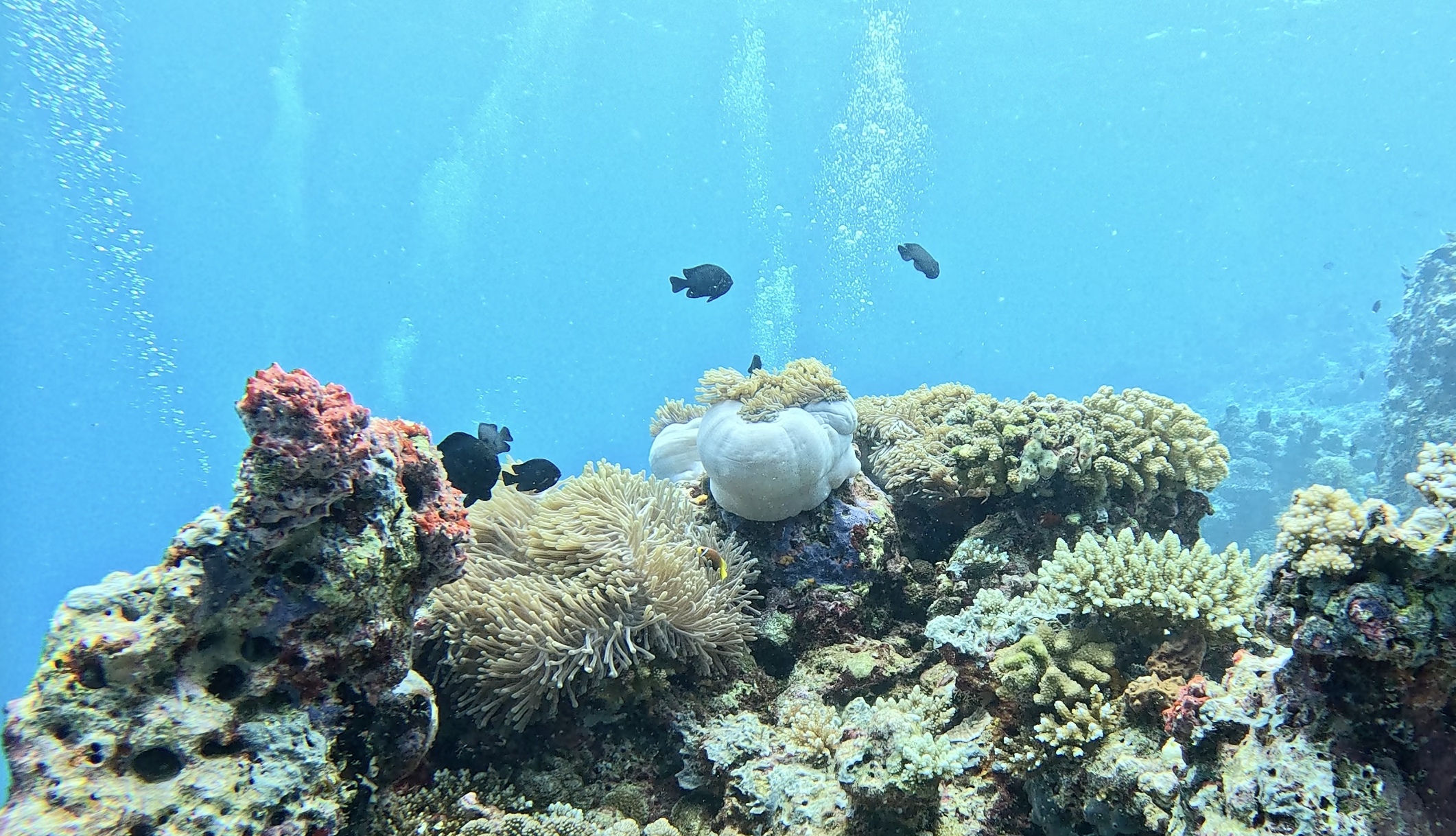
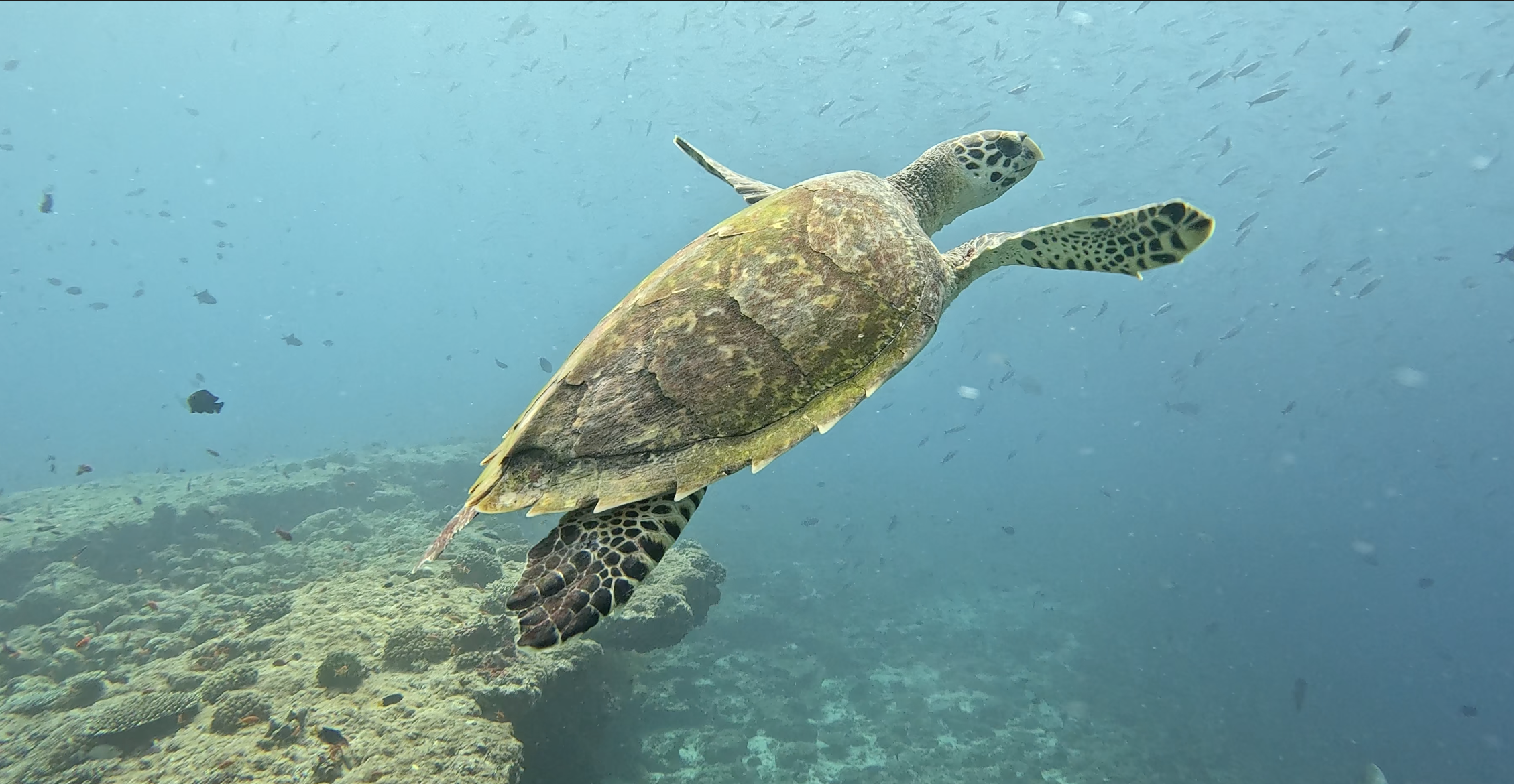
The lagoon reef directly off the island is shallow — 5 to 12 metres — and sheltered from the channel current on the seaward side. Two resident green turtles use a section near the jetty as a resting site reliably enough that local children have named them. The coral gardens hold juvenile fish in large numbers: butterflyfish, angelfish, and parrotfish in their banded juvenile colouration, occupying the branching coral in clusters before dispersal to adult territory.
At night the reef changes character entirely. Crustaceans emerge from every crevice. Sleeping fish are accessible at close range without reaction. Octopus move across the sand flat between coral heads. A moray was out in open water above the coral at around 8 metres — hunting position, not shelter. The anemone gardens on the lagoon side hold their colour under torchlight.
The Channel Thilas
Two adjacent submerged pinnacles on the channel approach north of Omadhoo, dived in sequence as a paired system. The southern structure sits slightly deeper and takes the full force of the incoming current on its upcurrent face — grey reef sharks hold the deeper corners at 25–30 metres, and fusilier schools bank against the flow in dense, compressed formations on the exposed side. The northern pinnacle has a shallower top, which extends usable depth time in the 8–12 metre range where the fish density on the upper reef is highest. Batfish school on the northeast corner across both structures regardless of current direction, using the reef as a reference point rather than for shelter from the flow.
Mahaana Thila (Broken Rock)
A split pinnacle in the northern section of the atoll — two separate structures with their tops at 10 metres and bases at 30, divided by a narrow channel that the current runs through with enough compression to make entry timing critical. The gap between the two halves is where the dive concentrates.
The physics of the split create conditions that concentrate both prey and predator. Fusiliers and snapper compress into the gap on the upcurrent face as the flow builds, stacking into a density that becomes difficult to see through on the strongest tidal cycles. Grey reef sharks hold the corners on both sides of the split, using the eddy zones behind each structure to maintain position with minimal energy expenditure. The Napoleon wrasse on the upper reef are unusually large — individuals at the top end of the species' size range, which in a protected reserve tends to mean animals that have been undisturbed long enough to reach full growth.
Kolhu Thila
The most compact of the Omadhoo area thilas — top at 15 metres, base at 35, smaller in footprint than Mahaana and visited less frequently. The smaller structure forces closer proximity between diver and reef: there is less space to drift past without engaging with what is on the wall, and the coral coverage on the flanks below 22 metres is dense enough to reward slower movement. Grey reef sharks and whitetips patrol the upper reef on the incoming tide; whitetips rest in pairs on the sand at the base.
The soft coral growth on the deeper flanks is among the best-preserved of the Ari Atoll sites visited on this circuit — a function of depth and the reduced foot traffic that comes with being the furthest site from the main boat traffic routes.
South Ari Atoll is not the most dramatic diving in the Maldives — the deep south's pelagic aggregations produce more intense encounters. What the atoll offers instead is ecological legibility: each thila expressing a distinct relationship between reef structure, current, and the fish communities that have organised themselves around both. After enough dives here the pattern becomes readable — the sharks always on the same corners, the fusiliers always on the upcurrent face, the batfish always on the northeast. Predictability at this scale is not monotony. It is evidence of an intact system.
The Maldives in Pictures
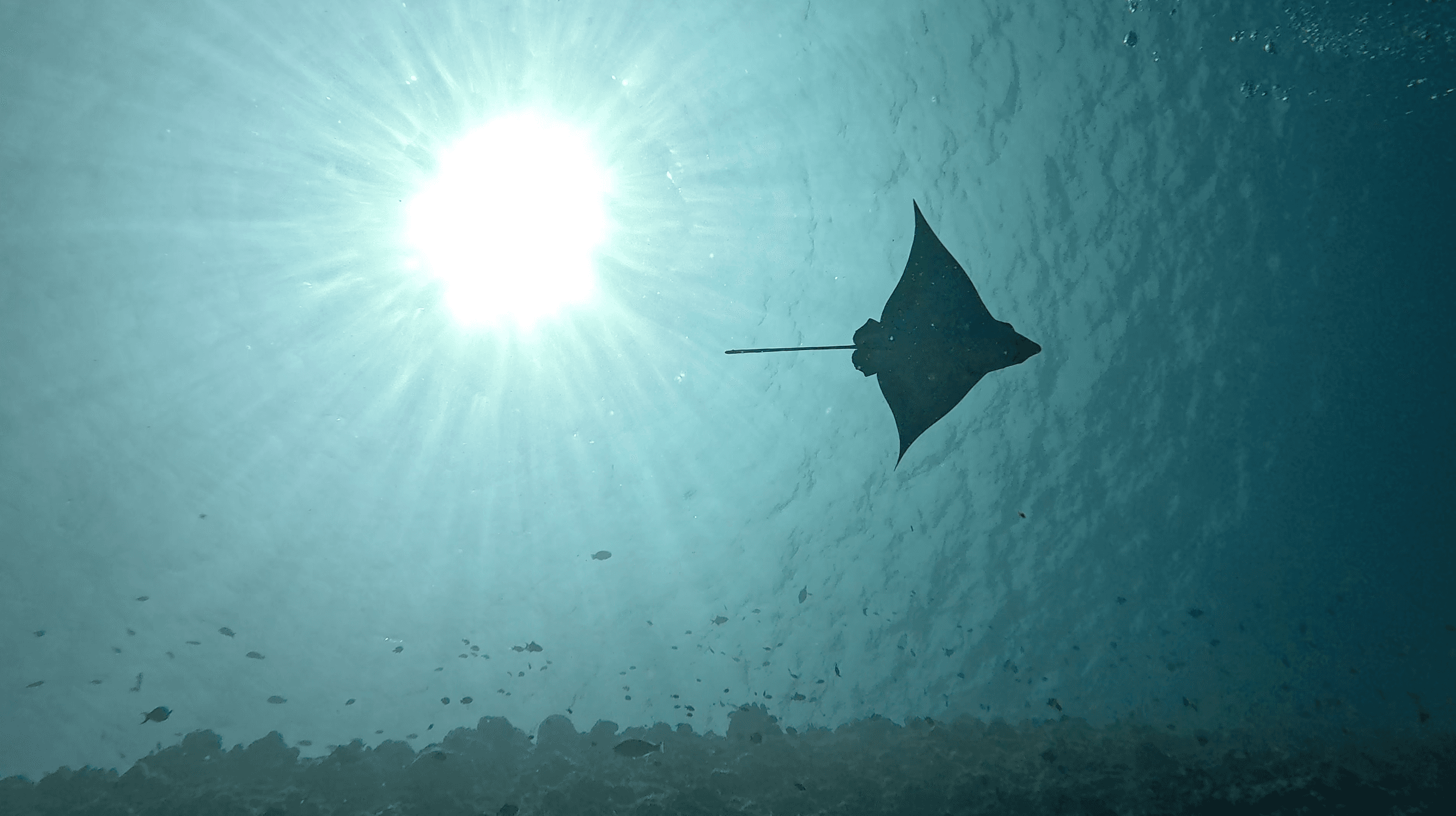
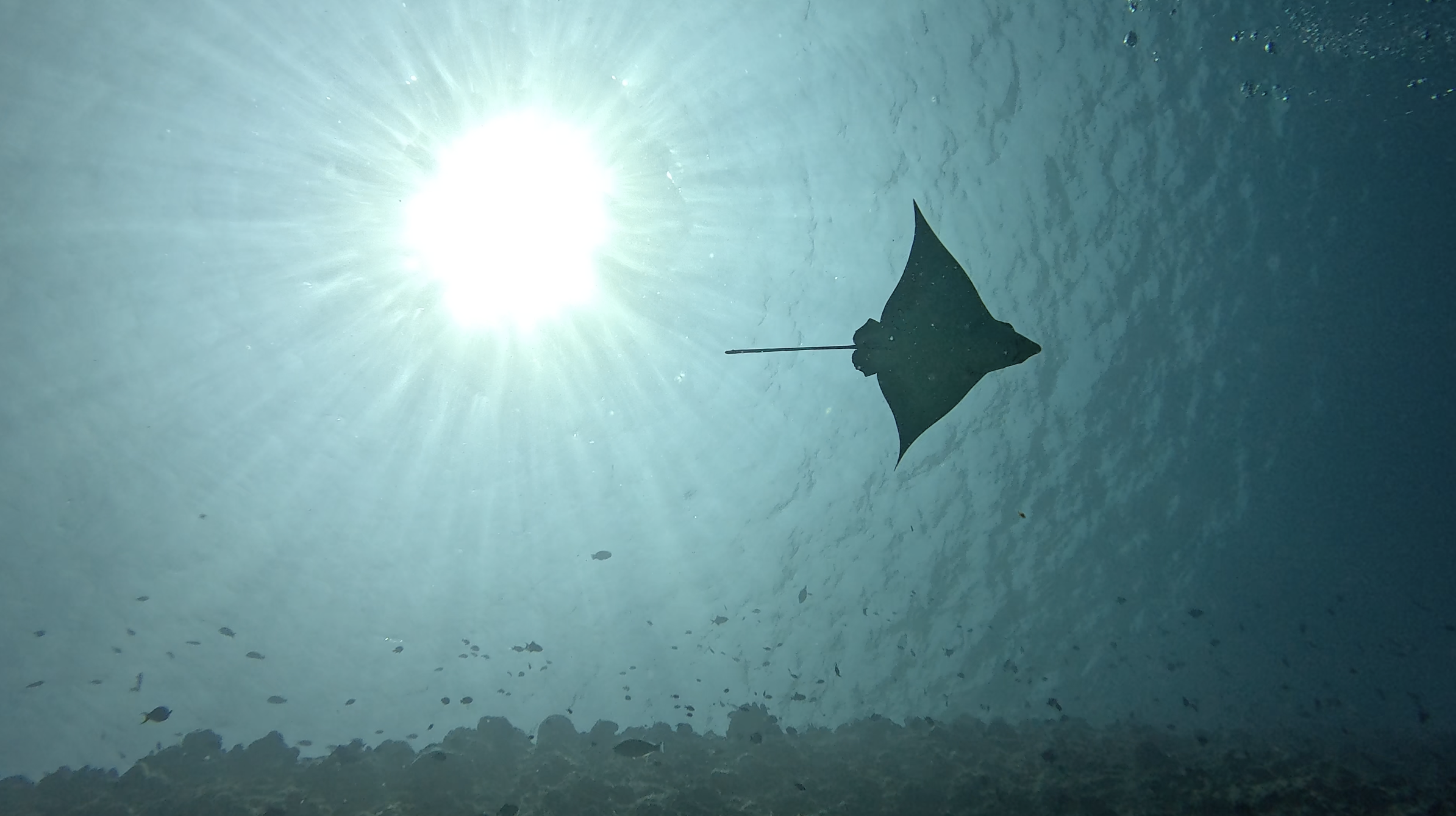
Reef manta silhouetted against the surface light at South Ari Atoll — mantas use the upwelling at the atoll edge as a feeding station
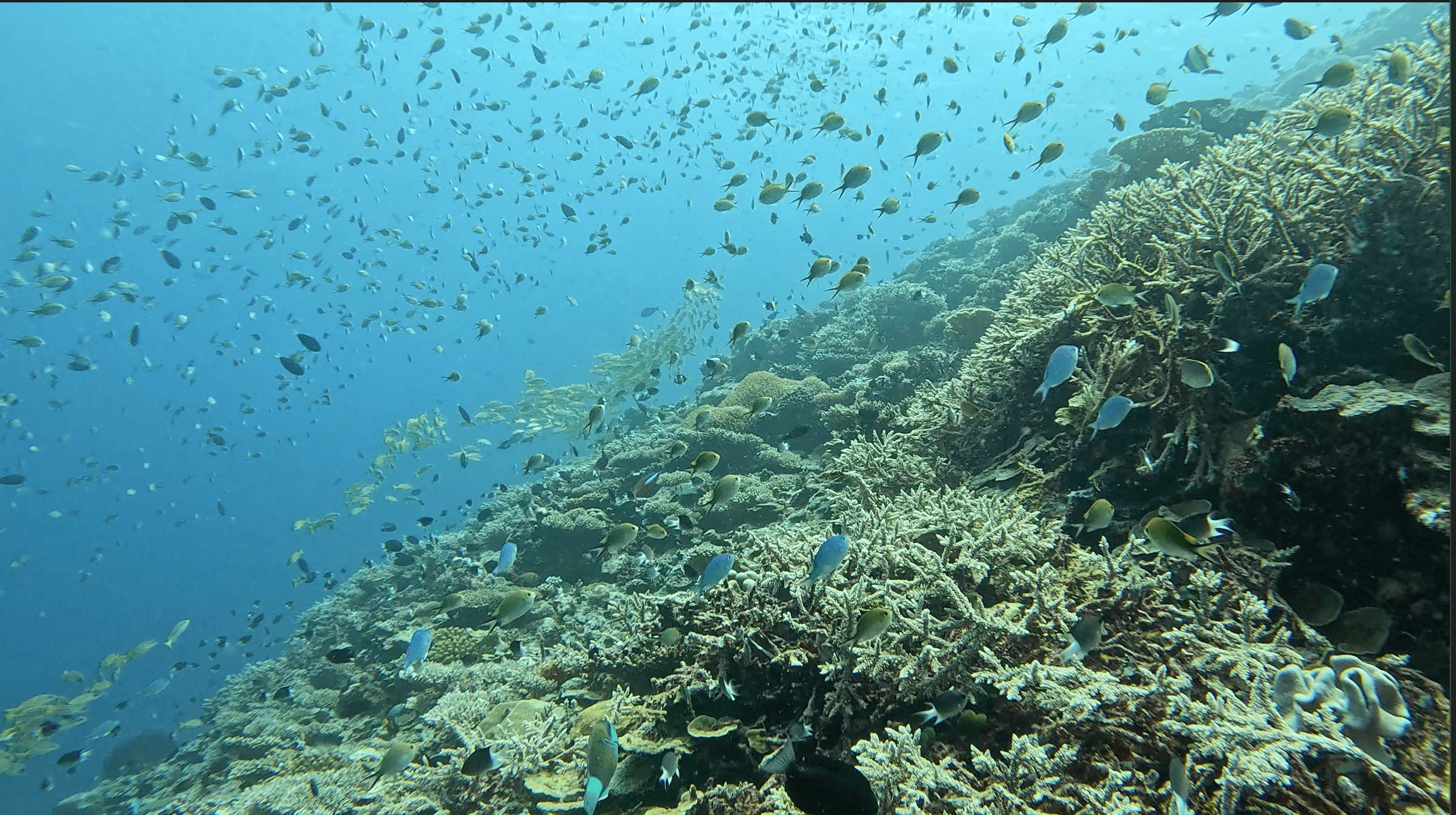
Dense chromis and damselfish cloud over the crescent wall at Banana Reef — thousands of fish moving in a single mass above the staghorn coral slope
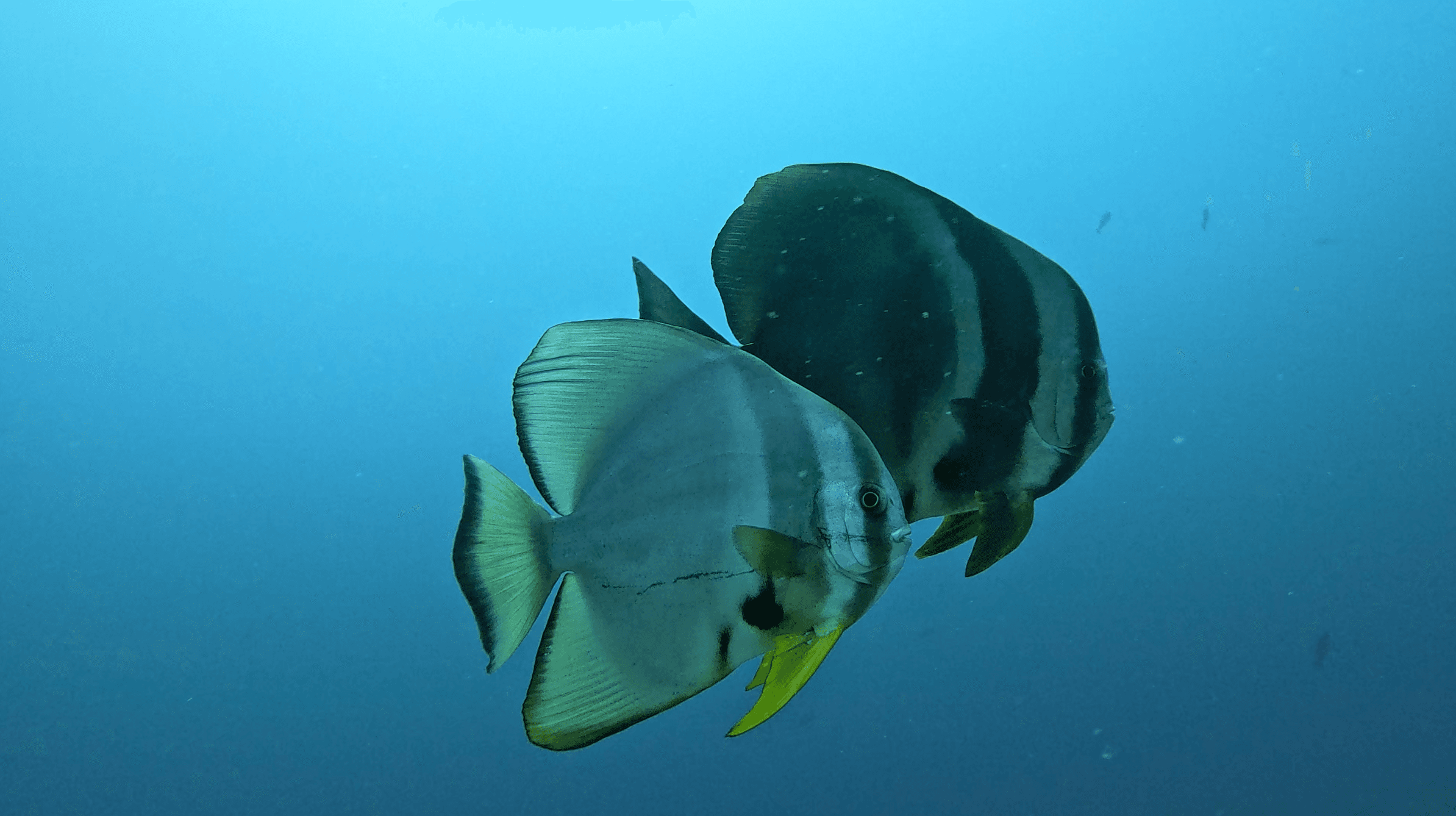
Pinnate batfish pair in open water off South Ari Atoll — juveniles travel in pairs before joining the larger school aggregation on the upper reef
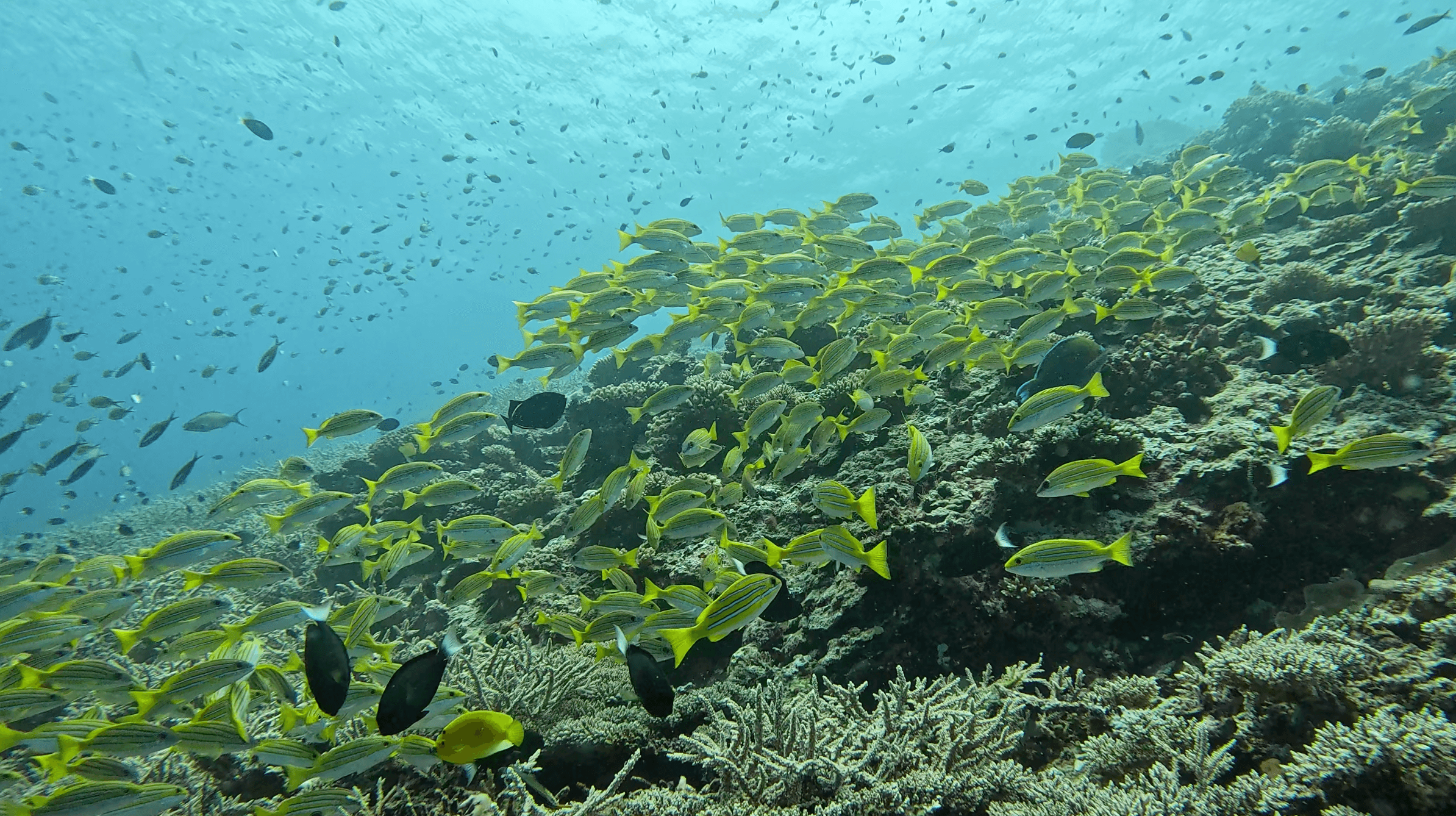
Bluestripe snapper and fusilier school sweeping over the staghorn coral on the channel current — the fish use the reef edge as a windbreak against the flow
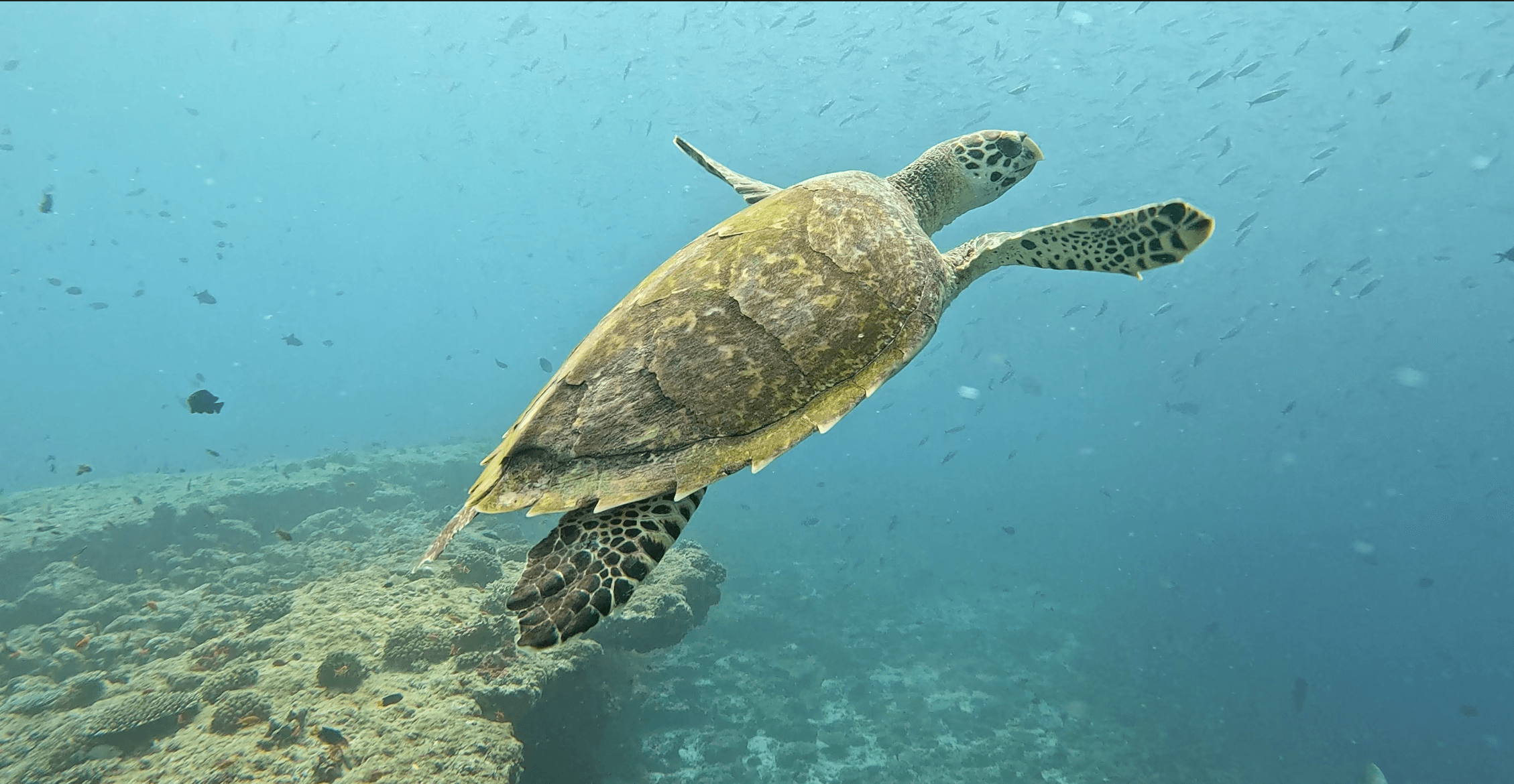
Green turtle crossing the outer reef slope at Omadhoo — one of two resident animals that use the reef near the jetty as a regular resting site
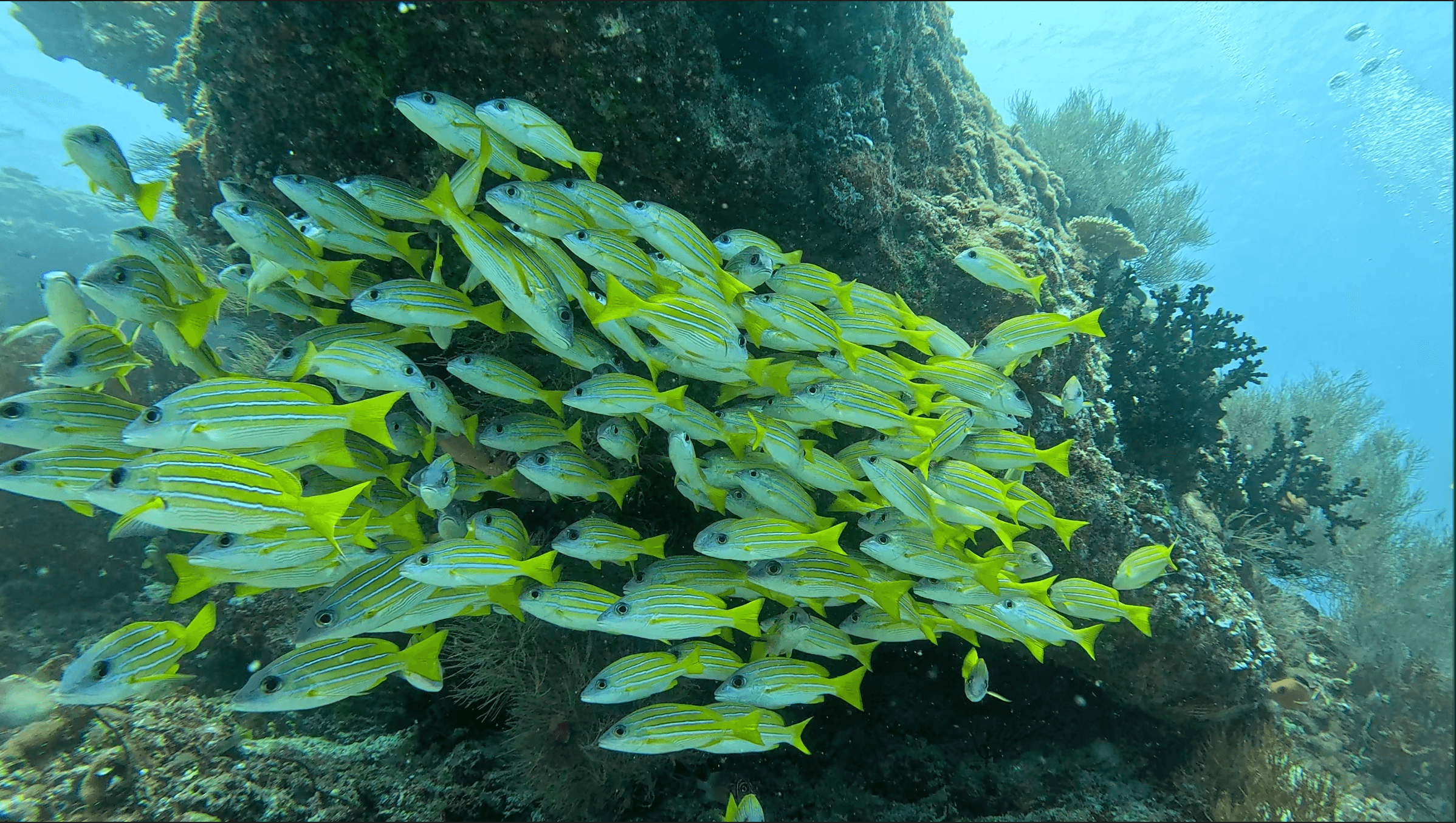
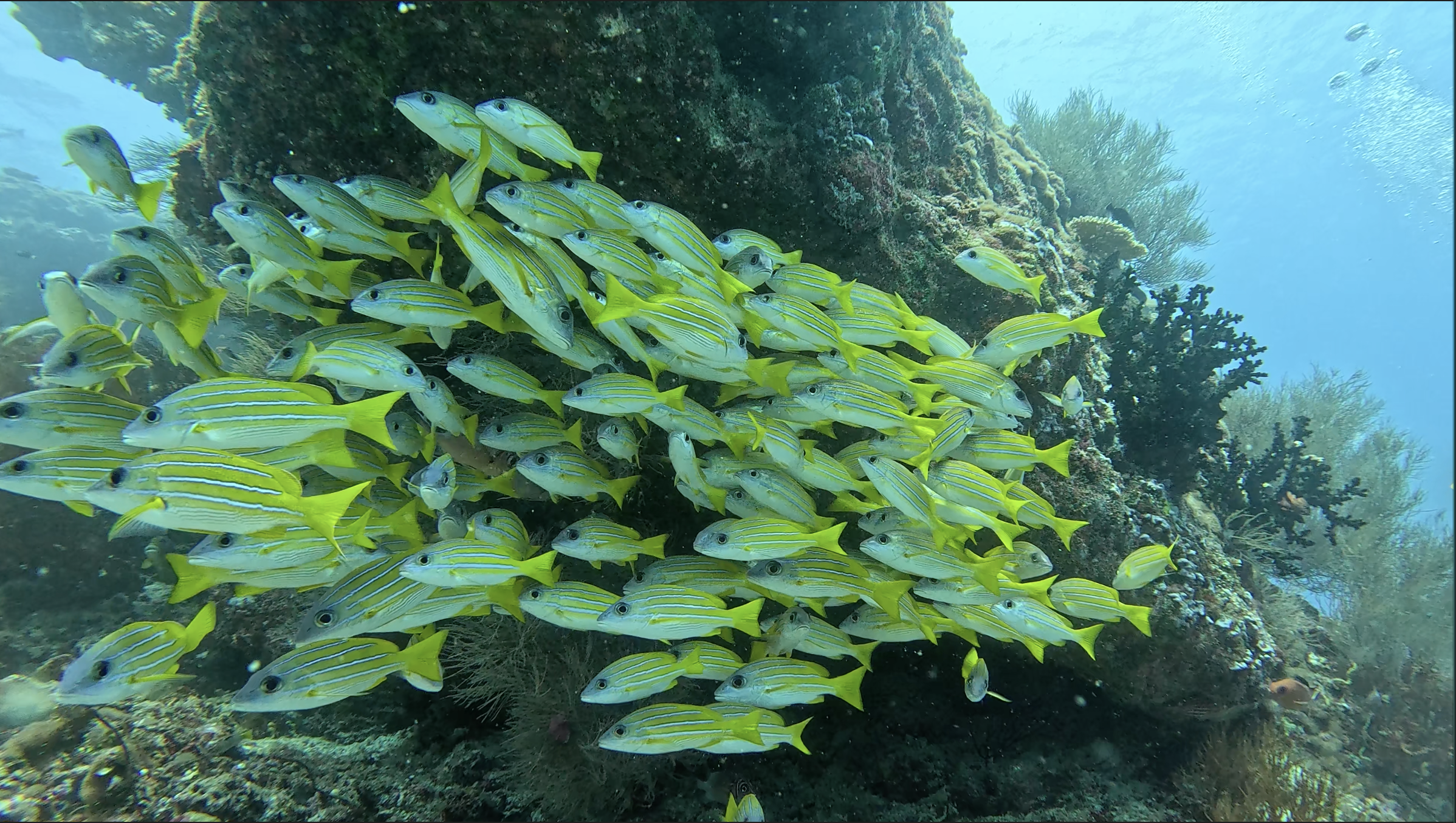
Bluestripe snapper school sheltering against the coral head — these tight aggregations are a fixture on every thila dive in the atoll
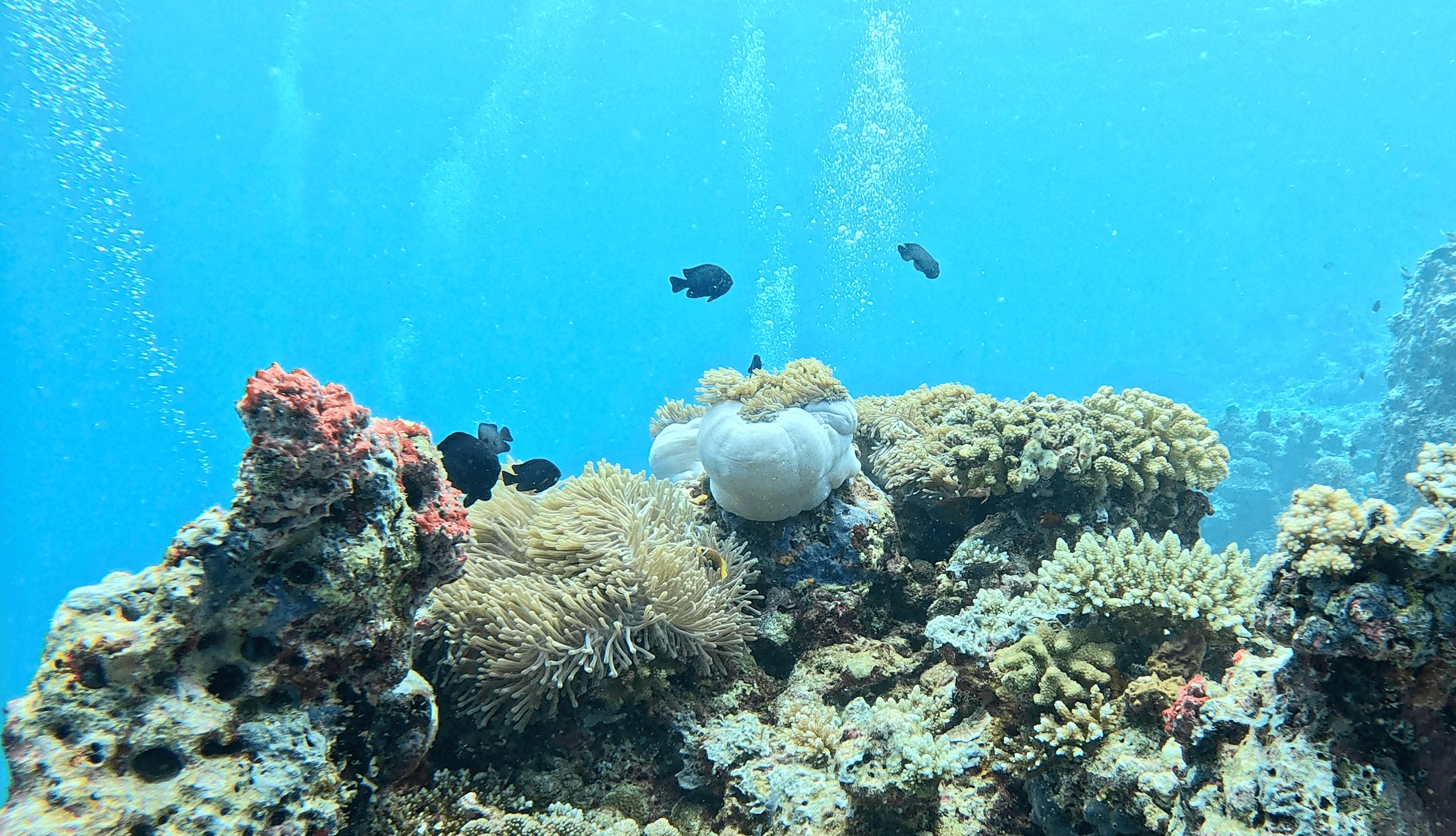
Anemone garden on the Omadhoo house reef — domino damsels and diver bubbles rising through the shallows on the lagoon side