The Maldives
Maldives — Atolls, Reefs and Island Life
One thousand two hundred islands spread across the Indian Ocean like a scattered necklace — the Maldives is as much an experience above the water as below it. Overwater bungalows, local island culture, and some of the most biodiverse reef systems on the planet exist within a few nautical miles of each other.
The geography
The Maldives is not a single island — it is an archipelago of 1,192 coral islands arranged into 26 natural atolls that run for 900 kilometres along the Indian Ocean. The highest point in the country is less than three metres above sea level. Seen from the air on a seaplane transfer, every island is a thin green strip of vegetation surrounded by a lagoon that shifts from pale turquoise to deep indigo within a hundred metres.
The country divides broadly into two zones: the resort islands, built for international visitors and operated as private leases, and the local islands, where Maldivian culture — the language, Dhivehi, the mosques, the fishing boats — continues largely unchanged. Spending time on both is the difference between visiting the Maldives and understanding it.
Malé and arrival
Most itineraries pass through Malé, the capital, which occupies an island so small the city has essentially run out of room to grow — buildings reach the edge of the reef in every direction. The fish market on the northern waterfront opens before dawn, when the night's catch comes in on traditional wooden dhonis. Tuna dominates; skipjack and yellowfin are the backbone of the Maldivian diet, dried, smoked, and eaten with every meal.
From Malé, the atolls are reached by speedboat, domestic flight, or the seaplane network that operates during daylight hours. The seaplane transfer is not incidental — fifteen minutes over the reef system from altitude, watching the water change colour with depth, sets the right frame of mind for everything that follows.
Island life above the water
Local islands — Maafushi, Ukulhas, Dharavandhoo — operate guesthouses and move at a different pace from the resorts. Bicycle is the standard transport. The main streets are concrete paths wide enough for one vehicle; most islands have none at all. Fishing remains the secondary industry after tourism, and on any afternoon you can watch men repairing nets on the beach while reef herons work the exposed coral at low tide.
The lagoons themselves are destinations. Snorkelling the house reef of a local island at dusk, when the tide is running and the grouper come up from depth, requires nothing more than a mask and an hour. The water is warm enough year-round that no wetsuit is necessary above 20 metres.
Sandbanks — some no larger than a volleyball court — appear and disappear with the tide. At low water, the sandbars off Baa Atoll and Ari Atoll are visible from the dhoni; at high water they vanish entirely. Swimming out to a sandbar at slack water, with no land in any direction and the reef visible through the glass-flat surface, is the specific quietness the Maldives is known for.
Diving the atolls
The reef structure of the Maldives is built around two formations: thilas (submerged pinnacles that top out at 10–20 metres and drop to over 30) and kandus (channels between atolls where current drives nutrient upwelling and concentrates pelagic life). The best diving is almost always at the junction of the two.
Baa Atoll holds Hanifaru Bay, a UNESCO Biosphere Reserve where reef mantas aggregate during the southwest monsoon (May–November) to feed on dense plankton blooms. On peak days, forty or more mantas perform cyclone feeding — overlapping barrel rolls in a tight helix — in water shallow enough to snorkel. Scuba is restricted inside the bay to protect the behaviour.
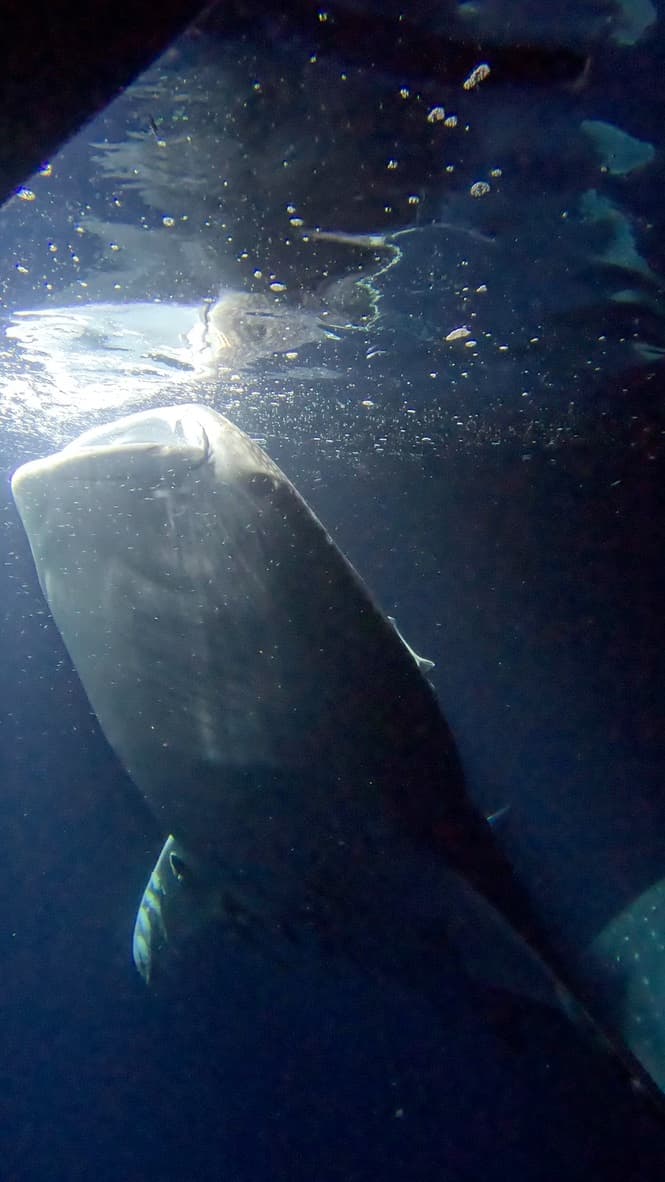
Ari Atoll runs along the western edge of the country and concentrates whale sharks year-round on its southern end. The channel dives at Fish Head (Miyaru Kandu) bring grey reef sharks and whitetip sharks stacking in the current at 20–25 metres. The thilas here are covered in sea fans and gorgonians that indicate clean, high-flow water.
Fuvahmulah, in the far south, sits outside the atoll system entirely — a single island exposed to open Indian Ocean on both sides. Tiger sharks are resident at the cleaning station at 25 metres, attended by trevally and hammerheads at depth. The water is colder than the north, fed by upwelling from the deep south, and visibility reaches 40 metres on good days.
Seasons and planning
The northeast monsoon (November through April) delivers the most reliable conditions for diving: calmer seas, better visibility, and consistent water temperatures. The southwest monsoon (May through October) brings stronger currents and reduced visibility in the north but opens Hanifaru Bay for the manta aggregation — a trade-off worth making if mantas are the objective.
The deep south — Huvadhoo Atoll, Addu, Fuvahmulah — is driveable year-round but is at its best between November and April when Indian Ocean upwelling is strongest and the tiger sharks are reliably present.
The Maldives in Pictures
Whale shark ascending to feed at the surface — Baa Atoll
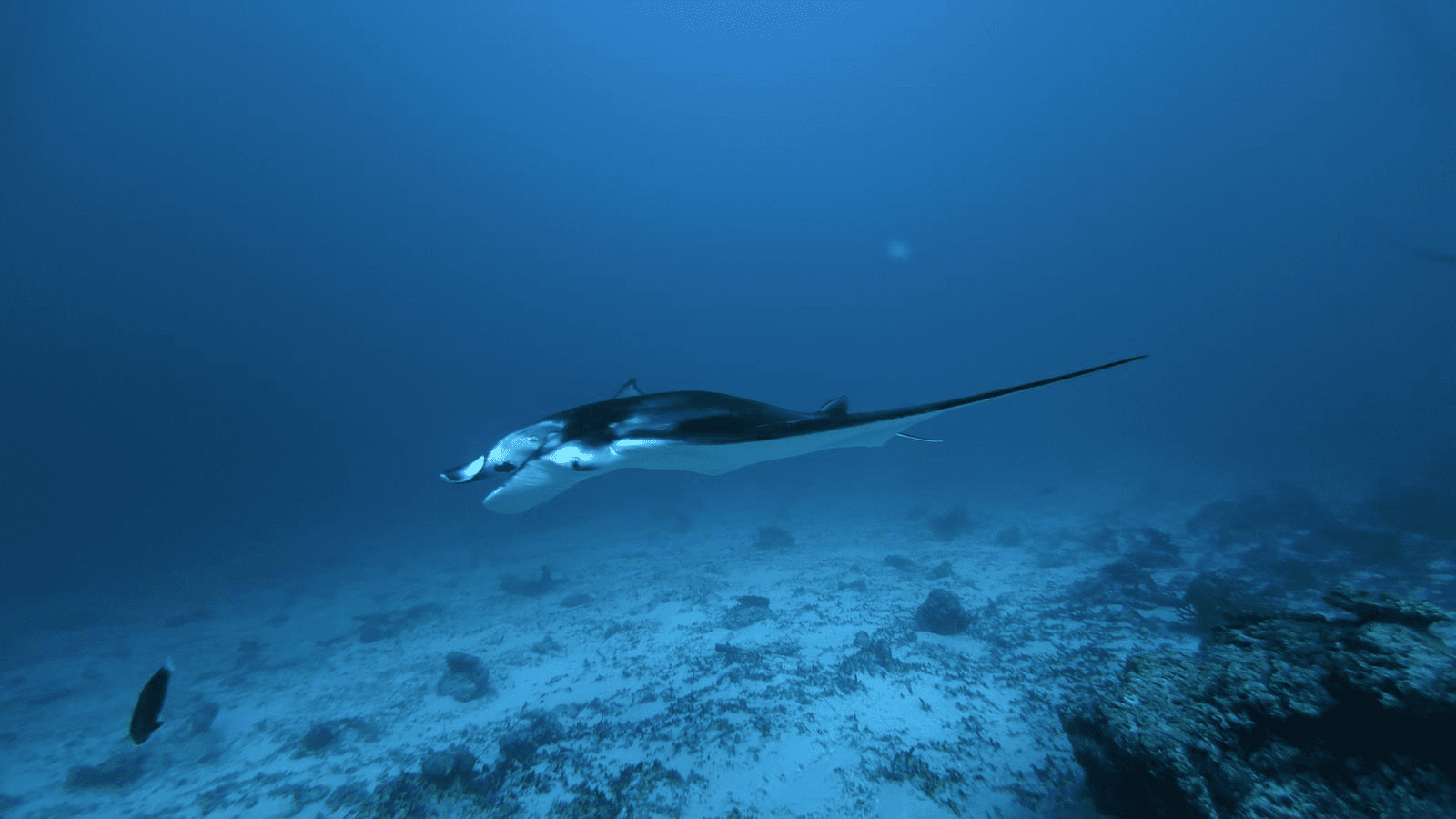
Oceanic manta ray in open water — the deep south atolls see larger, more solitary individuals than Hanifaru
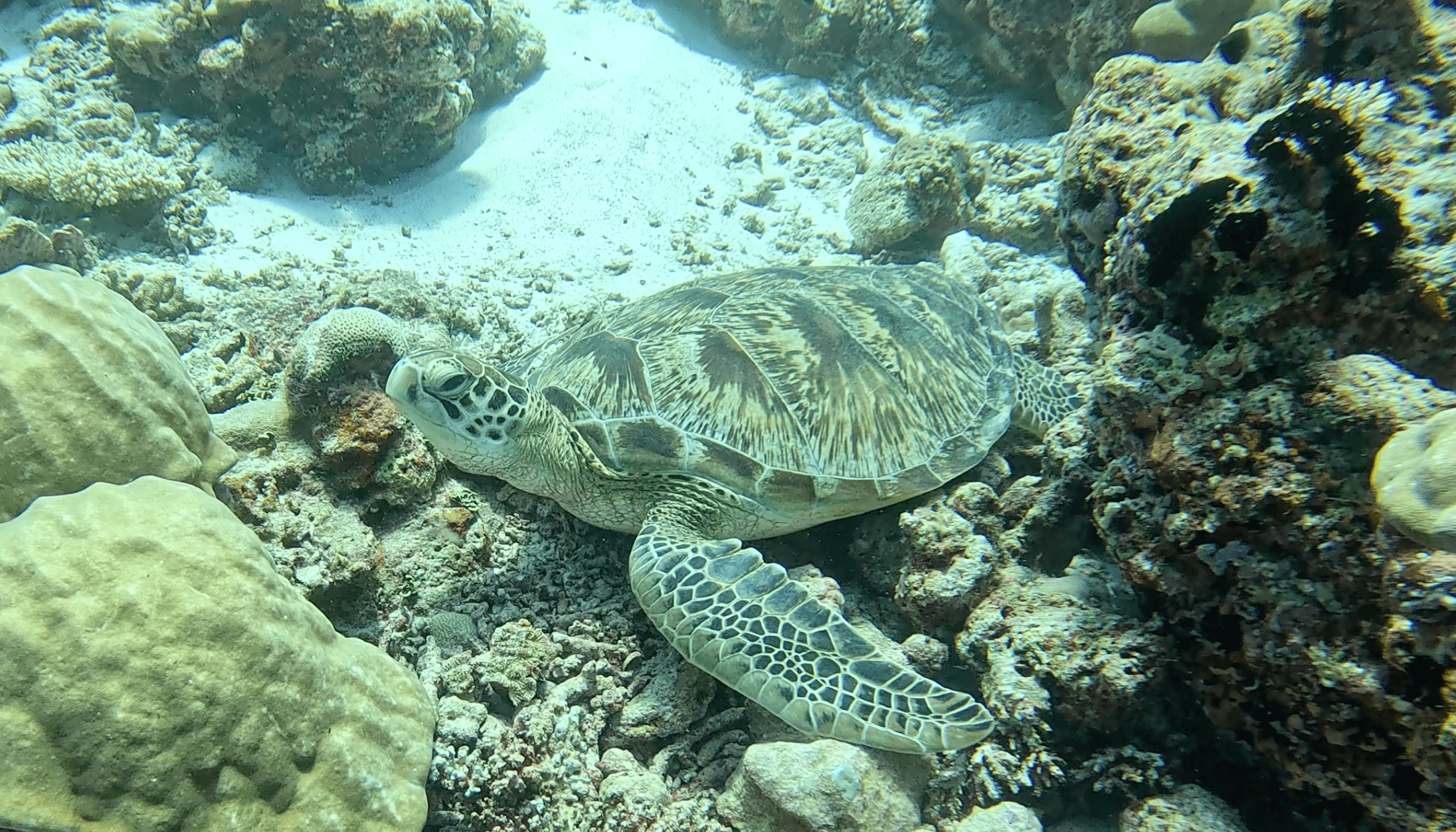
Hawksbill turtle resting on a coral head — common throughout the atolls at any depth