Egypt · May 2025
Egypt – Marsa Alam and the Far South
South of Marsa Alam the coast empties out — fewer boats, quieter reefs, and the kind of diving that reminds you how much difference distance from a harbour makes.
The case for going south
Most Red Sea diving operations run out of Hurghada or Sharm el-Sheikh — large resorts with efficient logistics and heavily dived reefs. Marsa Alam sits five hours south of Hurghada by road, and the boat traffic thins in rough proportion to the distance. The reefs here have had more time to recover, and the lack of constant boat anchoring shows in the coral structure.
Marsa Alam International Airport is a small terminal serving mostly charter traffic. The dive centre at Marsa Nakari is another forty minutes south by road — the Eastern Desert rising to the west, the Red Sea flat and turquoise to the east.
Marsa Nakari and the dugong
Marsa Nakari is a protected bay with a resident dugong — a single adult male who has been sighted in the seagrass beds here for years. He surfaces every few minutes in the shallows at dusk, moving slowly through water barely deep enough to cover him.
He surfaces at dusk in the shallows, audible with each exhalation — five or six times in twenty minutes on a quiet evening. The dive guides refer to him by name and track his movements with a proprietorial concern that seems entirely justified. He is the reason many people make the drive south at all.
The reef adjacent to the bay is underpressured and healthy. A morning drift along the wall produced turtles at three separate cleaning stations, a school of barracuda turning tight circles in the blue water above the wall, and a pair of crocodilefish on the rubble at the base.
Elphinstone
Elphinstone is the reef that gets written about. An offshore plateau rising from very deep water, with walls on all sides dropping beyond recreational depth, and oceanic whitetip sharks working the north end with the unhurried purposefulness of animals that have never had to avoid anything.
On the approach by boat the reef is not visible from the surface — it sits just below the chop, the presence of a structure only apparent from the change in water colour over it. The descent brings you down the wall to the plateau at 18 metres, and the sharks are usually visible before you reach the bottom.
Four to seven individuals at a time is typical — the dive master's position above the group gives a wider field of view. They circled at a distance that was simultaneously comfortable and not — close enough to see the white-tipped fins clearly, far enough that you were always aware they were choosing that distance, not constrained by it.
Sataya Dolphin Reef
Sataya is a horseshoe reef another hour south, with a permanent resident pod of spinner dolphins numbering somewhere between sixty and a hundred individuals depending on the season. They arrived at the boat on the surface crossing and stayed for thirty minutes — bow-riding, leaping, clearly performing for an audience.
The dive through the reef itself is secondary to the surface encounter, but it is not unimpressive: good coral coverage, strong fish diversity, and the dolphins occasionally dropping below the surface to investigate divers at close range before banking away.
Why the far south matters
The reefs around Marsa Alam and south are not pristine — the Red Sea faces the same pressures everywhere — but relative to the northern sites they are measurably better. Less physical damage, fewer anchoring scars, more intact coral heads at recreational depth. The difference between a reef dived five thousand times a year and one dived five hundred times is visible in the water.
The tradeoff is access. The road is long, the infrastructure is simpler, and the options for resort entertainment are limited. For anyone who came to dive, this is not a tradeoff at all.
Egypt in Pictures
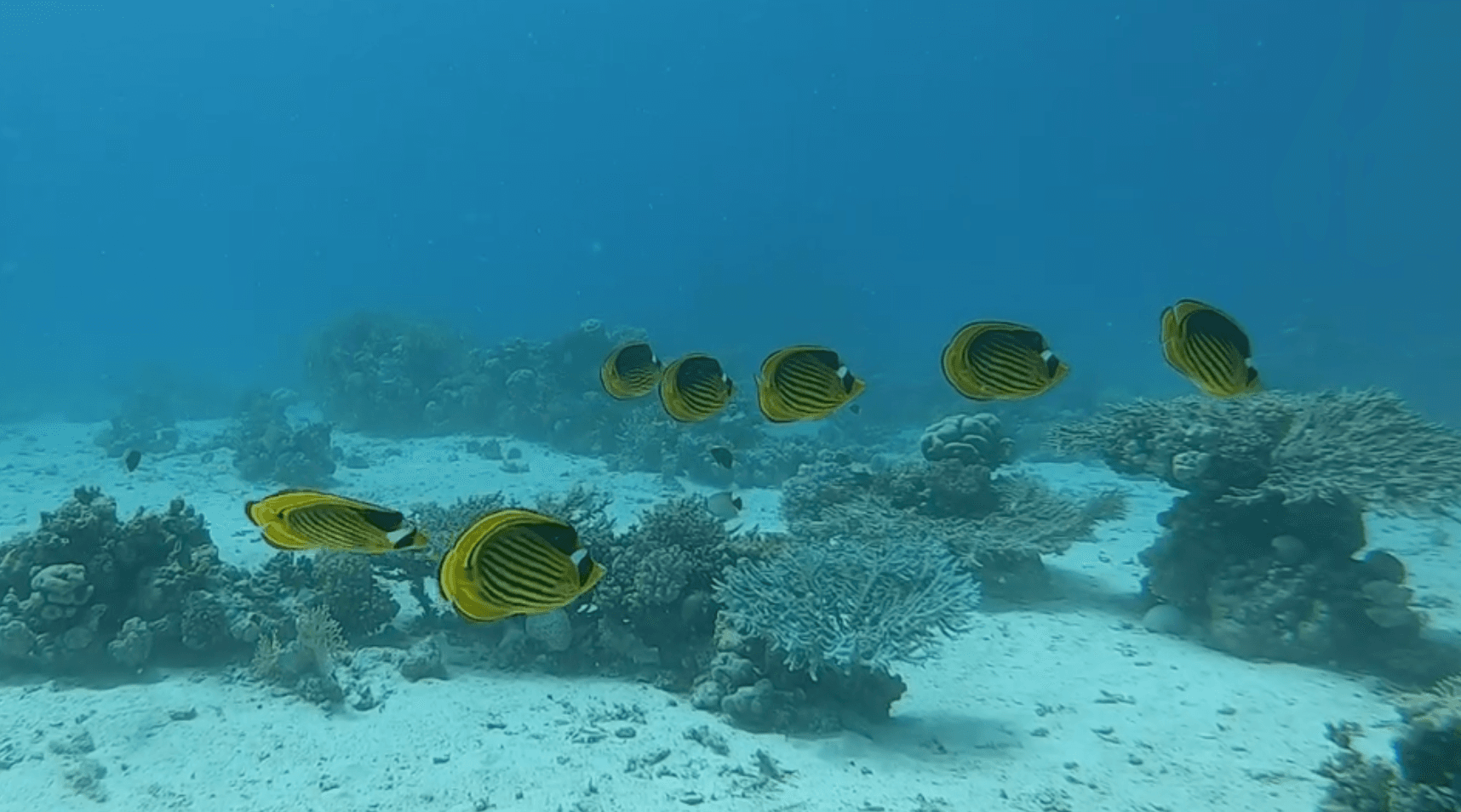
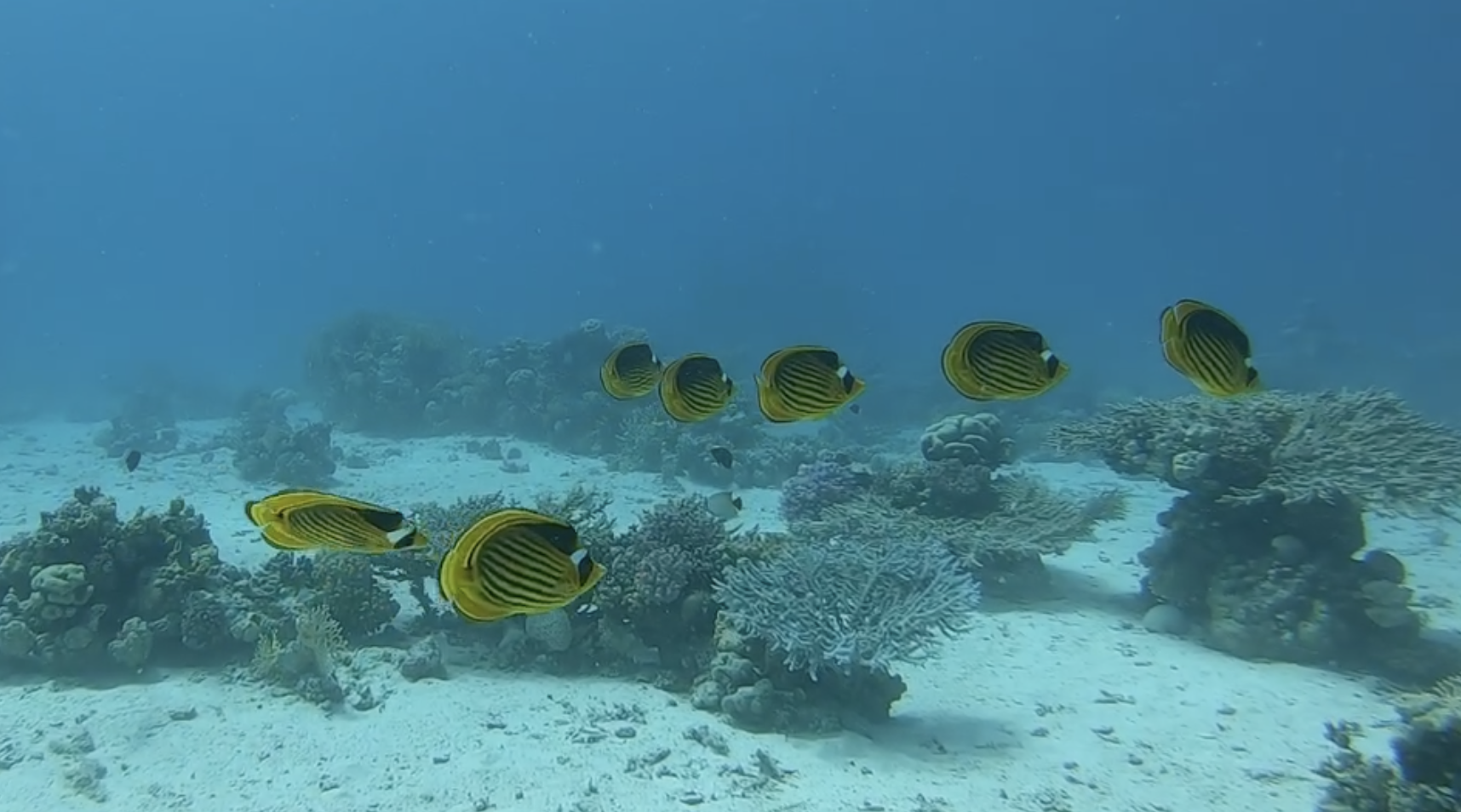
Raccoon butterflyfish in loose formation over the shallow reef shelf — the far south Red Sea reefs carry significantly less diver pressure than sites around Hurghada
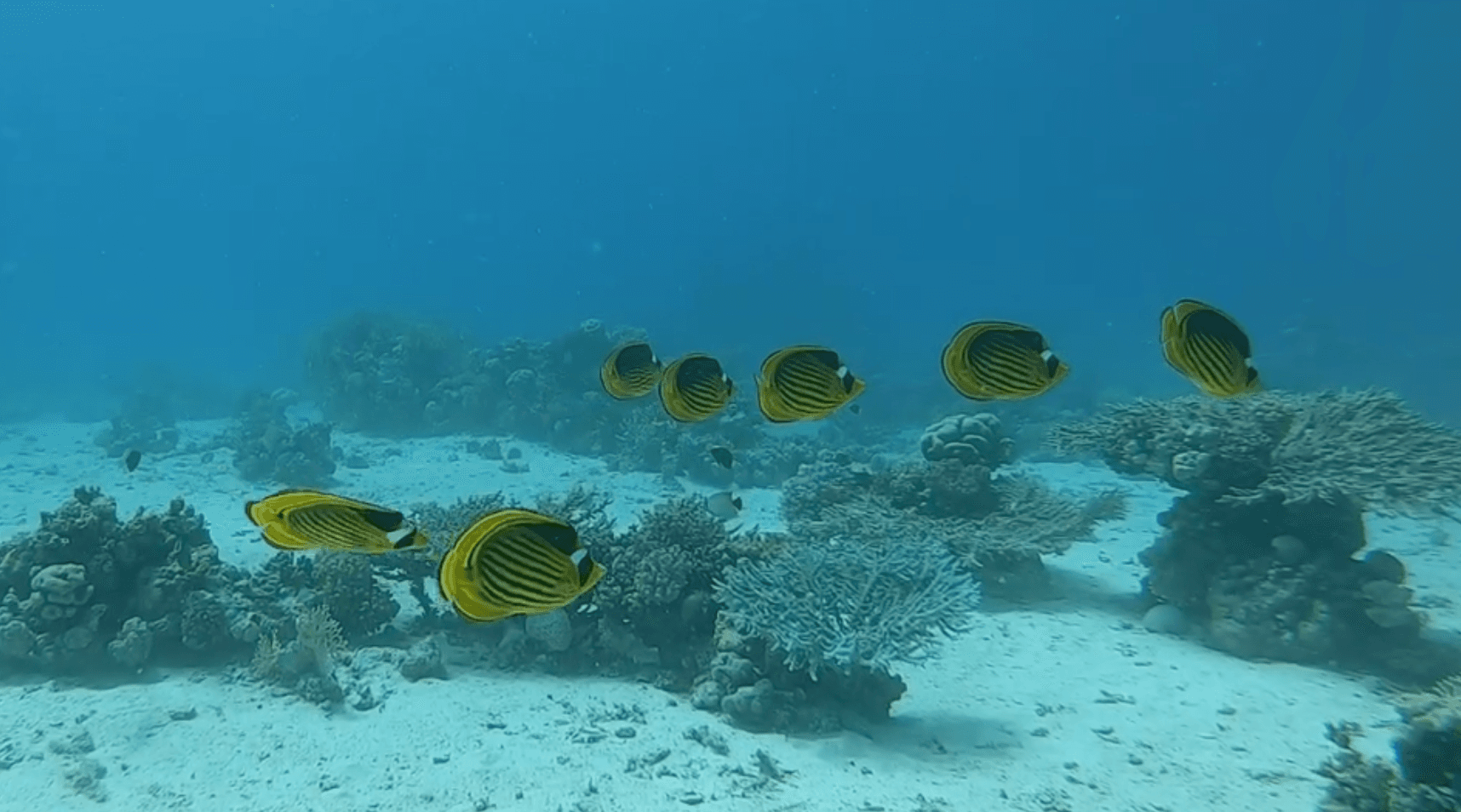
The reef garden off Marsa Nakari — one of the least-trafficked stretches of Egyptian coastline