Egypt · May 2025
Egypt – El Gouna and the Northern Red Sea
El Gouna anchors the northern Red Sea circuit — Sahl Hasheesh's protected bay reef, the coral pinnacles of Abu Nugar, the ship graveyard at Abu Nuhas, and Umm Gamar's current-washed walls. Four days, seven sites, the full character of the northern system.
El Gouna
El Gouna sits on the northern Red Sea coast, fifteen kilometres north of Hurghada — a purpose-built lagoon town that functions as the most logistically coherent dive base in this part of Egypt. The marina is the operational centre: dive centres, boat moorings, and equipment facilities within a few minutes of the hotels. The offshore sites are forty minutes by fast RIB; the wreck dives at Abu Nuhas an hour and a half further north into the Straits of Gubal.
Sahl Hasheesh
Sahl Hasheesh is a shallow bay ten kilometres south of Hurghada, sheltered from the prevailing northerly wind by the headland to the north. The bay's reef system sits immediately offshore from the Oberoi hotel's private jetty — a protected coral garden at 8 to 15 metres that transitions to a wall dropping past 30.
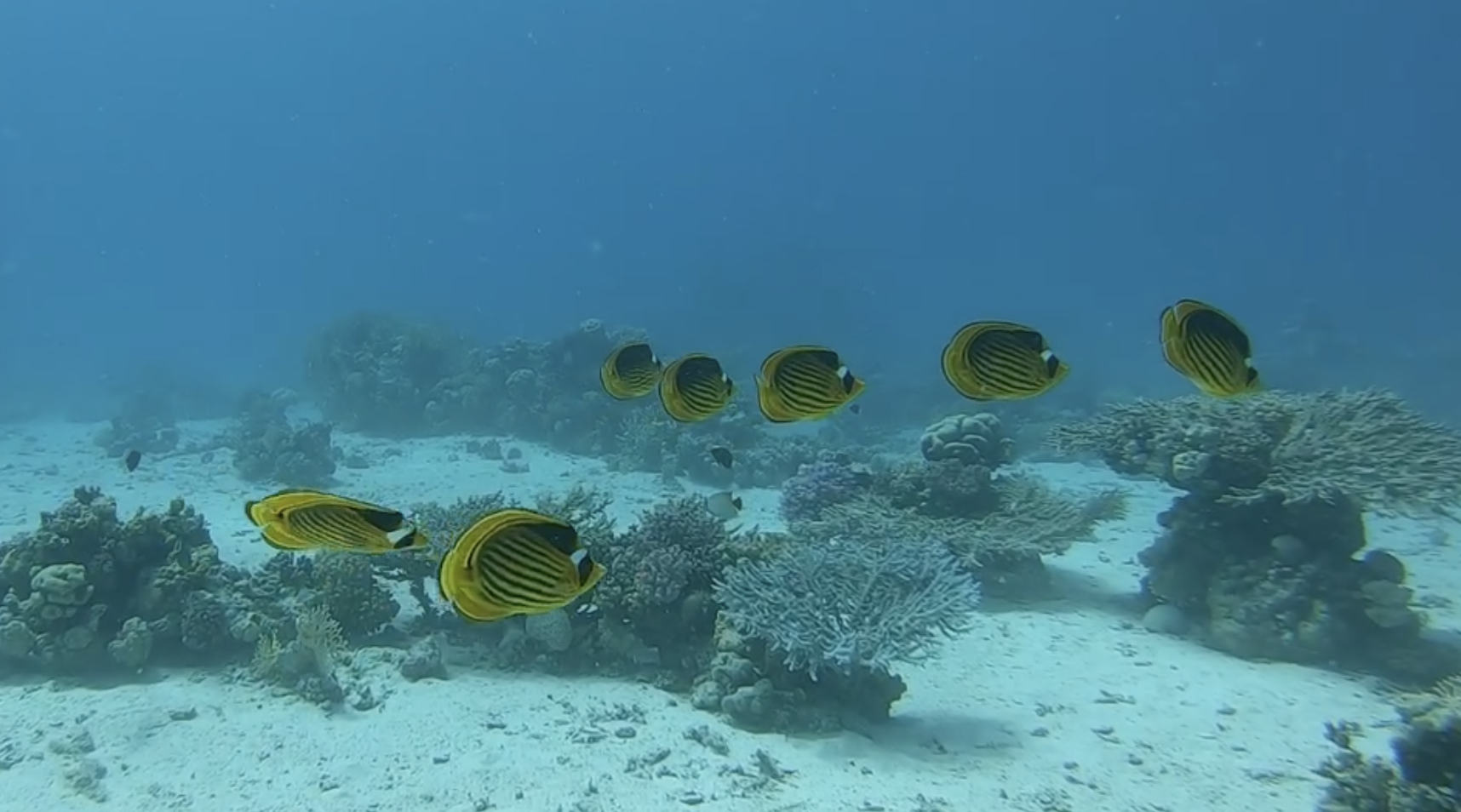
The bay's sheltered position means the reef fauna here skews toward the species that benefit from calm water and reduced current: crocodilefish motionless on the rubble patches, ghost pipefish in pairs among seagrass, and raccoon butterflyfish working the garden section in small groups. The macro life is consistently interesting. The bay also functions as a nursery — juvenile reef fish at higher density than the more current-exposed offshore sites, including a resident juvenile Napoleon wrasse that holds to the same coral head.
Abu Nugar
Abu Nugar is a reef and pinnacle system southeast of Hurghada — a series of coral towers rising from a sandy bottom at 30 metres to within a few metres of the surface. The two main structures, Gota Abu Nugar (the dome-shaped tower) and Erog Abu Nugar (the elongated ridge), each support dense hard coral coverage on the upper sections with soft coral growth increasing with depth on the flanks.
The pinnacle structure concentrates reef fish in the way that isolated towers always do — there is nowhere else to be. Napoleon wrasse patrol the upper reef. Lionfish hold the shaded lee sides of the coral formations. Glassfish form dense clouds in the gaps between structures, and trevally work the column above the pinnacle tops on the incoming current. The reef here is largely intact, which reflects its relative distance from the Hurghada day-boat circuit.
Abu Nuhas
Abu Nuhas is a navigational hazard reef at the southern edge of the Straits of Gubal — a shallow platform that sits directly in the shipping route between the Gulf of Suez and the open Red Sea. The result, accumulated across a century and a half of maritime traffic, is four shipwrecks on a single reef. No other reef in the Red Sea carries the same density of wreck diving in one location.
The reef lies exposed to the current that runs north and south through the strait. On the flood tide the flow builds to the point where entry on the upcurrent side of a wreck requires positioning the RIB carefully and timed entry. On the ebb the same sites run slack.
Giannis D
The Giannis D is a Greek bulk carrier that struck Abu Nuhas reef on 19 May 1983 while carrying Swedish timber. She ran onto the reef's northwest face and sank in two sections — the stern separated from the bow as the hull broke up. The bow lies at 18 metres, listing to starboard; the midship section and the engine room sit in 22 to 26 metres. The timber cargo dispersed, but the hold spaces remain accessible.
Forty years of reef succession have colonised the hull thoroughly. The mast and rigging carry soft coral growth. The engine room, accessible through the open hull sides, holds glassfish in the thousands — moving in coordinated curtains through the interior light. The Giannis D is the more intact of the two Abu Nuhas wrecks dived on this circuit, and typically dived first in the day for the structural clarity that comes with morning light from the east.
The Carnatic
The Carnatic is a British iron-hulled paddle steamer that sank on Abu Nuhas in 1869 while carrying copper ingots, cotton, and wine between Suez and Bombay. She struck the reef at night and broke in two on the surface before sinking — bow and stern lying separately on the reef's southeast edge at 20 to 27 metres.
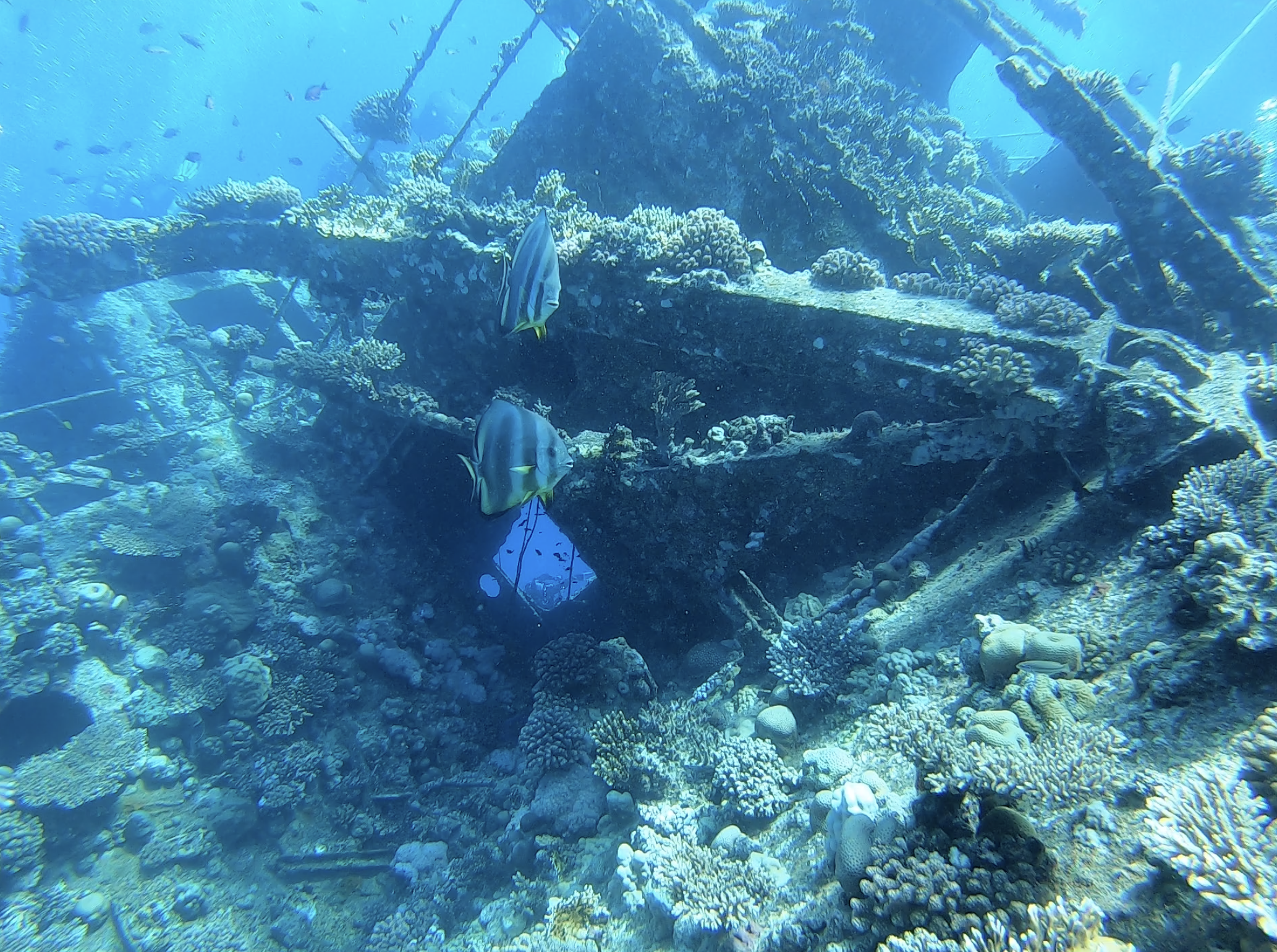
One hundred and fifty years of coral growth have turned the ironwork into a reef system in its own right. The frames and deck beams are encrusted throughout; bannerfishes and butterflyfish hold position in the structure where shelter and current intersect. The Carnatic has been reef longer than most living coral formations in the northern Red Sea, and the ecosystem that has established itself on the hull is measurably different from the Giannis D — more complex, more layered, and less obviously a ship.
Umm Gamar
Umm Gamar is a small island and reef pinnacle north of Hurghada, exposed on all sides to the current that runs through the straits. The reef wall drops from the island's rocky shore to beyond 40 metres on the western face, and on the flood tide carries strong drift conditions — the kind of diving where buoyancy control determines what you see rather than effort.
The site is known for grey reef sharks on the deeper corners, though their presence tracks the current state closely — on slack water the sharks pull back from the wall into the blue. Napoleon wrasse of considerable size use the upper reef as a territory; large scorpionfish are reliable on the rubble sections at the base of the wall. The reef coverage on Umm Gamar's western wall is among the better-preserved in the northern system, which likely reflects the current exposure that makes recreational diving more demanding and keeps traffic lower than the calmer sites closer to Hurghada.
Shabaha
Shabaha — the name translates loosely as "the nets," a reference to the reef structure's mesh-like coral formations — is a shallow reef complex north of Hurghada. The structure sits at 8 to 20 metres with table corals across the upper sections and a fish community that reflects the proximity to the protected bay systems further south. A quieter dive than Abu Nuhas or Umm Gamar, and more typical of the northern Red Sea's mid-depth reef character.
The northern system
The northern Red Sea from El Gouna to the Straits of Gubal reads as a progression from sheltered bay reef — Sahl Hasheesh — through exposed offshore pinnacle at Abu Nugar, to the strong current and wreck environments of Abu Nuhas and Umm Gamar. The range of conditions across four days covers most of what the northern system offers. The deeper pelagic diving — Elphinstone, Brothers, Daedalus — belongs to the south. El Gouna is the right base for everything north of that line.
Egypt in Pictures
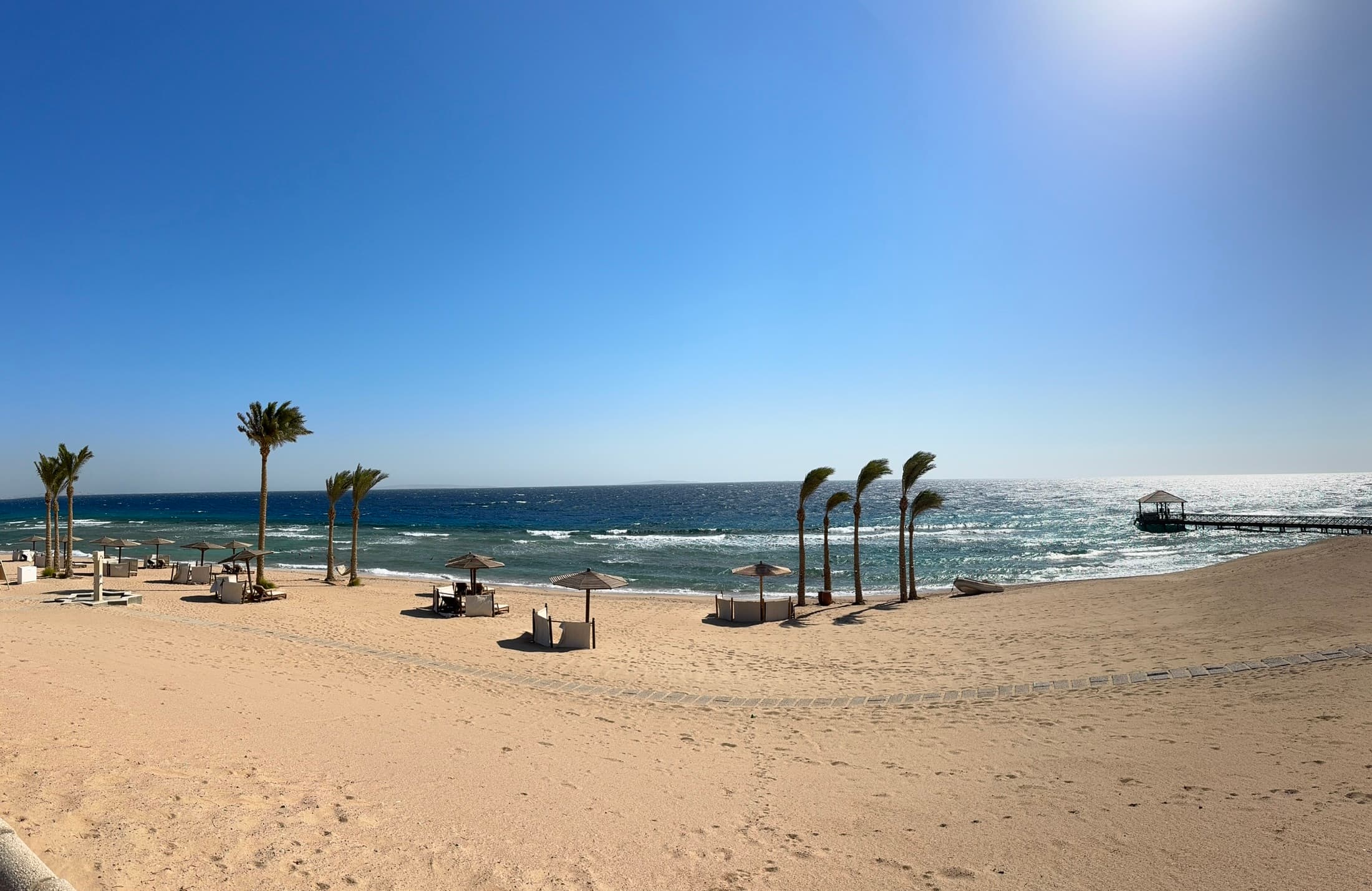
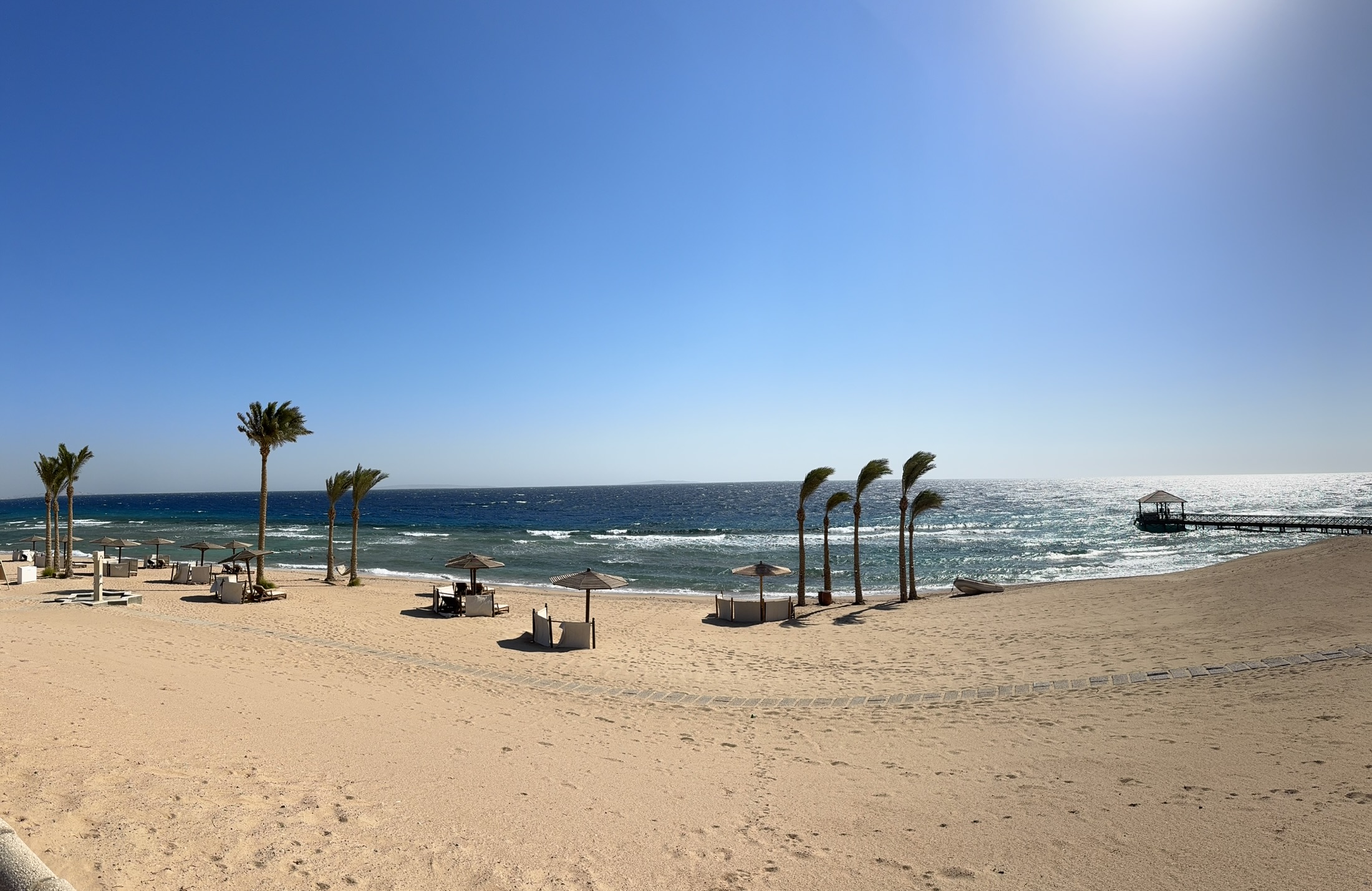
The El Gouna beach — the jetty leading out to the house reef entry point, the open Red Sea beyond
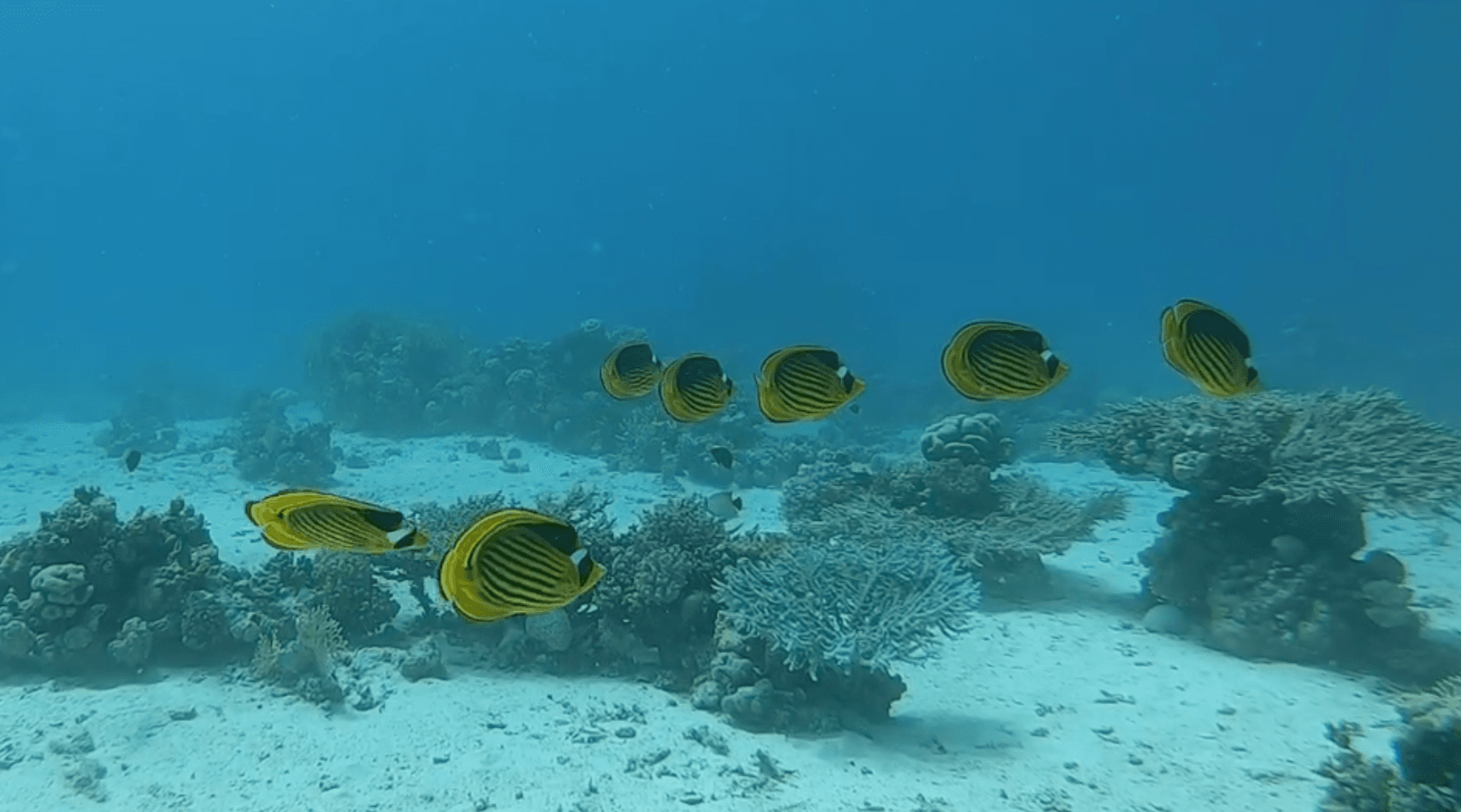
Raccoon butterflyfish on the Sahl Hasheesh reef — a reliable resident of the bay's protected coral garden
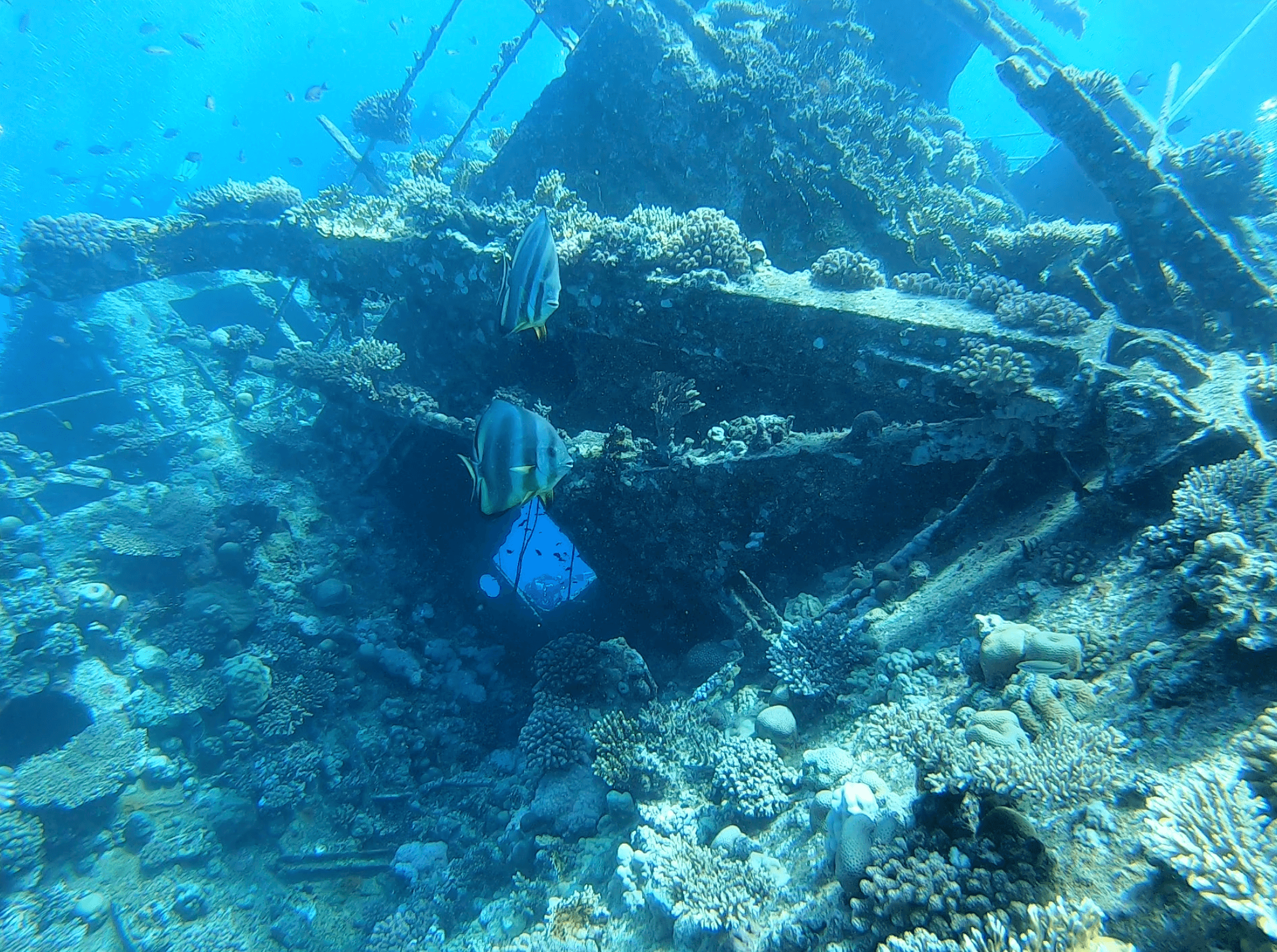
Bannerfishes among the coral-encrusted frames of the Carnatic — the wreck structure at Abu Nuhas has been reef for longer than it was a ship