Curaçao · April 2017
Curaçao – The Leeward Coast After Dark
Curaçao rewards the diver who ignores the boat schedule — park roadside, walk in, and find yourself alone on a wall that drops 300 metres with no one else in sight.
The island Bonaire's neighbours forget to mention
Curaçao sits 60 kilometres west of Bonaire and shares the same geological shelf, the same trade winds, and the same policy of painting rocks to mark dive entries. The diving is equivalent. The crowds are not.
The logistics are simple: rent a truck, fill tanks daily, and work through the western coast site by site. The dive shop in Willemstad hands over a laminated site map, points at the western coast, and says "pick one." For nine days, that is the entire operation.
Mushroom Forest
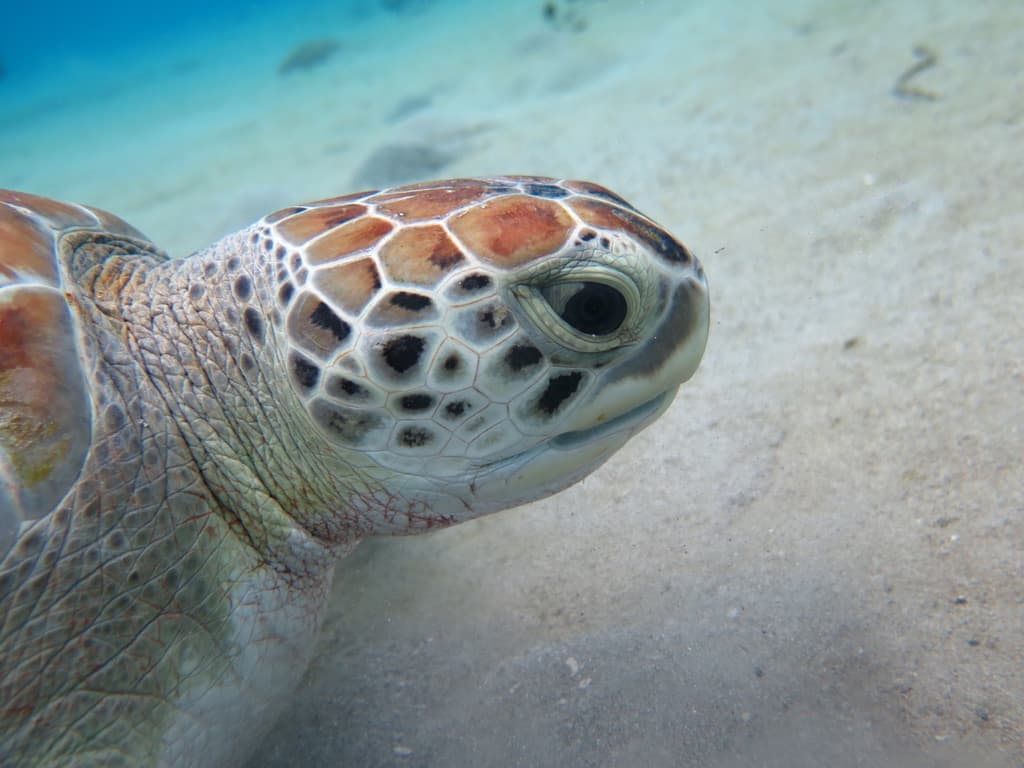
The site earns its name from a field of pillar coral formations that rise from the sandy bottom at 12 metres, some reaching the surface. The pillars are old — coral grows at approximately one centimetre a year, and the tallest here clear three metres. Between them: filefish, spotted drums, and a hawksbill turtle that returns on most visits and shows no particular concern about it.
The entry is a short swim over turtle grass shallows. The exit is the same. In between, roughly 70 minutes of the kind of diving where you look up and realise you've travelled almost nowhere because there was too much to stop for.
The Tugboat
At five metres depth, the tugboat sits fully intact, colonised so thoroughly by coral and sponge that it looks more grown than sunk. Visibility regularly hits 30 metres — the whole wreck visible from the surface before descending.
Night dives here are outstanding. Octopus hunting along the hull, spider crabs picking across the deck, a Caribbean reef squid hovering in mid-water, iridescent and precise. Multiple nights on the same wreck and each dive is different.
The walls
Every dive site on the leeward coast has a wall. They begin at between 8 and 15 metres and drop to 300 — vertical faces of sponge, sea fan, and black coral that recede into blue-green nothing. The current is minimal enough to hover in place and watch pelagics cruise past the wall face.
Park at a site with no other vehicles, enter through a gap in the ironshore, spend an hour drifting the wall alone. Two spotted eagle rays pass at 18 metres going north. They don't stop. The blue swallows them.
What Curaçao gets right
Curaçao has the same shore-diving infrastructure as Bonaire — the painted stones, the easy entries, the tank fills — without the development that comes with dive tourism infrastructure. The sites aren't crowded because most visitors come for the beaches or the colonial architecture in Willemstad. The reef doesn't know about that distinction, and neither does the frogfish sitting on the mooring block at Playa Lagun.
Curaçao in Pictures
Green turtle close-up — the Mushroom Forest has a resident population that ignores divers entirely
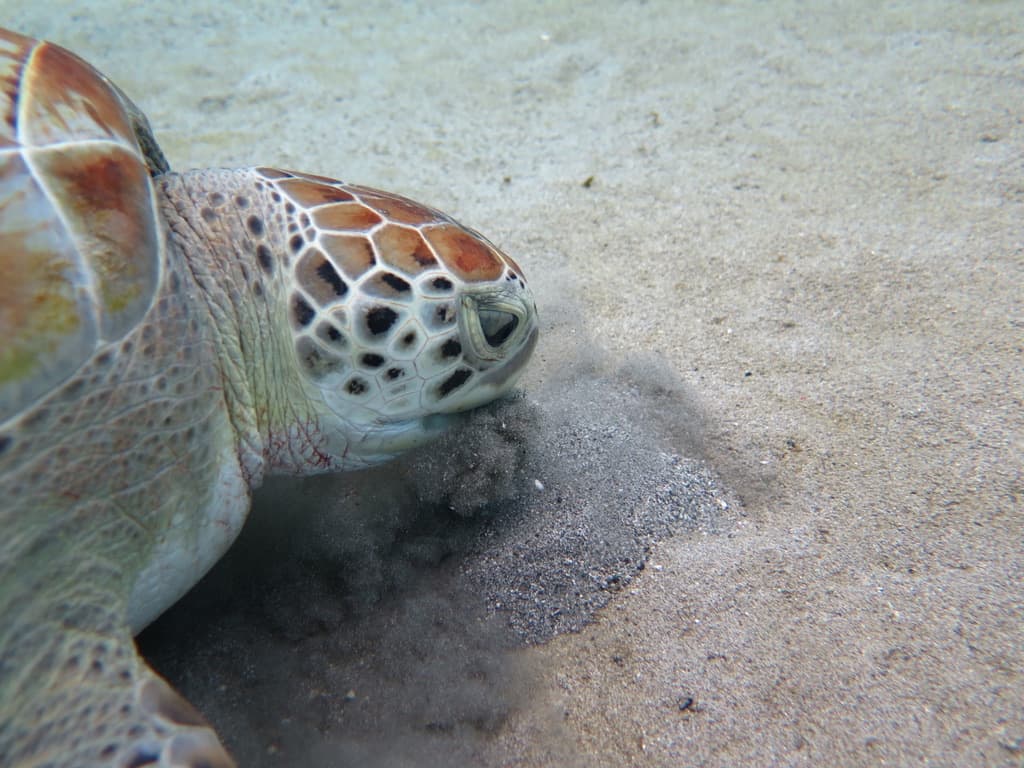
Green turtle feeding on the sandy bottom — head down, completely focused, perfectly approachable