Bonaire · 2017–2019
Bonaire – West Coast North
The northern stretch of Bonaire's leeward coast runs from Karpata down through 1000 Steps and into the Washington Slagbaai National Park — the least-dived, most dramatic reef on the island.
The north coast and the yellow stones
Bonaire doesn't have a beach culture. It has a dive culture.
The yellow-painted stones marking entry points run the entire length of the leeward coast — pull over, kit up, and you're in the water in ten minutes. No boat, no briefing, no waiting for a group of twelve to apply sunscreen.
The northern stretch of that coast, from Karpata up toward Washington Slagbaai, is where the reef gets serious. The sites thin out, the road deteriorates to gravel in places, and the divers you share the water with tend to know what they're doing. Drive north out of Kralendijk, count the yellow stones, and pick the one furthest from the rental truck scrum.
1000 Steps
The name is a lie — there are 67 steps cut into the ironshore cliff. But carrying twin tanks down them and back up after a 70-minute dive makes the exaggeration feel accurate enough.
The site is a classic Bonaire wall: a sloping reef from the shallows to around 10 metres, then a drop that fades into blue below 30. The shallow section holds dense schooling fish — French grunts stacked so tightly around the coral heads that you have to look carefully to find the heads underneath. Go at dusk. The golden light reaches the top of the wall and the pelagics move in from open water.
A spotted eagle ray at depth is a clean silhouette against the blue water column — unhurried, the schools parting and reforming in its wake. Go at dusk and they work the sandy channel between the wall and the shallows at closer range.
Karpata wall
Karpata is a more sheltered entry and a slower, more intricate dive than 1000 Steps. The wall here is thick with brain coral — grooved brain and symmetrical brain growing side by side, the different colourations making it obvious they're distinct species despite the shared architecture. Some of the colonies are clearly very old, their domed surfaces scarred by past bleaching events but still alive and building.
Turtles at Karpata tend to move through the seafans rather than the open sand — navigating channels between large fan heads with the shell barely clearing the gorgonians on either side, a path they clearly use regularly given how precisely they thread it.
Oil Slick Leap and Rappel
Oil Slick Leap is named for the iridescent sheen that sometimes sits on the surface here — a natural hydrocarbon seep. The dive site doesn't match the industrial associations of the name. At 16 metres the reef is dotted with large sponge heads, and the sponge surfaces host a density of fan worms that rewards slow movement and a torch. The radiole crowns retract the instant a shadow crosses them; approach at a 45-degree angle and they stay open long enough to fill the frame.
Rappel, a short drive north, holds the best cleaner shrimp stations I found on the island. The spotted cleaner shrimp — Periclimenes yucatanicus — lives inside giant anemones, antennae waving to advertise its services. Give it a few seconds of stillness and it will approach your fingers.
Washington Slagbaai National Park
The road into the national park requires a small fee and a bumping drive on tracks that are not always clearly signed. Most rental trucks can manage it; most rental divers don't bother, which is the point. The park's dive sites — Boca Slagbaai, Playa Funchi, Wayaka — see a fraction of the traffic of the sites south of Karpata.
The reef inside the park is not dramatically different from the rest of the north coast, but the fish are less habituated to divers and the coral substrate looks older and less disturbed. The rocky ironshore above water has its own character — the iron-oxidised limestone taking on a reddish tint in the morning light, the water below showing turquoise through gaps in the rock that clarify what you're about to enter.
Plan for a full day if you're going into the park. The drive is part of the experience, and the entry fee pays for the ranger infrastructure that keeps the reef in the condition it's in.
Bonaire in Pictures
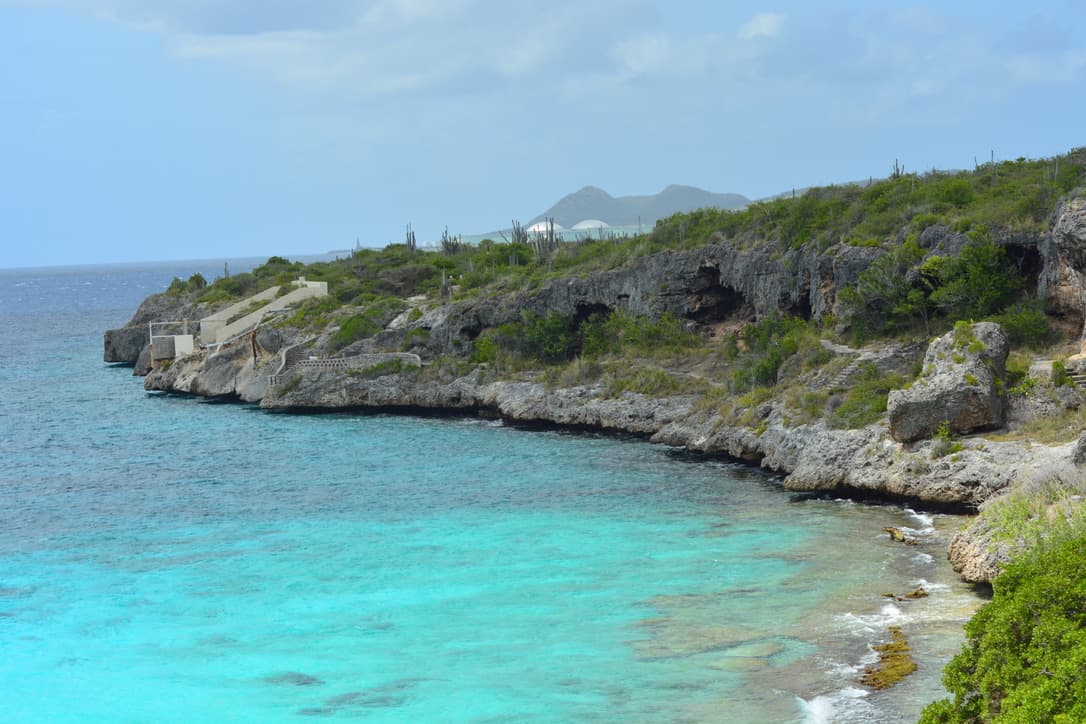
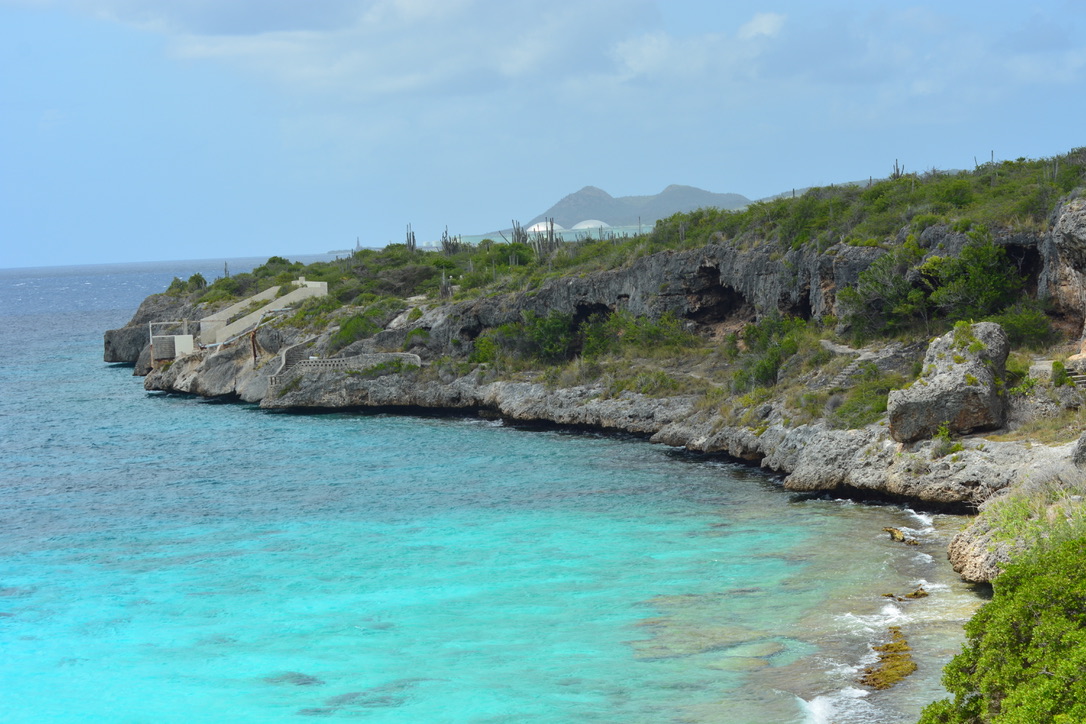
The 1000 Steps entry point — the staircase cut into the ironshore cliff, turquoise water below