Bonaire · 2017–2019
Bonaire – East Coast
Bonaire's east coast faces into the trade winds — rougher water, sparser diving infrastructure, but Lac Bay is a sheltered lagoon of extraordinary clarity where turtles rest on the sand and the mangroves meet the reef.
The windward coast
Most of Bonaire's diving infrastructure faces west. The leeward coast — sheltered from the trade winds, calm, lined with yellow stones — is where the trucks park and the tanks get filled. The east coast faces the open Atlantic. The trade winds hit it directly, building a short chop that makes shore entry difficult and occasionally dangerous, and the absence of a sheltered reef system means there are few formal dive sites.
What the east coast offers instead is a different character entirely. The ironshore here is rawer, the vegetation more sparse and windswept, and the light in the afternoon comes over your shoulder from the west with a quality that makes the rock and water look different from anything on the leeward side. Drive the road that runs along the eastern shoreline and you pass through a version of the island that the divers clustering around Karpata and Klein Bonaire rarely see.
Lac Bay
The exception to the windward coast's difficulty is Lac Bay — a large, sheltered lagoon enclosed by a reef ridge that breaks most of the swell before it enters. Inside the lagoon the water is often glass-calm and conspicuously warm: the shallow, sun-exposed basin heats the water a degree or two above the surrounding sea, and the clarity is startling. The sandy bottom is visible at five metres with the same definition as a swimming pool.
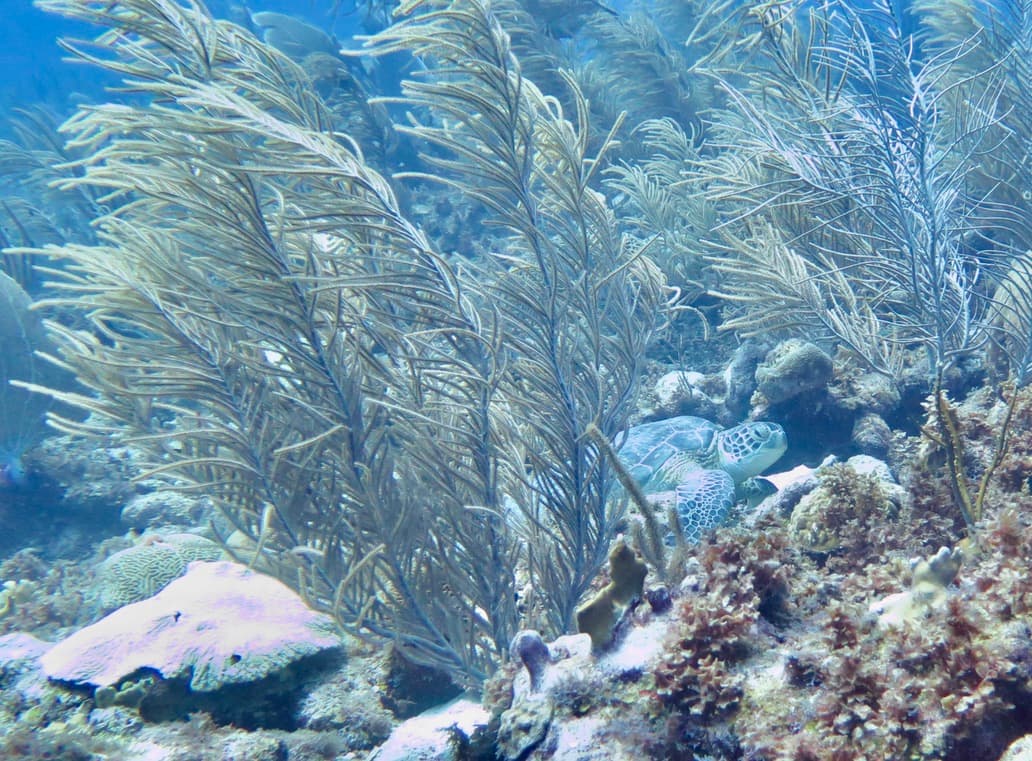
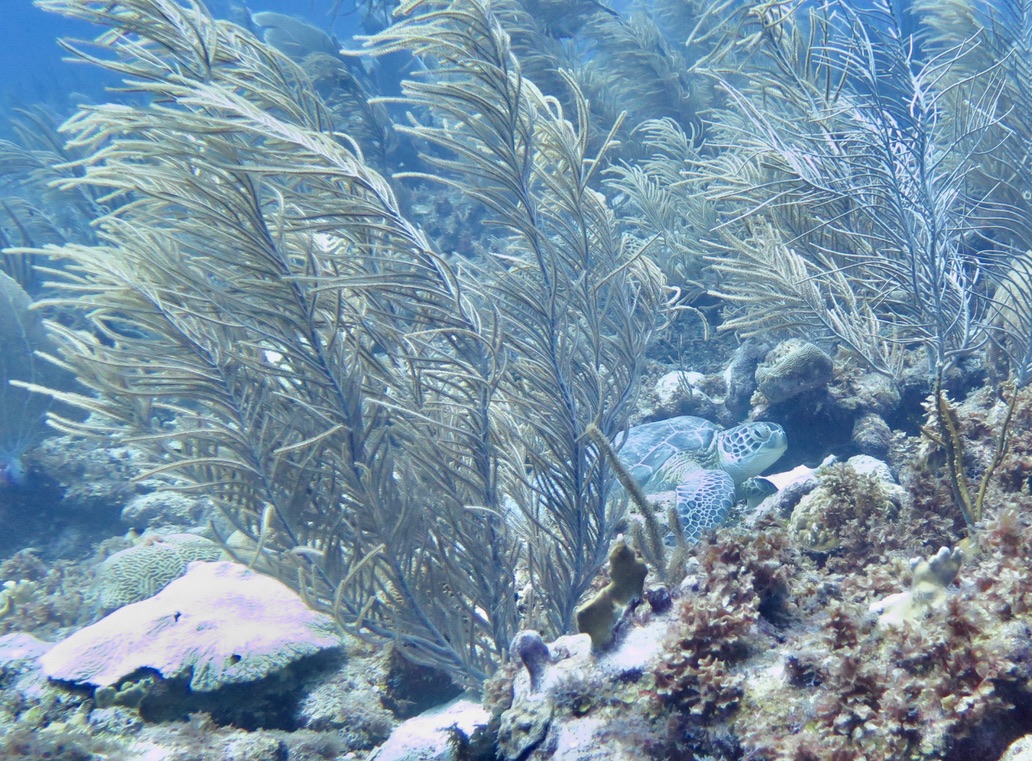
Green turtles use Lac Bay as a resting area. On the west coast turtles are usually in motion — grazing along the reef, moving between feeding areas, briefly settling before pushing off again. In Lac Bay they rest properly: settled flat on the sand, motionless, occasionally lifting the head to scan the water above them. The absence of boat traffic and the sheltered water seem to produce a different behavioural state. A turtle that would move off after thirty seconds of diver attention on the west coast will hold its position on the Lac Bay floor long enough to approach, compose, and shoot carefully.
The mangroves
The landward edge of Lac Bay is mangrove — red mangrove pressing to the water line, the prop roots descending into the sediment in a dense lattice that is impenetrable from above but navigable, barely, by snorkel at the right state of the tide.
The mangrove root zone is a juvenile fish nursery. The species you encounter in adult form on the west coast reef — grunts, snappers, parrotfish — spend their early lives in the shelter of the root systems, small enough to thread between the roots and invisible enough among the dappled light to avoid the predators that work the open lagoon. The density of juvenile fish at low tide, when the water level drops enough to expose the lower root structure, is difficult to convey: the roots are animate with movement, every gap occupied.
The transition from mangrove root to reef happens at the seaward edge of the lagoon, where the sediment gives way to hard substrate and the coral begins. The juveniles eventually make that crossing, and the continuity between the mangrove nursery and the offshore reef is one of the reasons healthy mangrove systems matter to reef health in ways that aren't always obvious from the dive boat.
Above water: the east coast
The road to Sorobon passes the salt flats that extend inland from the southern end of the bay. Flamingos feed here in reliable numbers — the hypersaline conditions supporting the crustacean population the birds depend on. In the early morning, before the wind builds, the flats are quiet enough that you can approach within photographic range without disturbing the flock.
The ironshore walk along the windward coast north of Lac Bay is worth the effort if the wind isn't too strong. The rock formations here are more dramatic than the leeward side — the wave action over centuries cutting undercuts and surge channels into the limestone, the surface iron-stained and rough underfoot. The water below the cliff edge is turquoise where the depth allows it and white where it doesn't, the surge visible as a rhythmic boil over the submerged reef. It's a reminder that the calm yellow-stone entries on the other side of the island are a privilege of geography, not a feature of Caribbean diving generally.
Bonaire in Pictures
Green turtle moving through sea rods on the Lac Bay reef — the gorgonians almost obscuring the shell