Malta · September 2023
Gozo – The Blue Hole, Dwejra, and the Um El Faroud
Gozo is the smaller, quieter island northwest of Malta — and the better diving. The Blue Hole at Dwejra, the Inland Sea swim-through, and the Um El Faroud wreck at 36 metres make it one of the most concentrated dive destinations in the Mediterranean.
Gozo
Gozo is separated from Malta by a four-kilometre channel and reached by a twenty-minute ferry from Ċirkewwa. It is smaller, less developed, and geologically distinct — the limestone that underlies both islands is older and more fractured on Gozo, producing a coastline of arches, chimneys, and collapsed sea caves that concentrate diving into a small area on the western coast around Dwejra Bay.
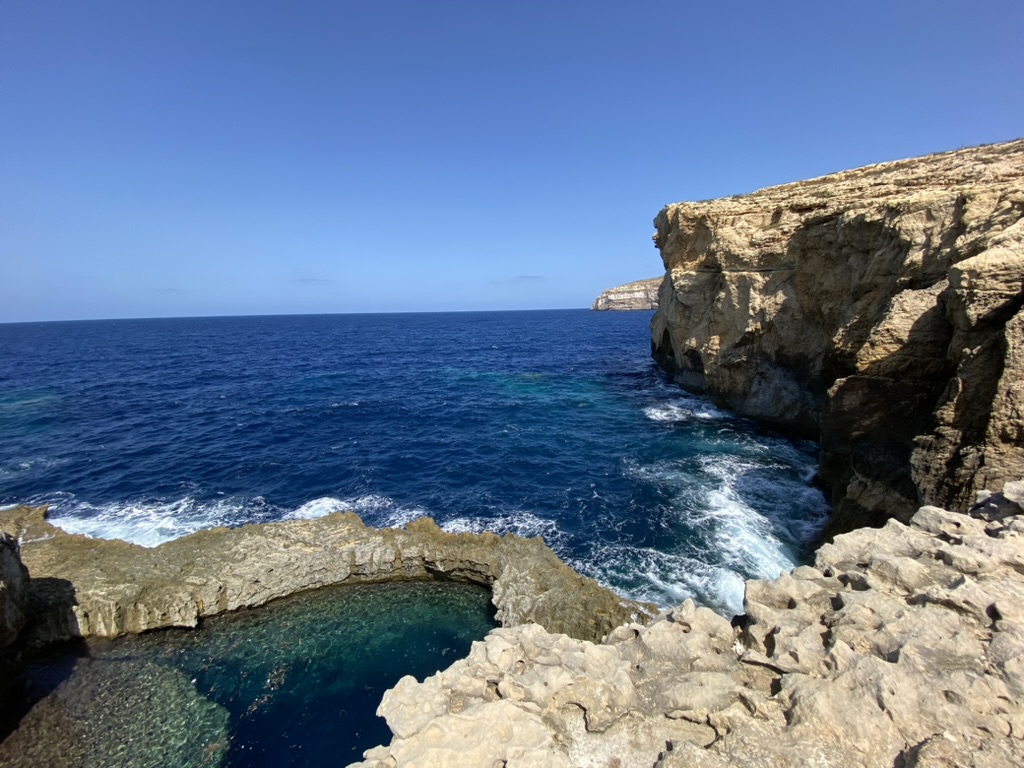
The Blue Hole and Inland Sea sit within a few hundred metres of each other at Dwejra, making it possible to complete multiple dives without moving the car. The Um El Faroud wreck is a forty-minute drive to the south coast. Between those three sites, a diver can exhaust a week without repetition.
The Blue Hole, Dwejra
The Blue Hole is a natural limestone chimney — a circular shaft approximately 10 metres across that descends from the surface into a cavern at 15 metres, which opens through a submerged arch into the open sea and the outer wall. The wall drops to 60 metres. The Azure Window, a free-standing limestone arch that stood above the entrance, collapsed in 2017 after centuries of wave erosion; what remains is the geology beneath — undisturbed and increasingly colonised.
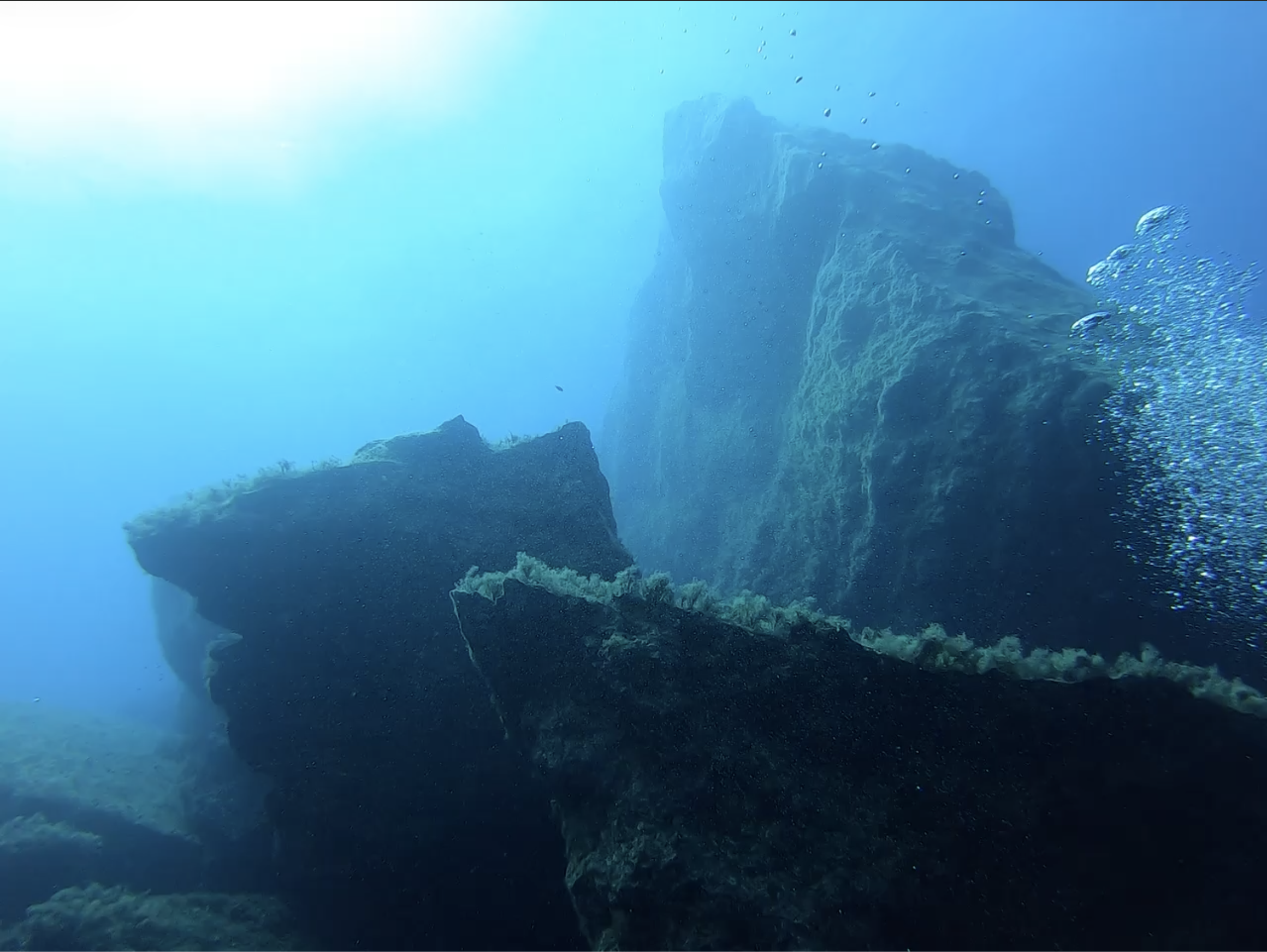
The arch opens onto a wall covered in gorgonian sea fans and sponge below 25 metres, with grouper and amberjack in the mid-water above the drop-off. The Double Arch — a second formation 50 metres to the north — is accessible on the same dive and is often quieter than the main Blue Hole entry point.
The Inland Sea
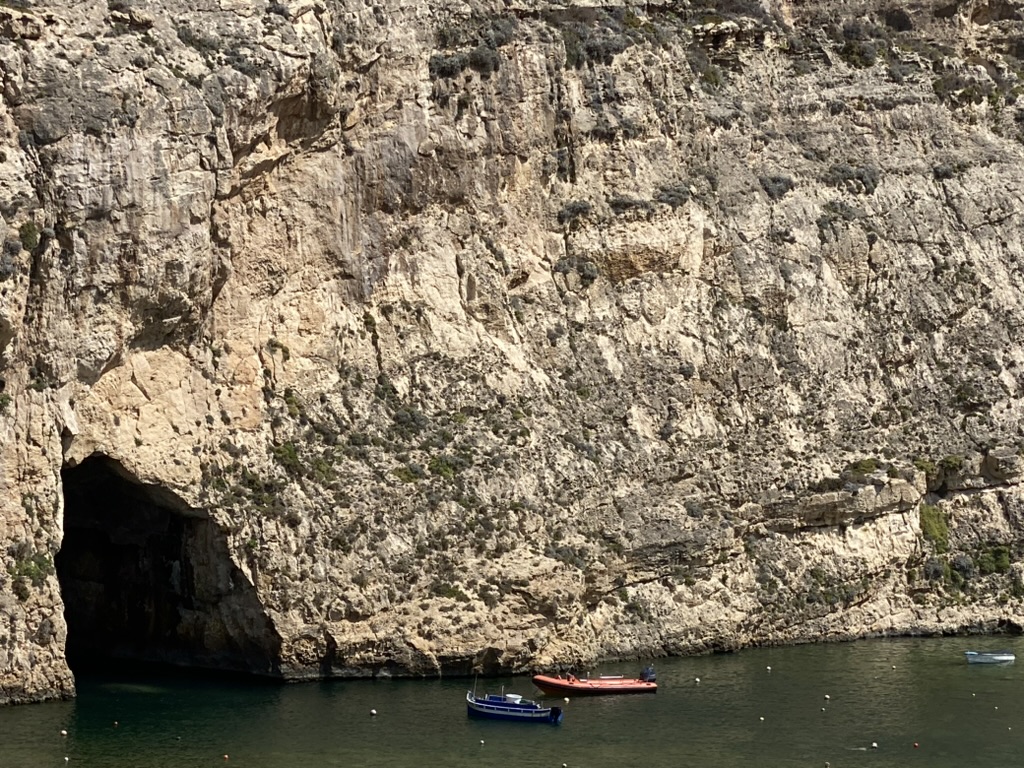
The Inland Sea at Dwejra is a collapsed sea cave — a shallow lagoon connected to the open sea by a 70-metre tunnel cut through the limestone cliff. The tunnel is navigable by diver and, on calm days, by traditional luzzu fishing boats. The dive begins in the lagoon and exits through the tunnel into open water at 6 metres, where the cliff face continues down to 35 metres.
The tunnel walls and ceiling carry dense invertebrate growth — sponge, tunicates, and encrusting coral in the sections where the light does not reach. The lagoon side holds octopus and moray eels in the rubble at its edges.
The Um El Faroud
The Um El Faroud is a 110-metre Libyan oil tanker that grounded and sank accidentally in 1995 following a gas explosion during maintenance. Deliberately sunk as an artificial reef the following year, it now lies upright on a sand shelf on Gozo's south coast at 36 metres, superstructure rising to 18.
The vessel is intact from bow to stern. The engine room is accessible, the bridge is navigable, and the cargo holds are open. Marine succession over nearly thirty years has colonised the hull comprehensively — large grouper occupy the hatch openings, tunicates and sponge cover the upper decks, and the anchor chain is a fixed reference for the descent.
Kemmuna (Comino)
The channel between Malta and Gozo runs past Kemmuna — the island Maltese call Comino — and Kemmuna's north coast is honeycomb limestone: a series of interconnected caves, caverns, and swim-throughs that require good buoyancy and a degree of comfort with reduced overhead.
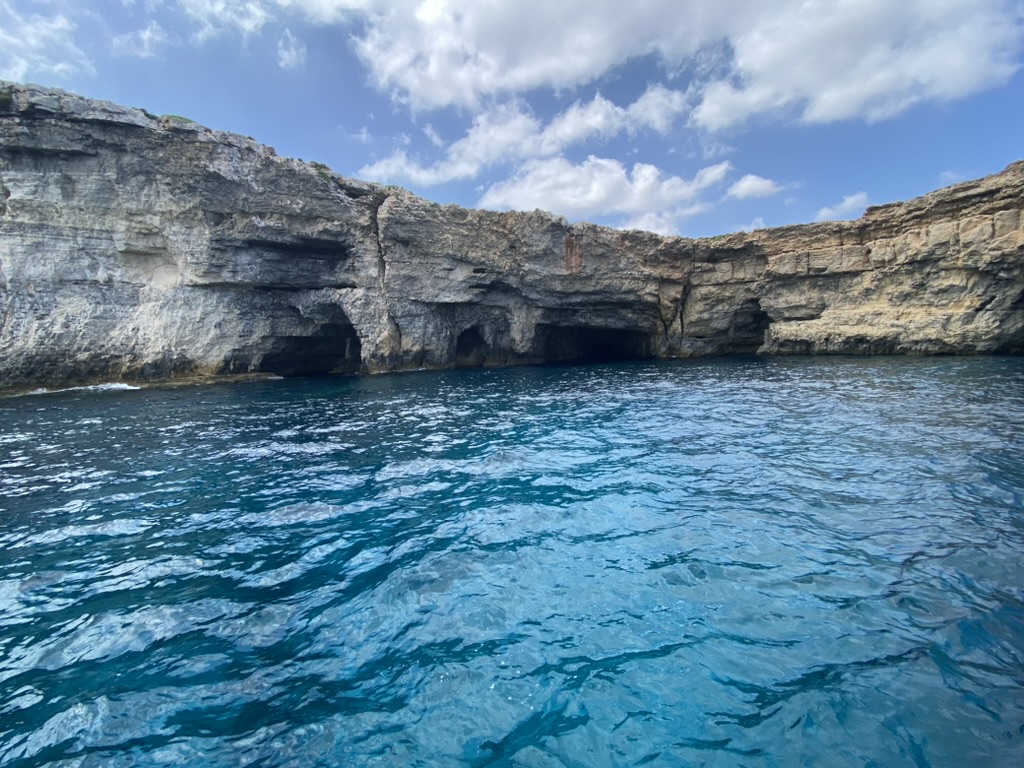
The smaller caverns on the eastern face are often quieter than the main tourist circuit and, on two dives, just as rewarding. Entry is from the water by inflatable; the caves are navigable without specialist equipment at the upper levels, with the deeper sections requiring a torch.
Reqqa Point
The north coast of Gozo at Reqqa Point is a wall dive in a different register from the Dwejra sites. The reef drops from the surface to beyond 40 metres on a vertical face exposed to open Mediterranean current, bringing pelagic species close to the wall. Barracuda school in the mid-water, amberjack patrol the upper sections, and bluefin tuna have been recorded at depth during the autumn migration. Entry is calculated against the flow and the dive runs with it along the wall.
Malta in Pictures
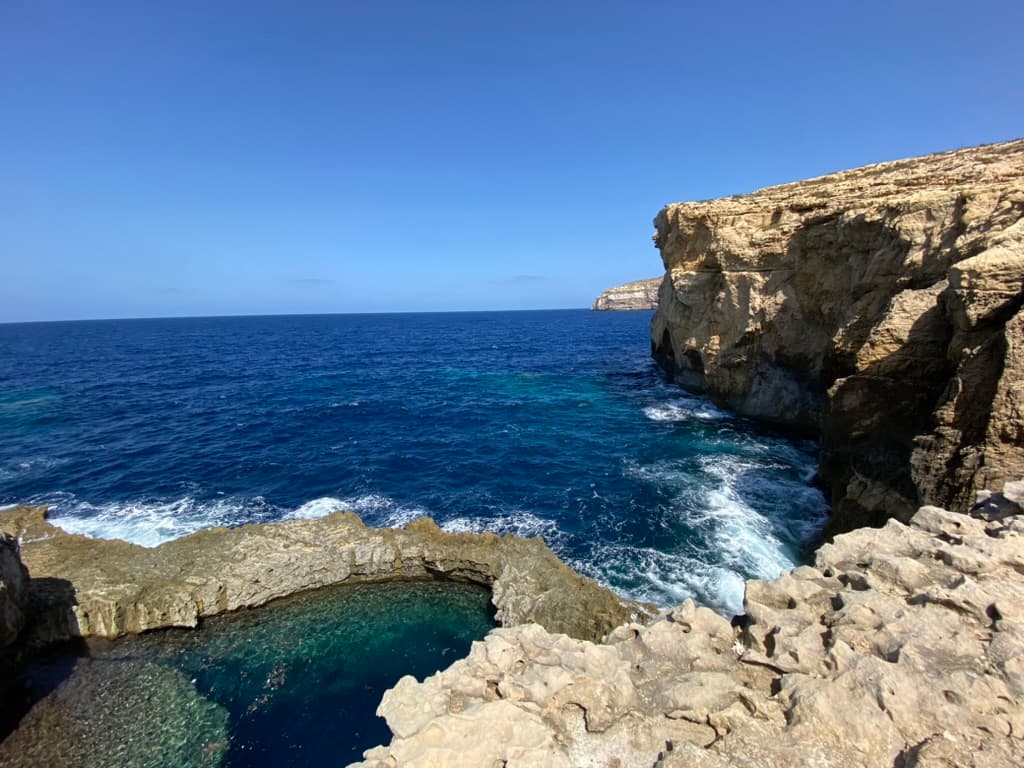
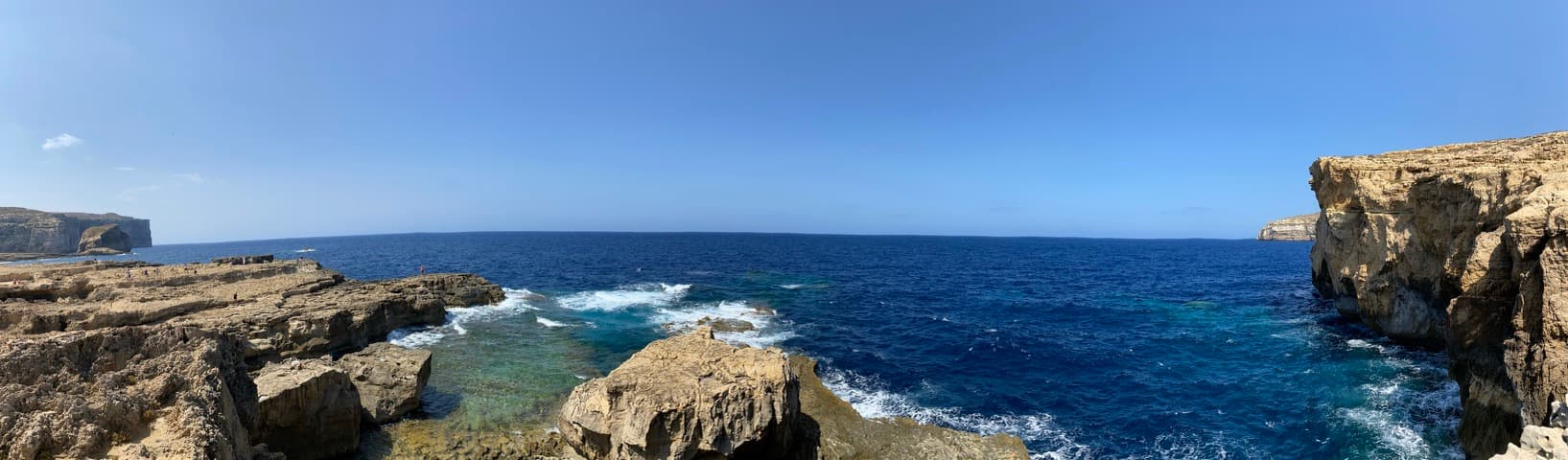
Dwejra Bay from the cliff top — the Blue Hole pool visible in the foreground limestone, the Mediterranean open to the horizon
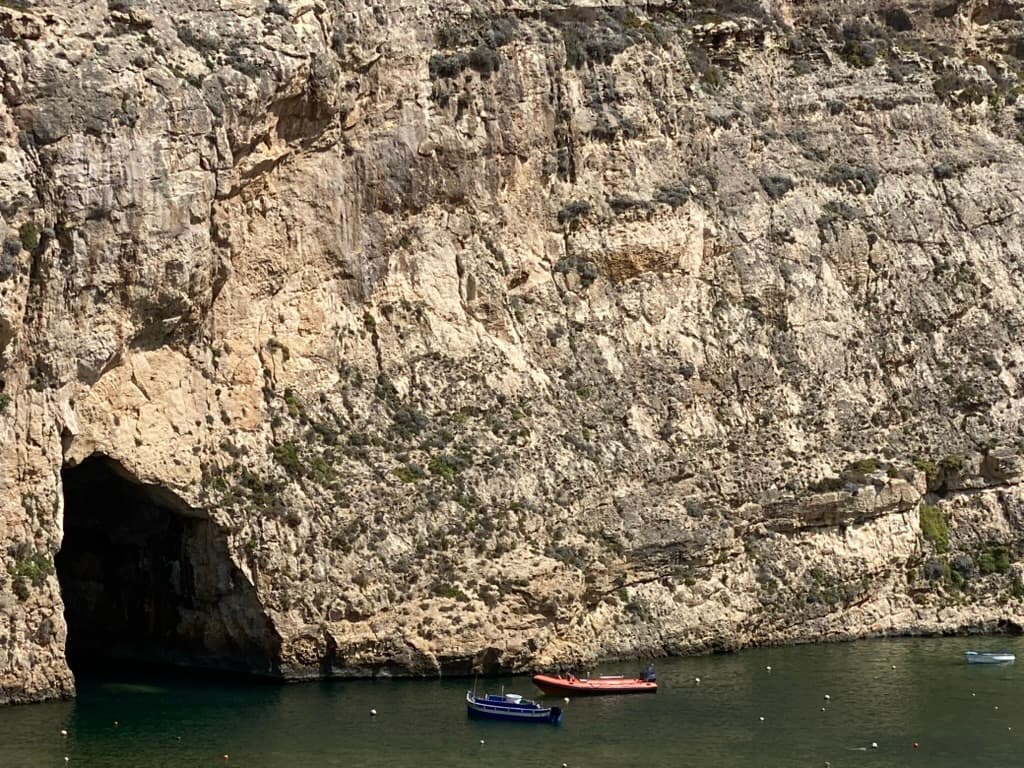
The Inland Sea lagoon — luzzu fishing boats moored in front of the tunnel entrance, the limestone cliff rising above the sheltered water
Kemmuna's (Comino's) honeycomb limestone coast from the water — multiple cave and cavern openings accessible on a single dive
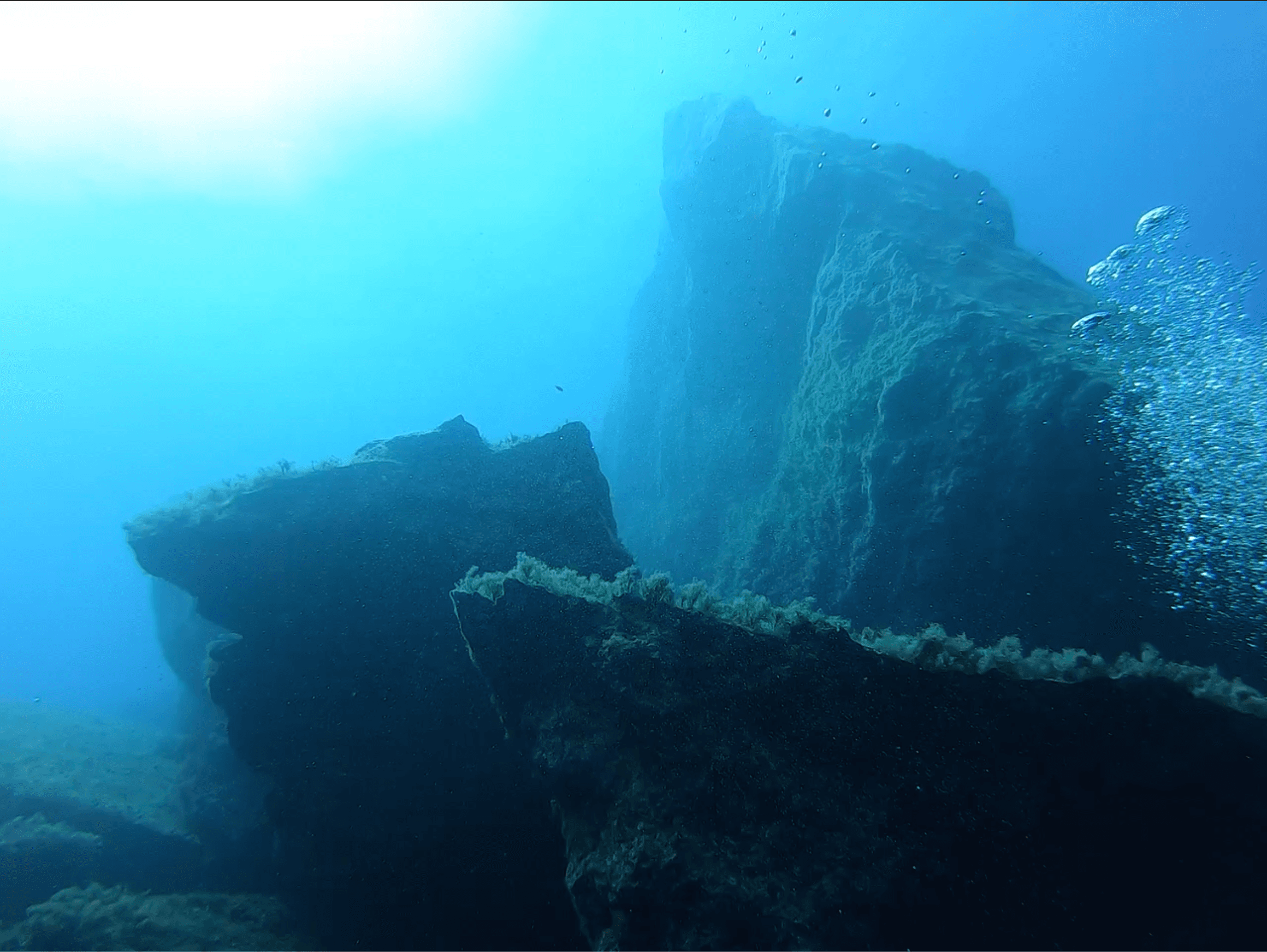
The Blue Hole at depth — rocky structure at 25 metres with small fish schooling in the haze, sunlight filtering from the chimney above