Malta · June 2023
Malta – Wrecks, Caves, and the Blue Hole
The Mediterranean in June: clear water, a wreck graveyard on the south coast, and a cave system that rewards every dive differently.
Europe's best-kept dive secret
Malta doesn't advertise itself as a dive destination. It advertises the Baroque architecture, the Knights of St John, the food. The diving is incidental — which is precisely why it's so good. No drift-boat queues, no reef traffic, no one to compete with for space on the wreck.
The summer months bring the best conditions: the sea has had all season to warm, visibility is at its annual best, and the sites are quiet enough to dive without pressure. The crossing between Malta and Gozo takes twenty minutes by ferry.
The Blue Hole, Gozo
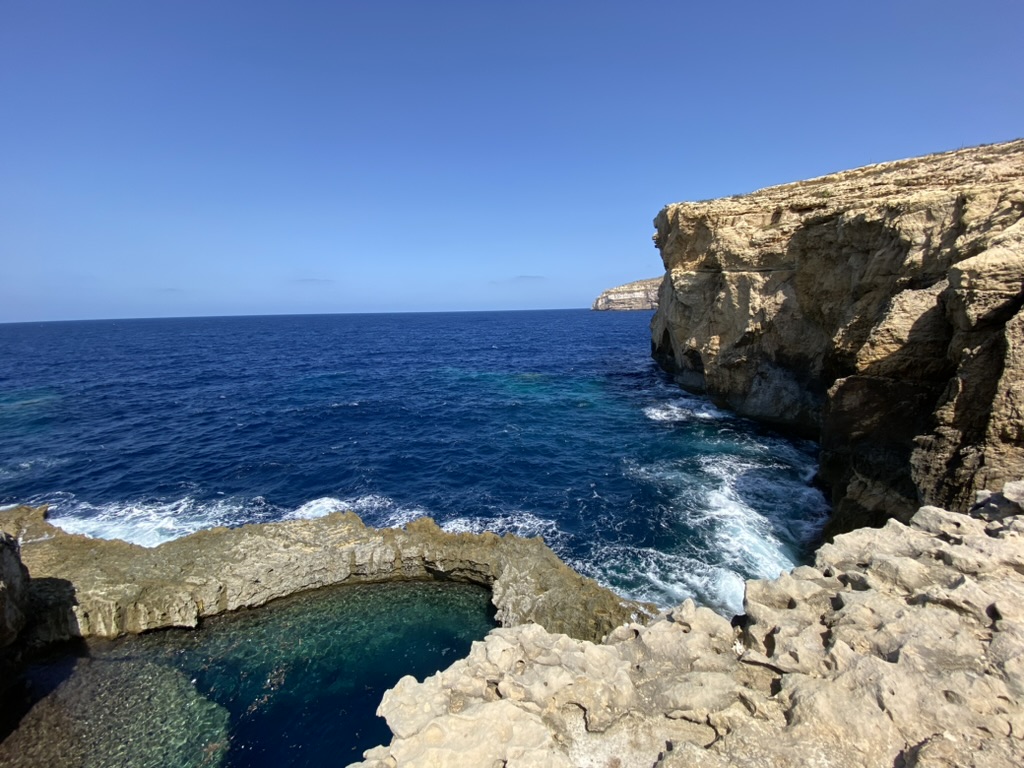
The Blue Hole is a natural chimney formation — a circular shaft roughly 10 metres across that drops from the surface into a cavern at 15 metres, which opens through an arch at 6 metres into open water and the wall. The wall drops to 60 metres. From above, before you enter the water, you can see exactly how deep the pool runs — the turquoise bleeding to dark blue at its centre.
On a clear September morning, with the sun overhead, the light show in the chimney is extraordinary — shafts of refracted blue dropping through the water column, changing angle as clouds pass. It is one of the few dive sites that stops divers mid-descent just to look up.
The Um El Faroud
The Um El Faroud is a 110-metre Libyan oil tanker that was accidentally sunk in 1995 after a gas explosion killed nine workers during maintenance. Deliberately sunk as an artificial reef the following year, it now sits upright on a sand shelf at 36 metres, superstructure rising to 18.
The penetration is extensive. The engine room is intact, the bridge is accessible, and the corridors are navigable with a torch. The wreck is dark enough to require a light, large enough to lose your bearings in, and colonised with enough marine growth — tunicates, sponge, small grouper in every hatch opening — to feel alive rather than derelict.
Comino's caves
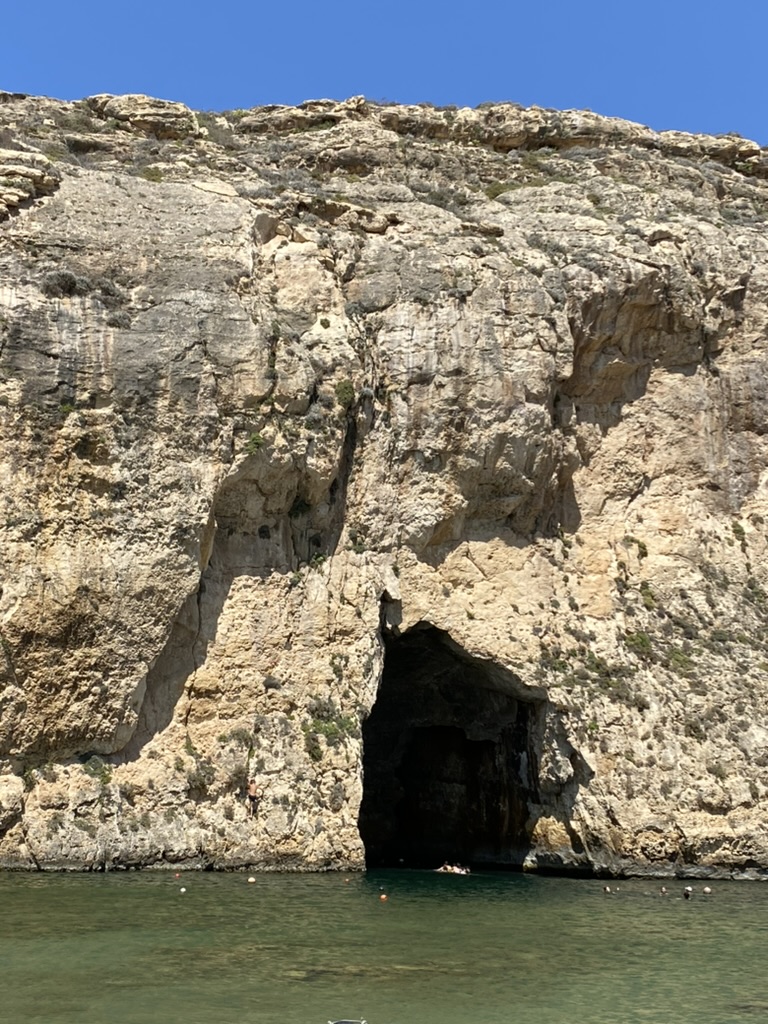
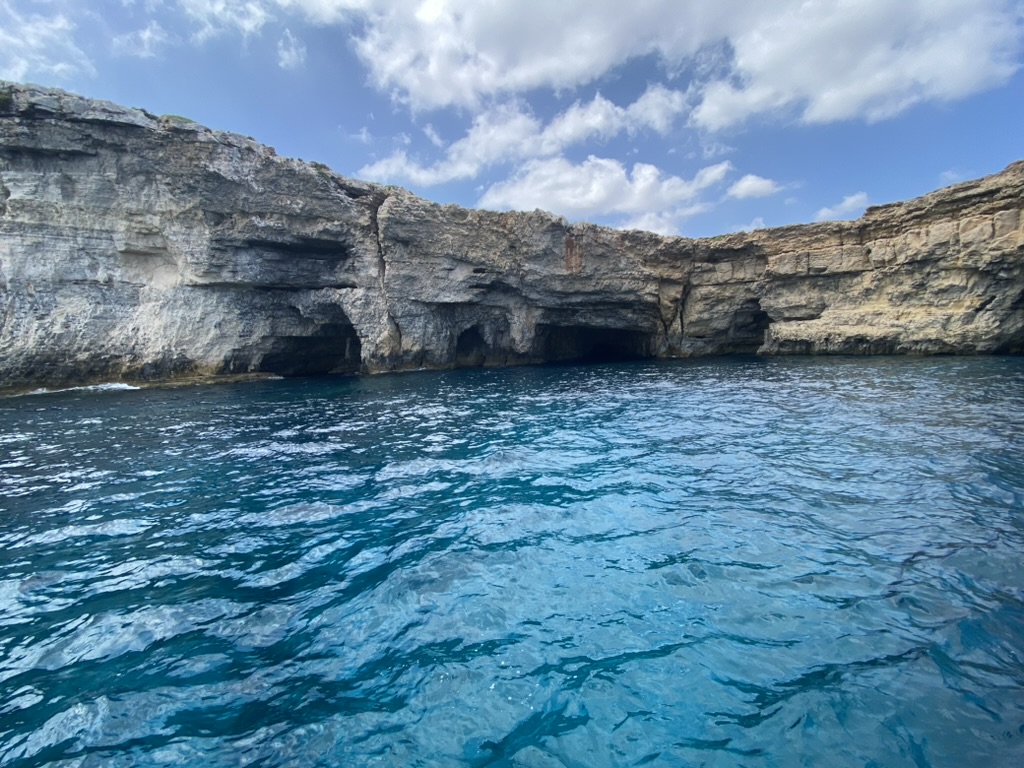
The channel between Malta and Gozo runs through Comino, and Comino's north coast is honeycomb — a series of interconnected caves, caverns, and swim-throughs that require good buoyancy control and a degree of comfort with reduced overhead. The Inland Sea passage — entering a lagoon through an underwater tunnel — is the headline site, but the smaller caverns to the east were emptier and, on two dives, just as rewarding.
On diving in Europe
Malta answers the question of whether European diving can compete with tropical destinations. For clarity and structure it absolutely can — in September it matches the Indian Ocean. For the sheer density of marine life it can't, but that's not what Malta offers. It offers history in the water: a wreck graveyard, geological formations, and the particular quiet of a dive site that hasn't been curated for mass tourism.
Malta in Pictures
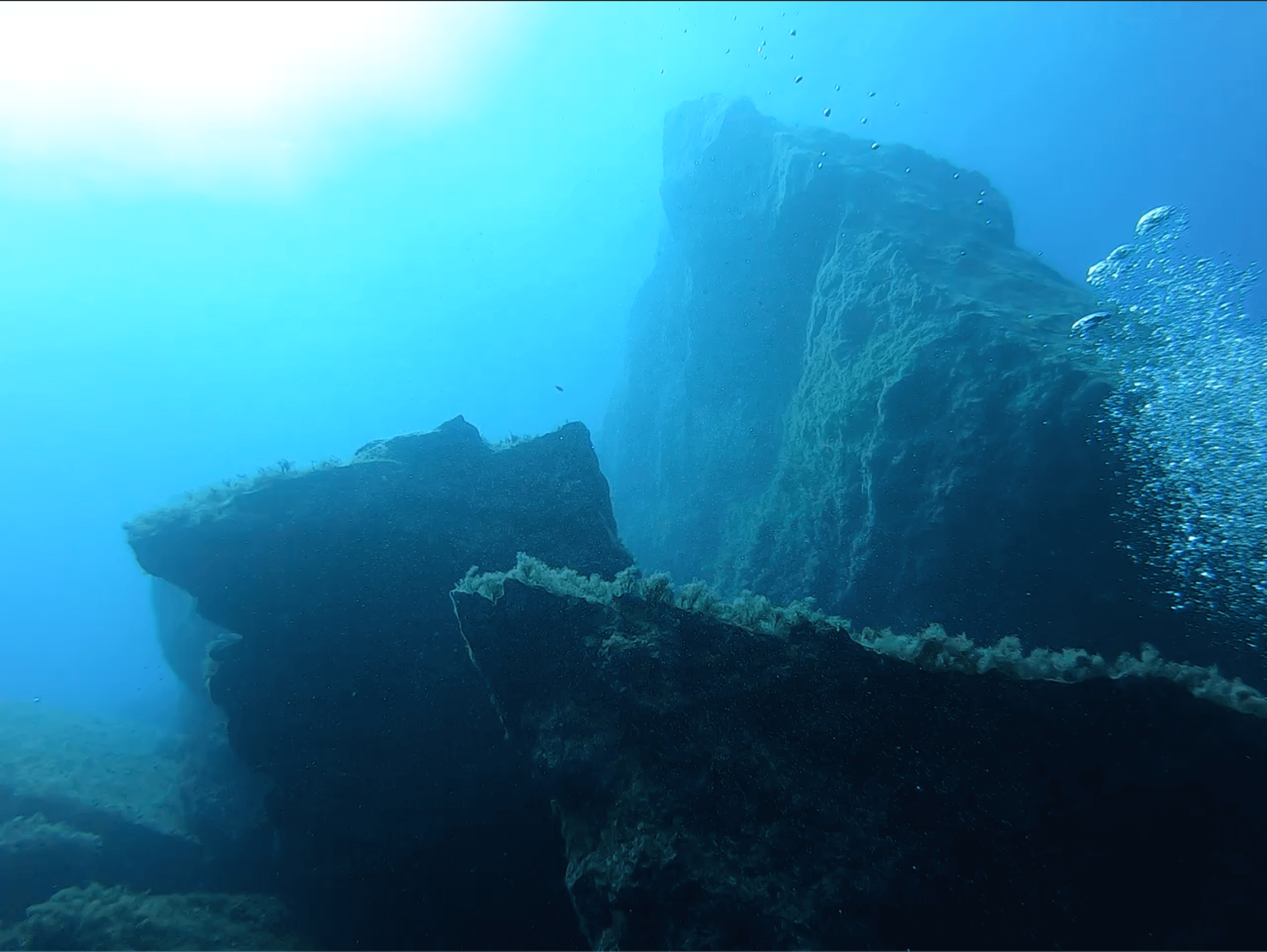
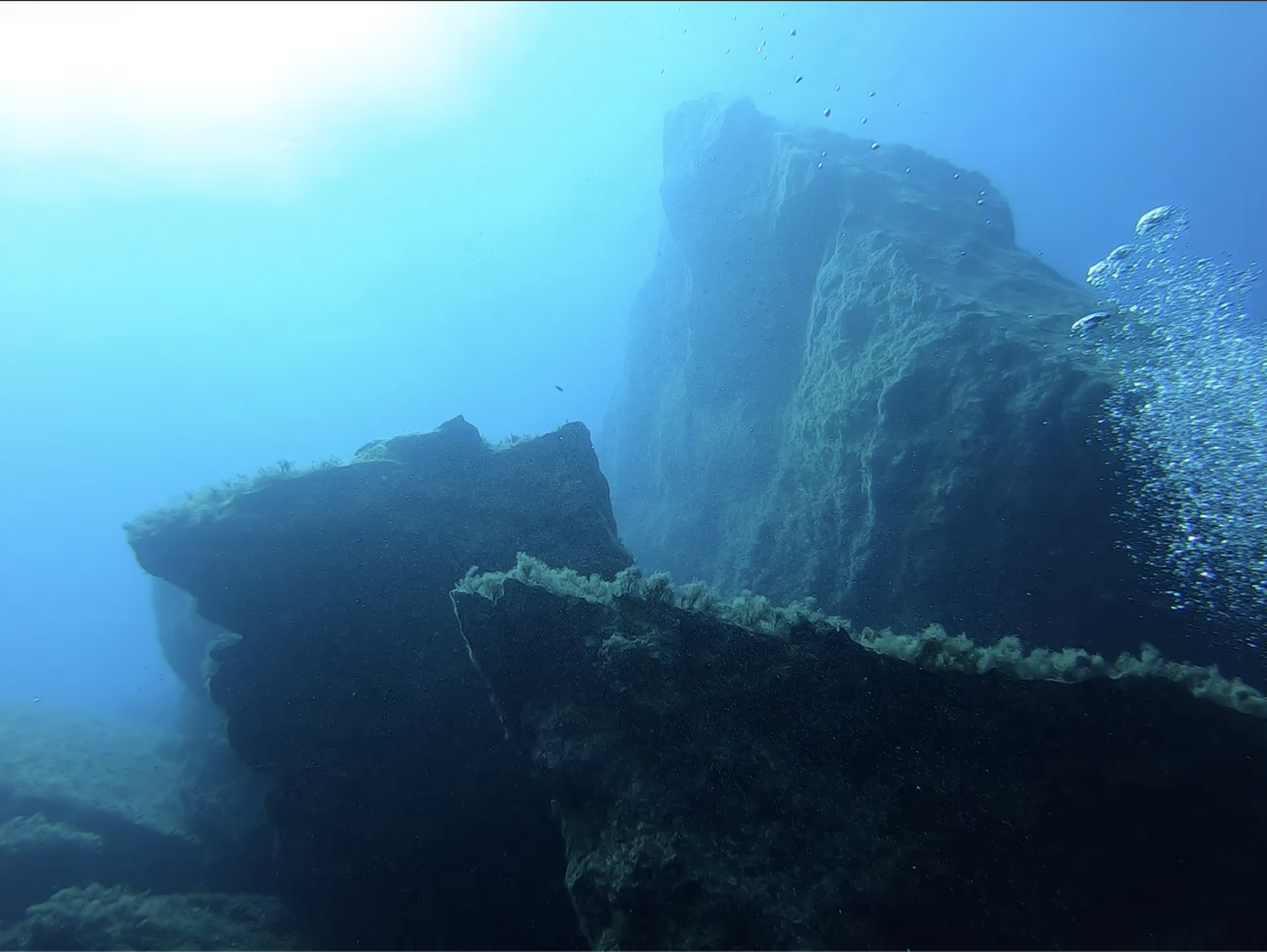
Wreck superstructure at depth — sponge growth on the upper hull, small fish schooling in the haze, sunlight filtering from above
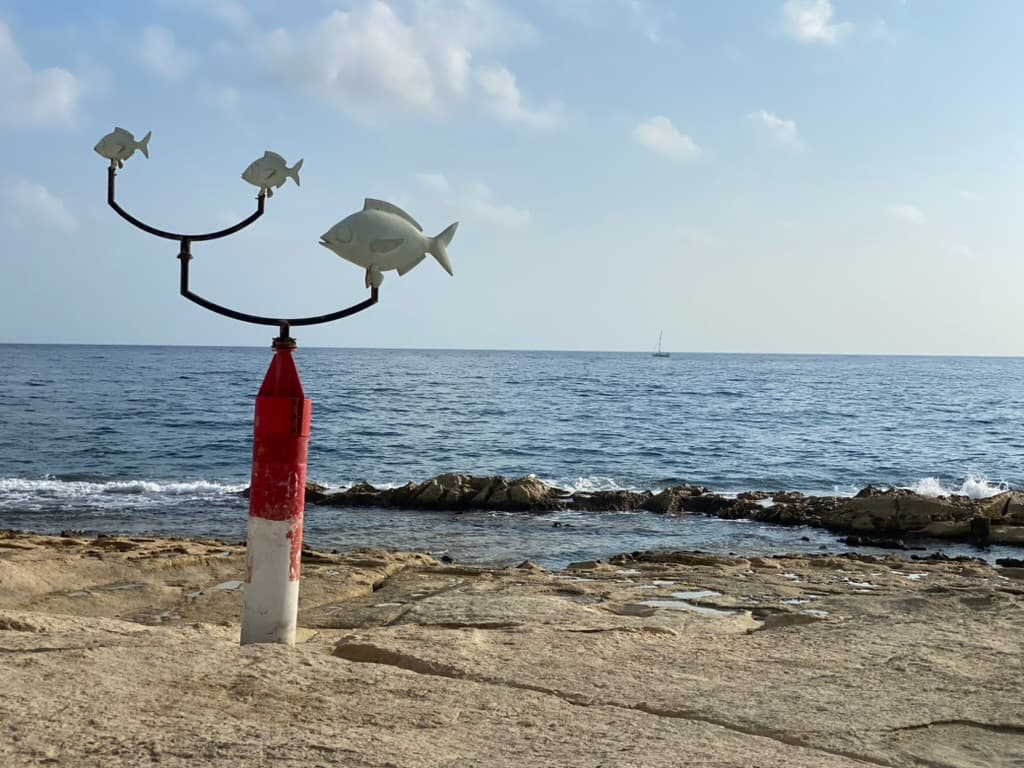
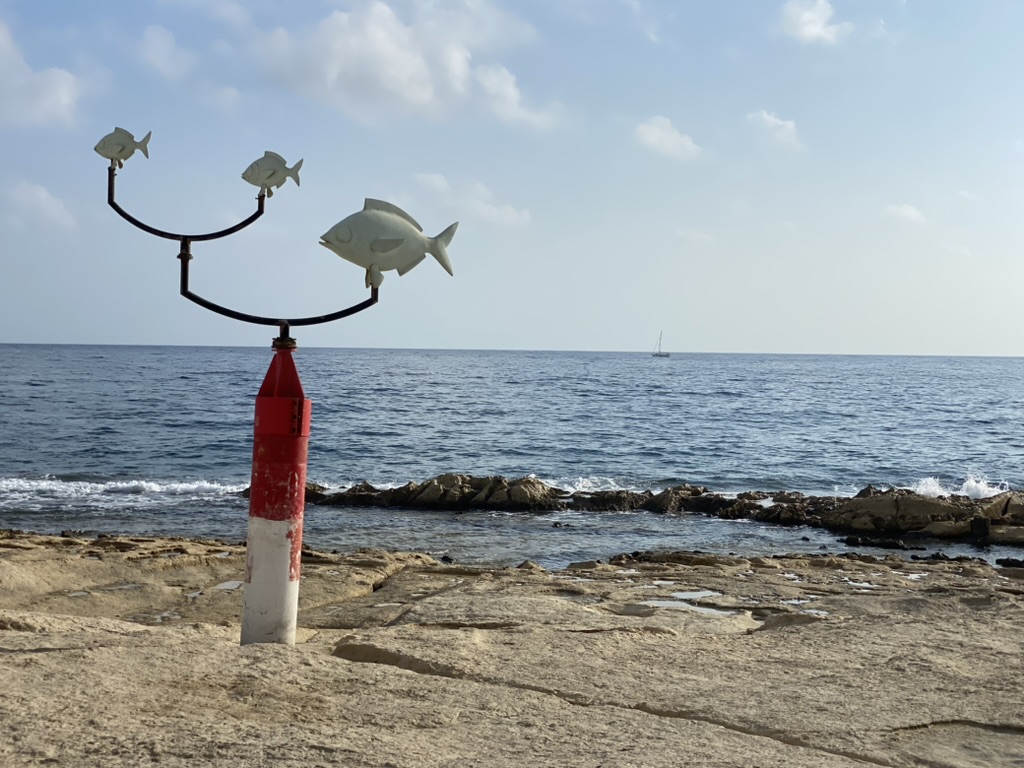
Dive site marker on the Maltese shoreline — a sculpture of three fish on a buoy post marking the shore entry point
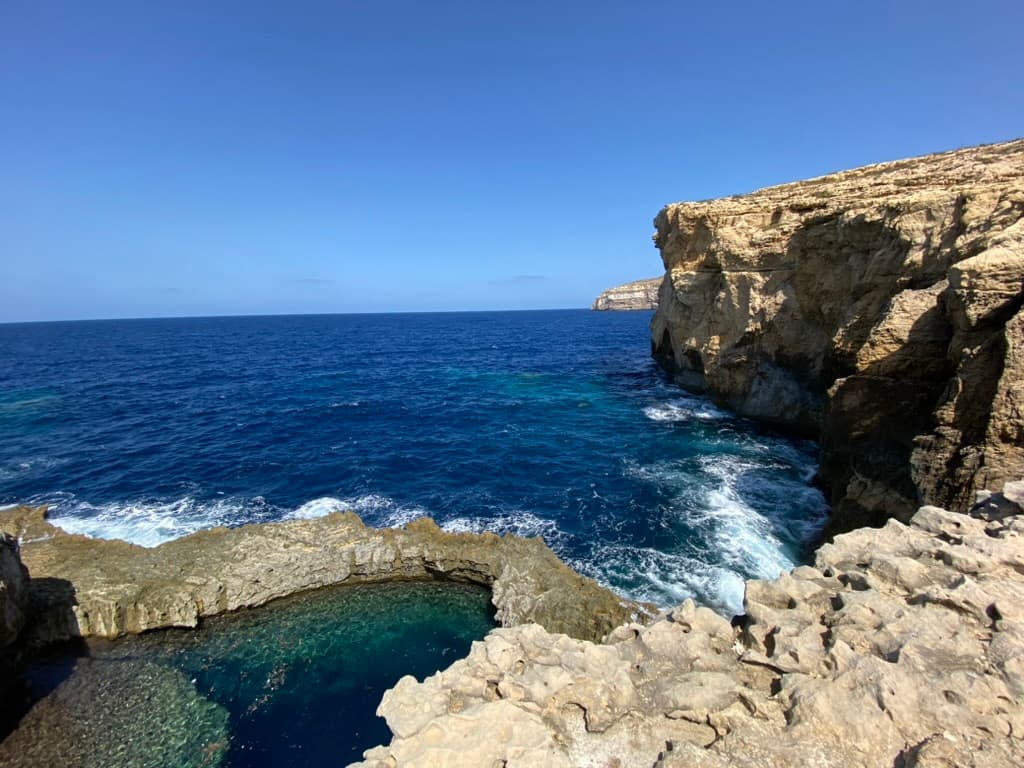
The Blue Hole at Gozo — the turquoise pool opens to the open sea through a submerged arch at 6 metres
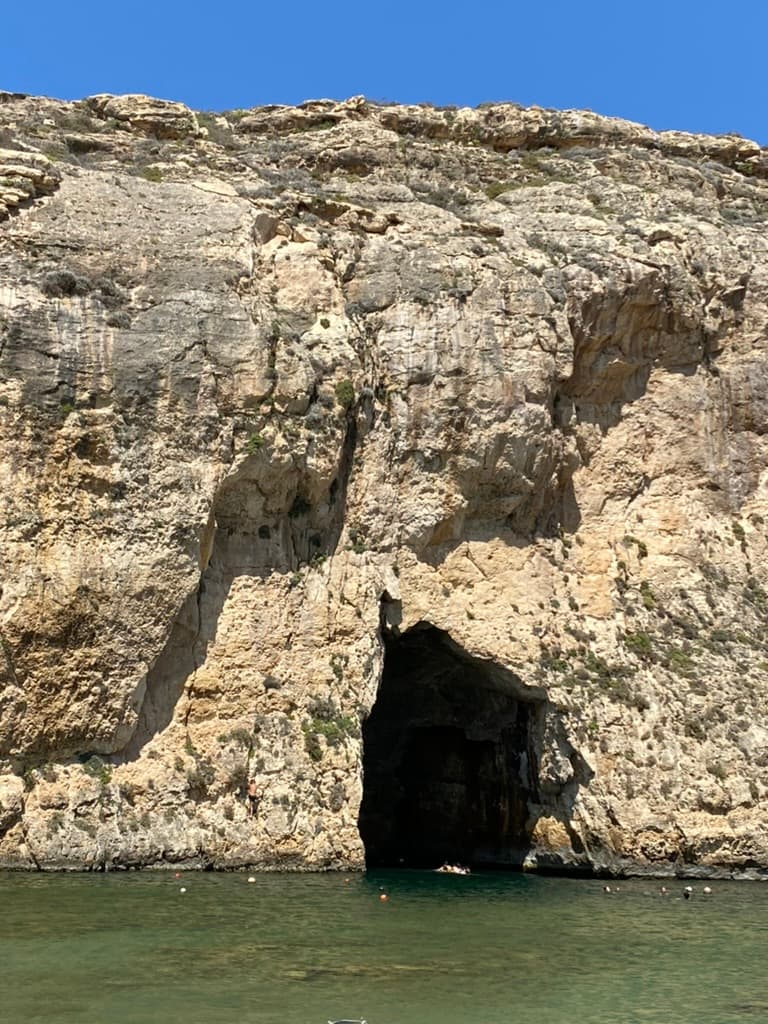
The Inland Sea tunnel entrance from the water — divers swim through this opening into the lagoon beyond
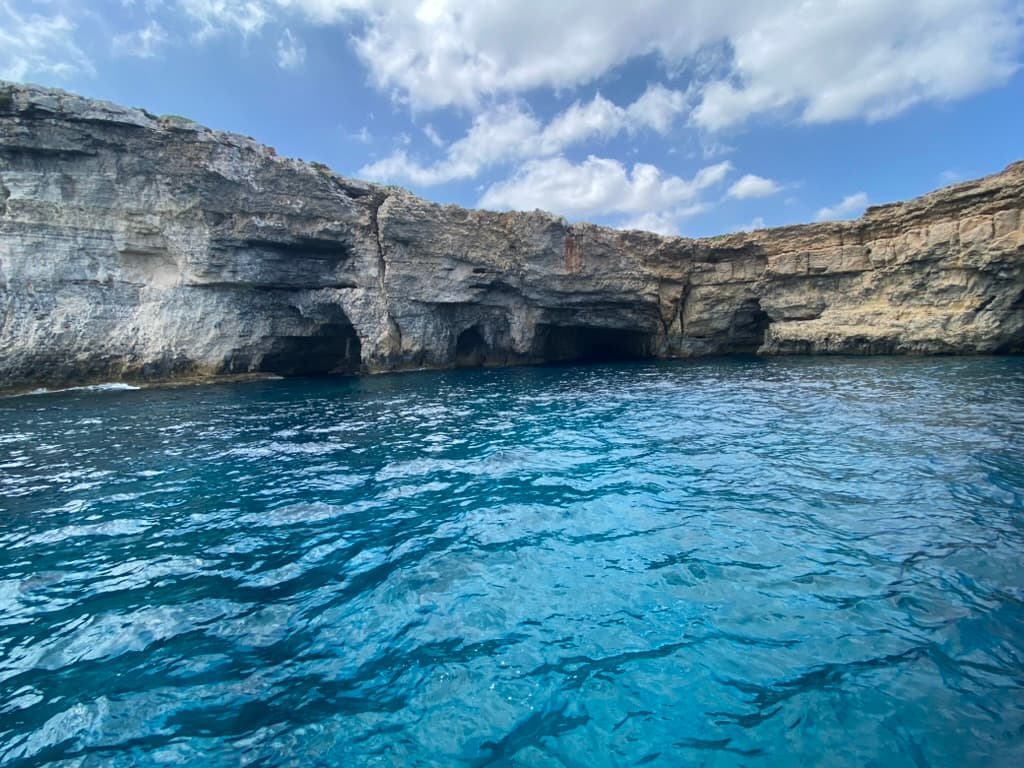
Comino's honeycomb limestone coast — multiple cave and cavern openings accessible from the water