The Philippines · December 2025
Malapascua – Thresher Sharks and Kalanggaman Island
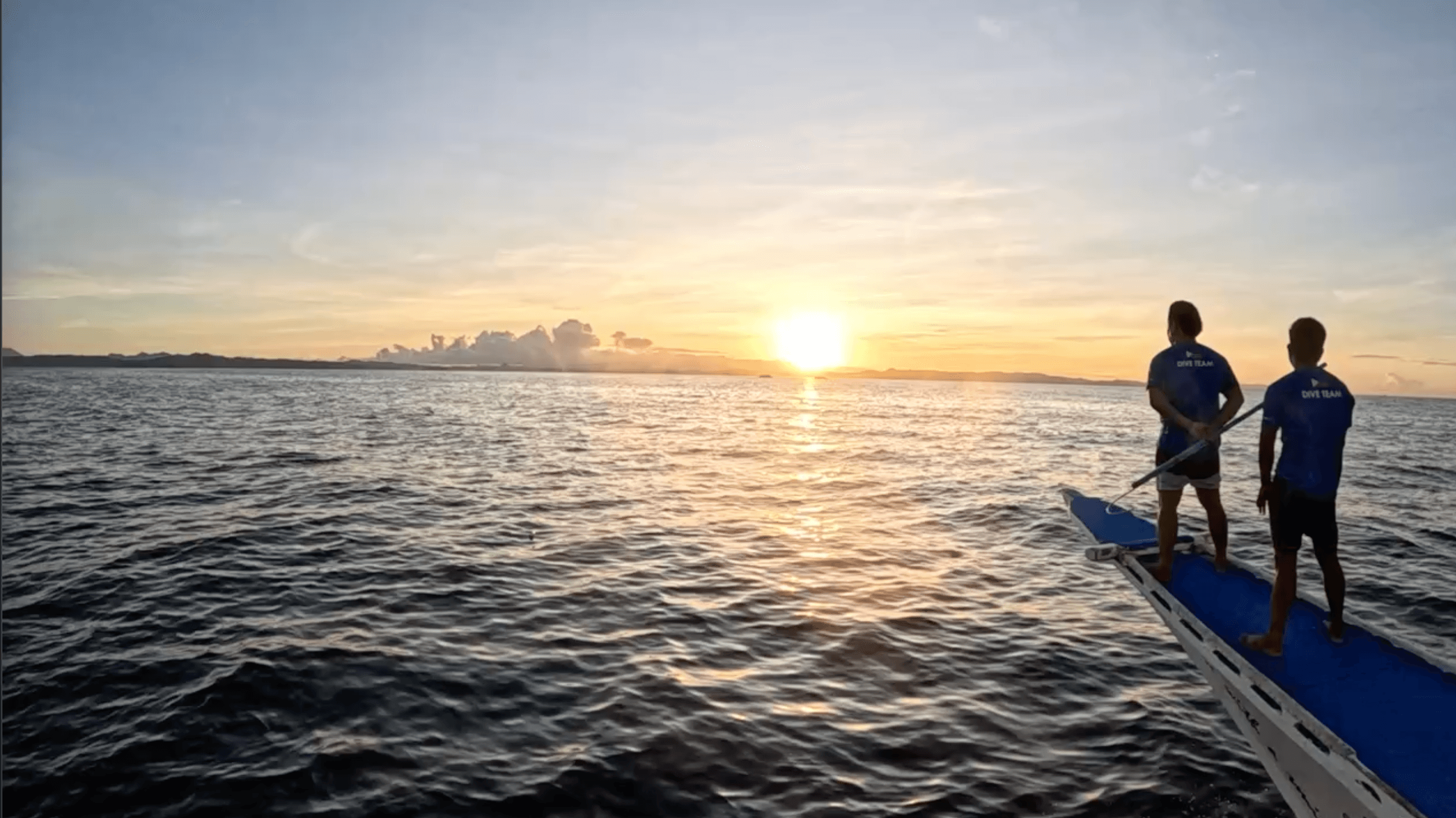
Malapascua at dawn: descend to the seamount before the sun clears the horizon and wait, motionless, for the thresher sharks to arrive for their cleaning station appointment.
Malapascua and the pre-dawn boat
Malapascua Island is a 30-minute bangka ride from the northern tip of Cebu. The island itself is small — walkable end to end in 20 minutes — and the dive industry exists almost entirely to service one site: Monad Shoal, a submerged seamount roughly 250 metres long where pelagic thresher sharks come to be cleaned of parasites each morning.
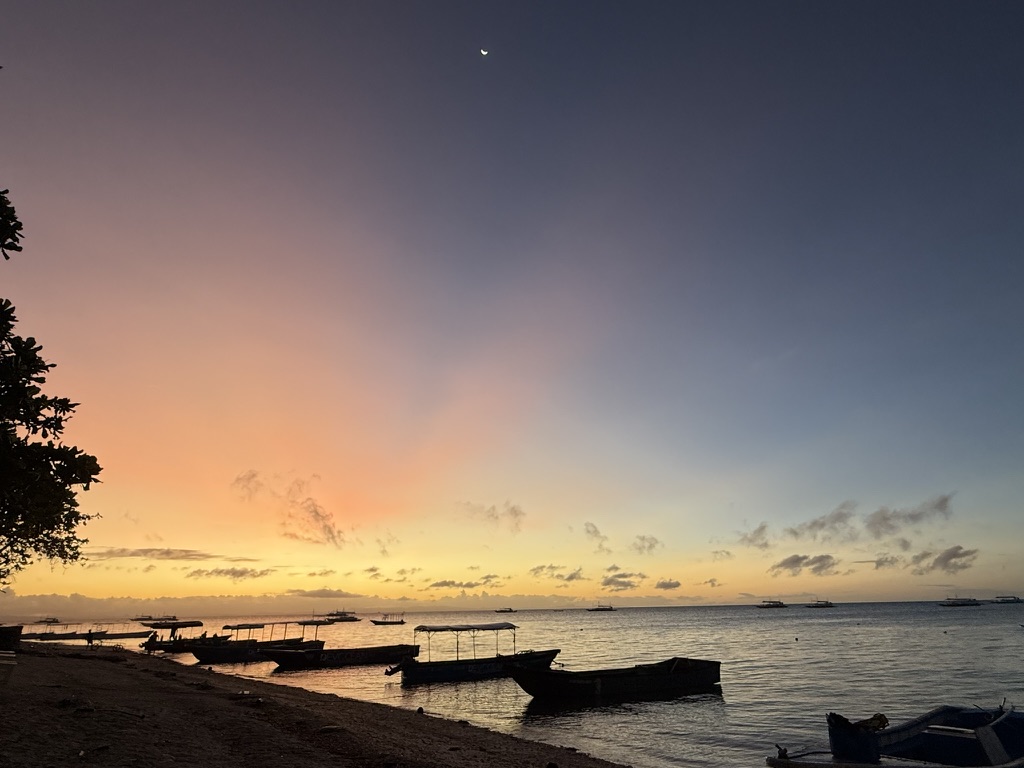
The departures begin between 5 and 5:30am, before the sun is up. The bangka fleet leaves the beach in near-darkness, running the fifteen minutes to the shoal in time to descend before the light reaches depth.
The thresher sharks
Alopias pelagicus — the pelagic thresher — is unlike any other shark species. The tail is the first thing: it equals the body in length, giving the animal a silhouette that looks designed by someone who hadn't seen a shark before and had only read the description. They arrive at the cleaning station from below, ascending from the deep water column, and hover while small wrasse work their skin and gills.
On the best morning six individuals were present simultaneously at the seamount. The largest was perhaps three metres to the base of the tail. They are not interested in divers, but they are aware of them — maintain depth and stillness and they work the station regardless of how many people are watching. Move toward them and they descend.
The dive briefing is emphatic: no movement toward the sharks, no torches, descend slowly. The whole operation runs on the seamount's schedule, not the divers'. It is extremely effective.
Kalanggaman Island
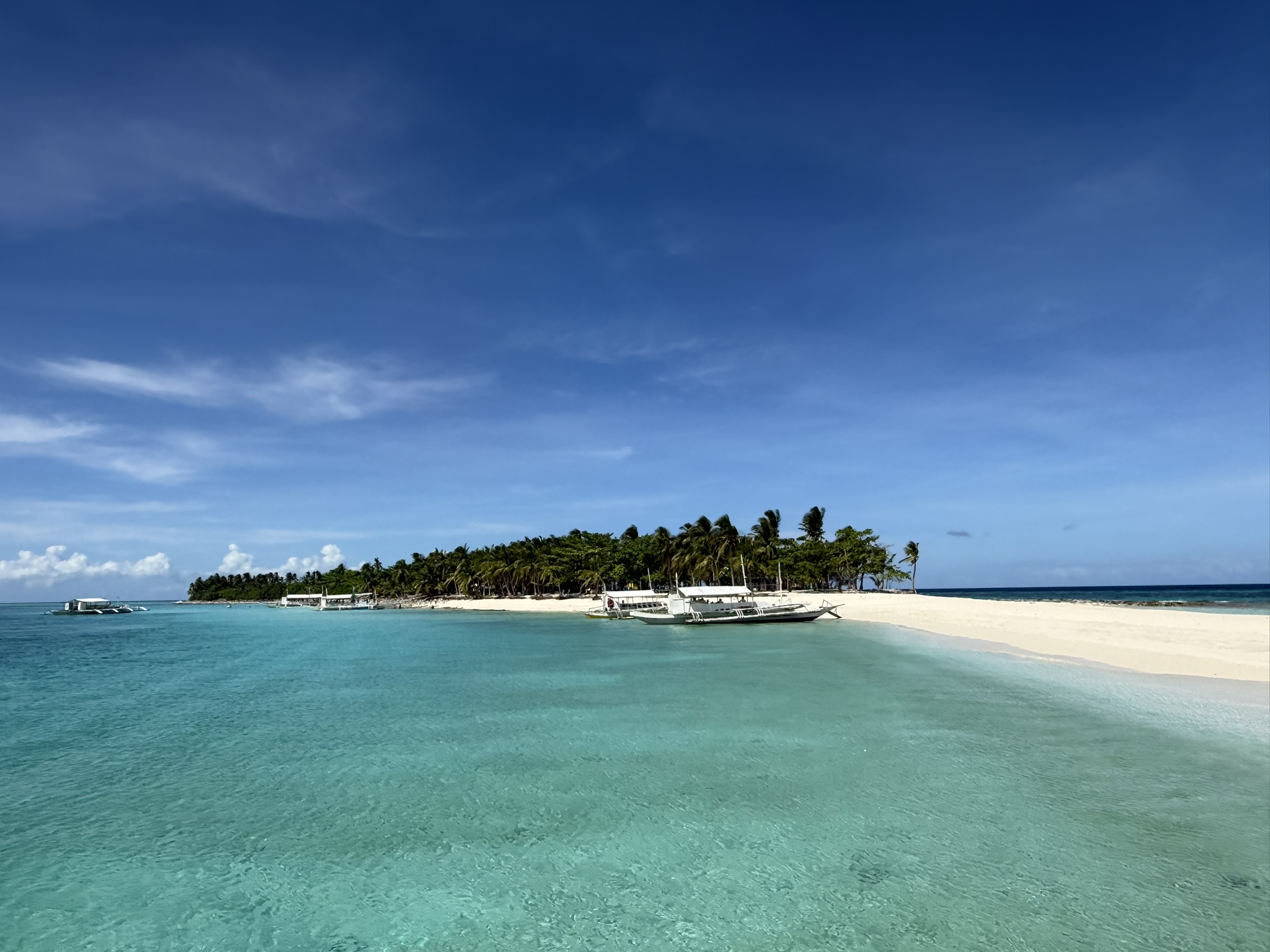
Kalanggaman is an uninhabited island off the Palompon coast of Leyte, reached from Malapascua by a three-hour bangka crossing across the Camotes Sea. The island is small — a few hundred metres of palm-fringed land — with a sandbar extending from its eastern point that, at low tide, narrows to a strip of white coral sand between two shades of turquoise.
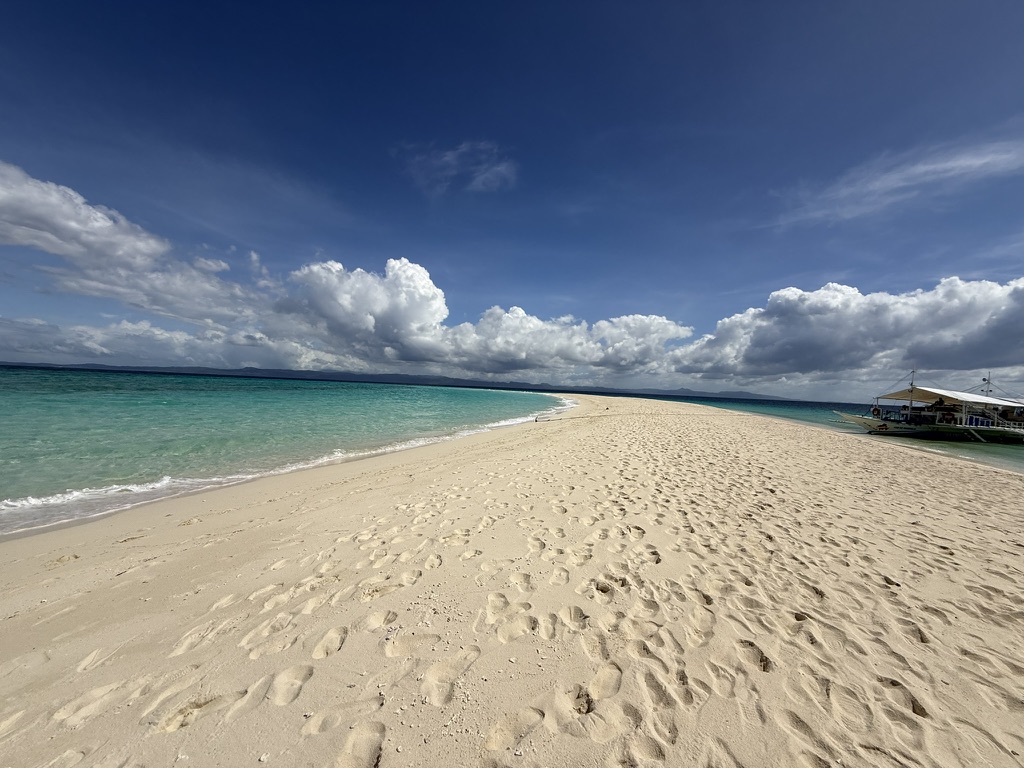
The sandbar is the point. It runs for several hundred metres into the Camotes Sea, barely above the waterline, with the water on the open-ocean side a deeper blue than the lagoon side. The crossing takes the better part of a morning; most operators run it as a day trip with snorkelling on the surrounding reef and a return in the late afternoon.
The Coral Triangle
The Philippines sits at the heart of the Coral Triangle — the region bounded by the Philippines, Indonesia, and Papua New Guinea that contains more coral species and more fish species than anywhere else on the planet. This is not an abstract statistic when you're at 15 metres on Gato Island's wall watching a reef that has more species on a single coral head than many dive destinations have in their entire marine park.
It sounds like hyperbole. On this occasion it's just accurate.
The Philippines in Pictures
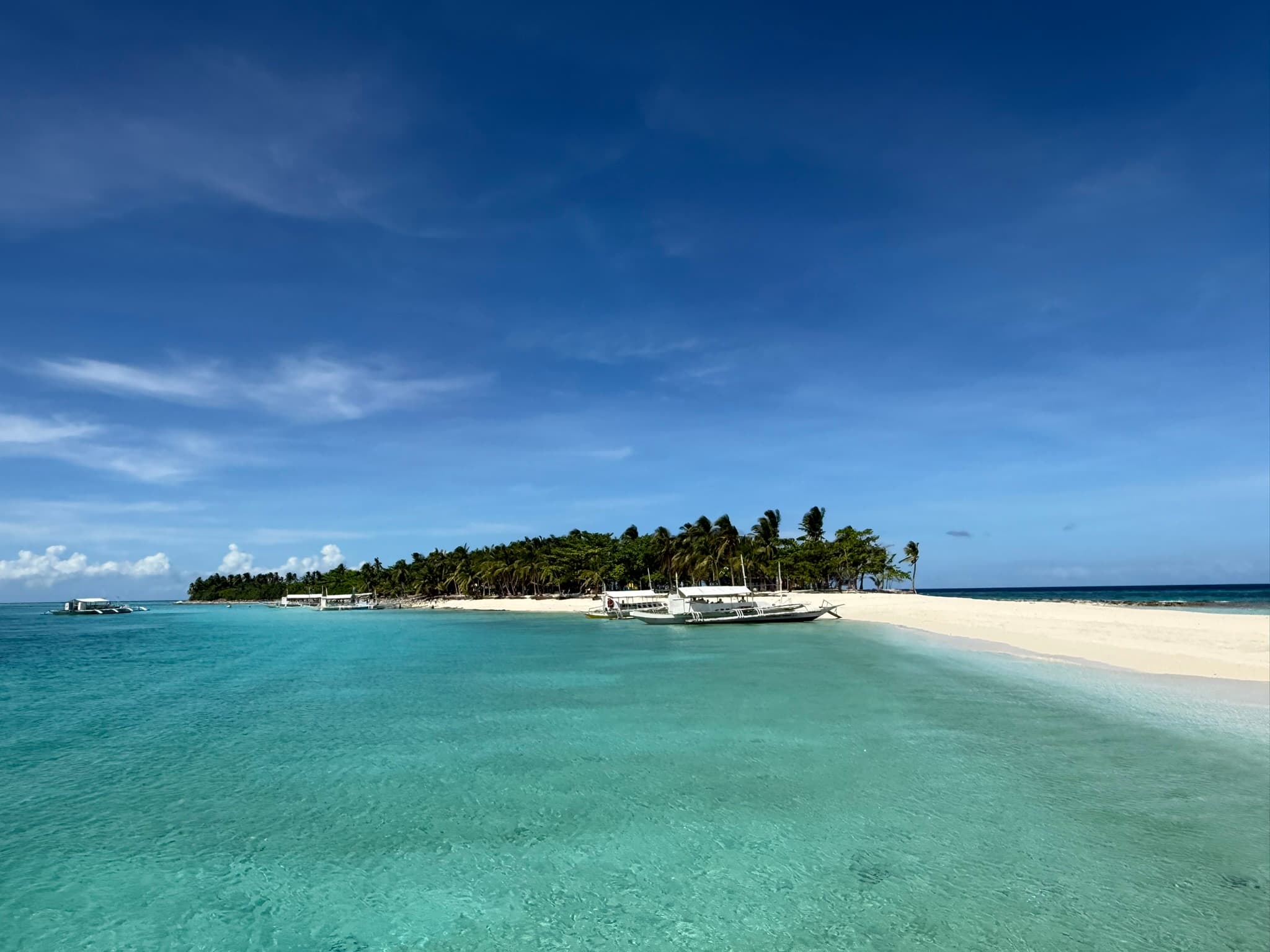
Kalanggaman Island from the water — bangka boats moored at the white sand shore, the palm-lined interior rising behind
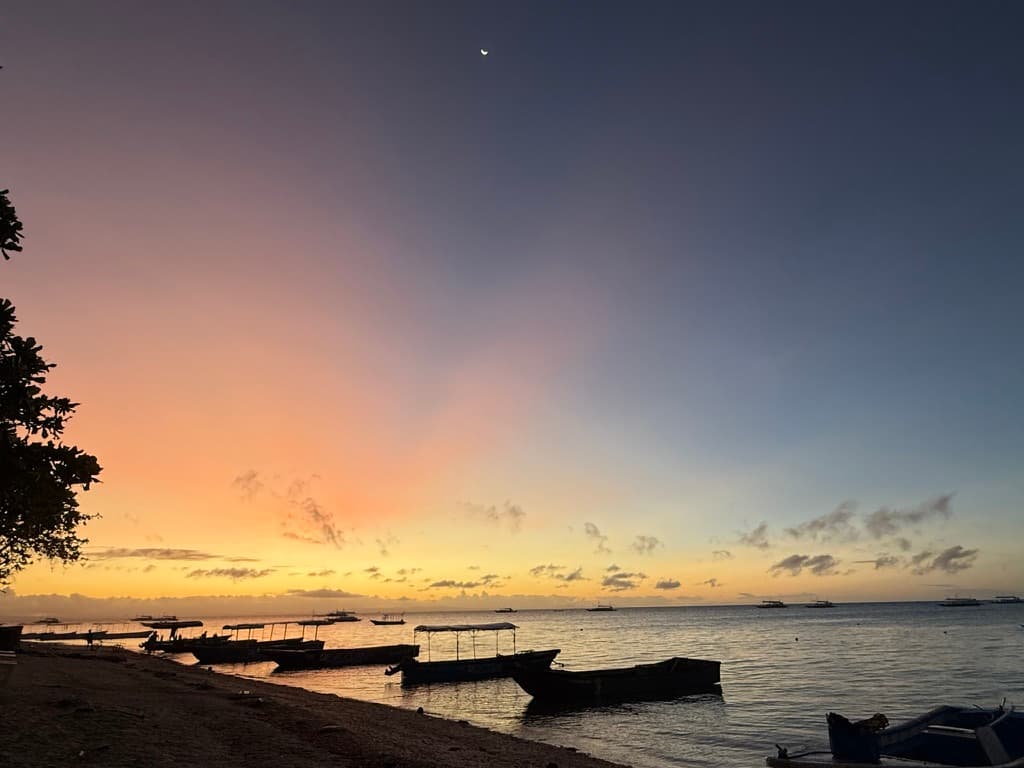
Pre-dawn on Malapascua beach — bangka fleet silhouetted against the orange sky before the Monad Shoal departure, crescent moon above
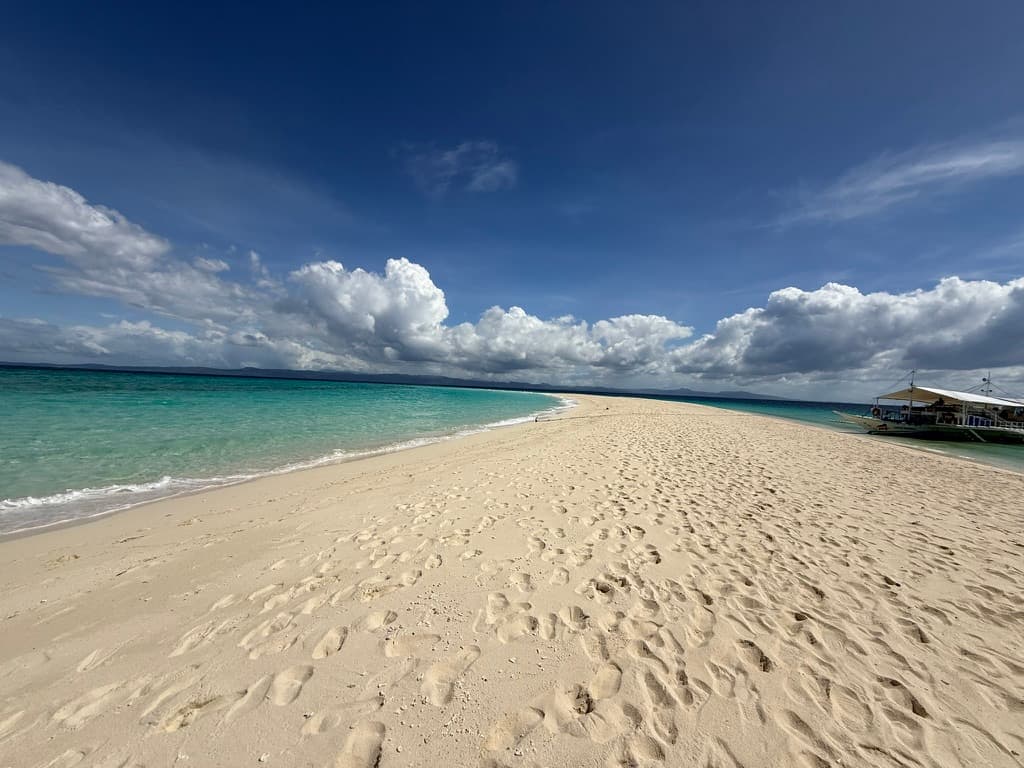
Kalanggaman Island's sandbar — the narrow white sand spit extending into open turquoise water, almost completely deserted at midday
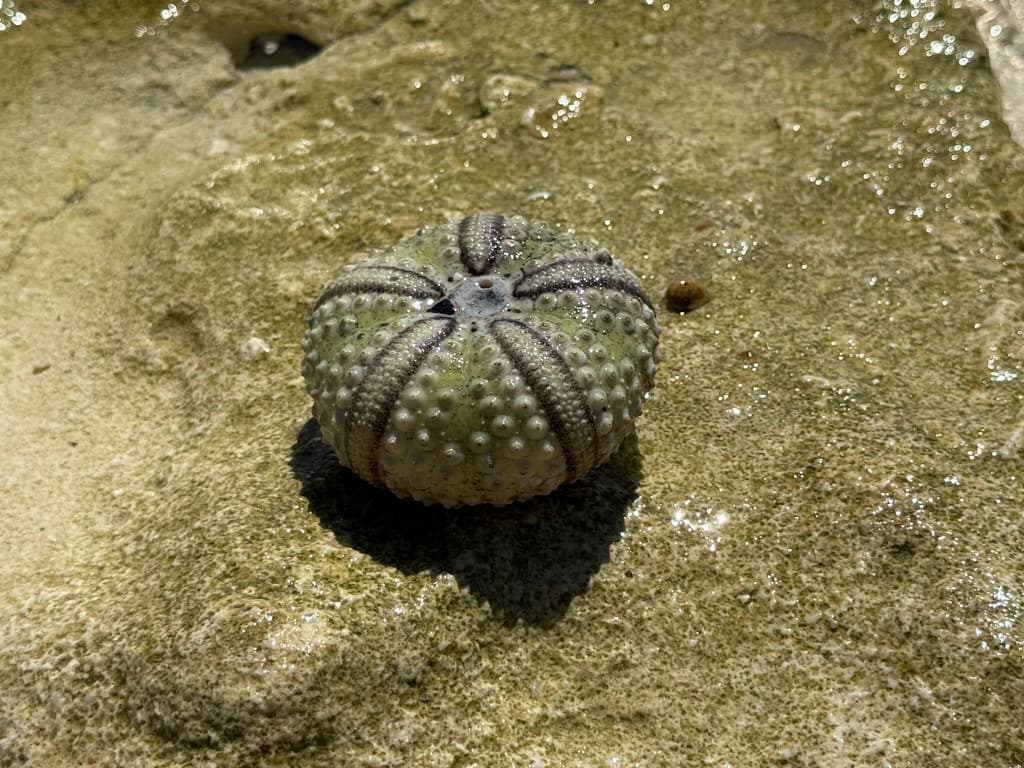
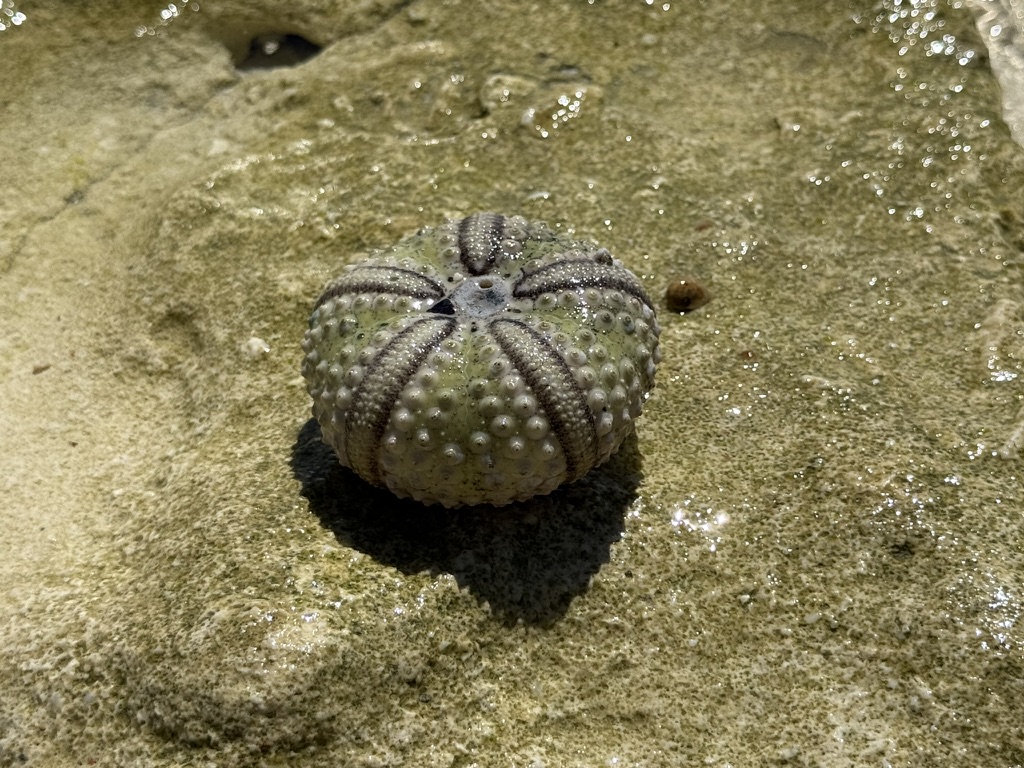
Sea urchin test on the ironshore at Malapascua — the spines gone, the skeletal structure intact on the wet limestone