Indonesia · September 2024
Komodo – Mantas, Dragons, and Ripping Current
Komodo National Park sits at the convergence of the Flores Sea and the Indian Ocean — cold upwellings, ripping tidal currents, and one of the most intact reef ecosystems in the Coral Triangle. Thirteen dives across the park's major current-driven and sheltered sites.
The Coral Triangle context
Komodo National Park occupies a narrow strait between the islands of Flores, Komodo, and Rinca — a pinch point through which the Indian Ocean and the Flores Sea exchange water twice daily with the tidal cycle. The hydrodynamic result is among the most productive in the Coral Triangle: upwellings of cold, nutrient-rich water drive phytoplankton blooms, which concentrate zooplankton, which concentrate filter feeders and the pelagics that follow them. The reef systems here — surveyed at over 1,000 species of fish and 260 species of coral — represent some of the highest recorded biodiversity density in the world.
The park is accessed by liveaboard from Labuan Bajo on western Flores. The serious dive sites are 2 to 3 hours from port; a liveaboard lets you dive the same site at different states of the current, which at Komodo matters more than almost anywhere else.
Current-driven sites
The dominant ecology of Komodo is current-driven. Tidal flow accelerates through the channels and over submerged structures, concentrating nutrients and the animals that feed on them. The park's signature dives — Batu Bolong, Castle Rock, The Cauldron, and Tatawa Kecil — are all products of this hydrodynamic.
Batu Bolong is a seamount rising from deep water to within 5 metres of the surface, hit by very strong current on both faces. At 28.8 metres the fish density in full current is extraordinary: surgeonfish stacked against the reef structure, Napoleon wrasse holding station in the wash, grey reef sharks tracking the current edge. Reef health recorded as excellent — the current exposure that makes this site demanding is the same mechanism that keeps it healthy, limiting sedimentation and delivering constant nutrition to the filter-feeding corals.
Castle Rock and Crystal Rock are submerged pinnacles in the channel between Komodo and Rinca. Castle Rock runs strong current through a narrow gap; the entry is technical, the dive managed from within the lee of the pinnacle rather than fought across the face. Crystal Rock sits in moderate current and rewards attention to the water column above the structure — scalloped hammerheads transit through on larger tidal exchanges.
The Cauldron compresses tidal flow through a channel into a site that runs very strong current — pelagic and reef, 22.4 metres, 56 minutes. The dive is not swum; it is managed. You hold depth, neutralise position against the structure, and observe what the current delivers past you.
Tatawa Kecil presents very strong current on a reef and wall structure at 23.6 metres. The wall face on the current side holds sea fans aligned precisely into the flow — a visible record of the prevailing hydrodynamic across the organism's lifespan.
Manta aggregation — Karang Makasar
Karang Makasar — Manta Point is a cleaning station in a cold upwelling zone on the southern side of the park. Oceanic manta rays (Mobula birostris) arrive to be cleaned by resident wrasse and to feed on the zooplankton concentrated by the upwelling. At 17.3 metres, moderate current, the site produces one of the most sustained pelagic encounters in the Coral Triangle: mantas on long, slow circuits, turning into the current on the approach and banking away after cleaning. The longest dive of the trip at 63 minutes.
The upwelling that makes Karang Makasar productive also makes it cold — water temperatures here drop to 21°C when the thermocline pushes shallow. The reef health assessment is Good rather than Excellent, reflecting the thermal stress that periodic cold upwellings impose on the coral assemblage; the trade-off is the pelagic productivity the same upwelling supports.
Sheltered and macro sites
Not all of Komodo is current-driven. Secret Garden at 24.9 metres runs light current across a reef of exceptional macro diversity — pygmy seahorses in sea fans, ornate ghost pipefish in seagrass, nudibranchs on every shaded surface. Reef health excellent. The site functions as an illustration of what the Coral Triangle's species richness looks like at rest, without the current dynamics that define the park's more celebrated sites.
Sebayur Kecil and Mawan are broader reef platforms in moderate current — intact hard coral cover, high fish density, sea turtles at rest on the reef structure. Siaba Kecil runs as a drift at 20.6 metres in strong current; sea turtles resting on the reef in numbers atypical for a drift dive, the current delivering you past them before a full count is possible.
Night diving — Gililawat Darat Bay and Padar Kecil Wreck
The park's night diving reveals a parallel ecology. Gililawat Darat Bay in light current at 22.4 metres — nudibranchs, hunting octopus, the reef invertebrate fauna active in the absence of diurnal predators. Wae Nilu transitions from structured reef to open sandy muck — flatheads immobile on the substrate, cuttlefish active in the mid-water, decorator crabs visible only when they move. Padar Kecil Wreck at 18.9 metres is a colonised hull at the point where wreck and reef are indistinguishable — the original structure serving as substrate for the same coral and sponge assemblages found on natural reef.
The dragons
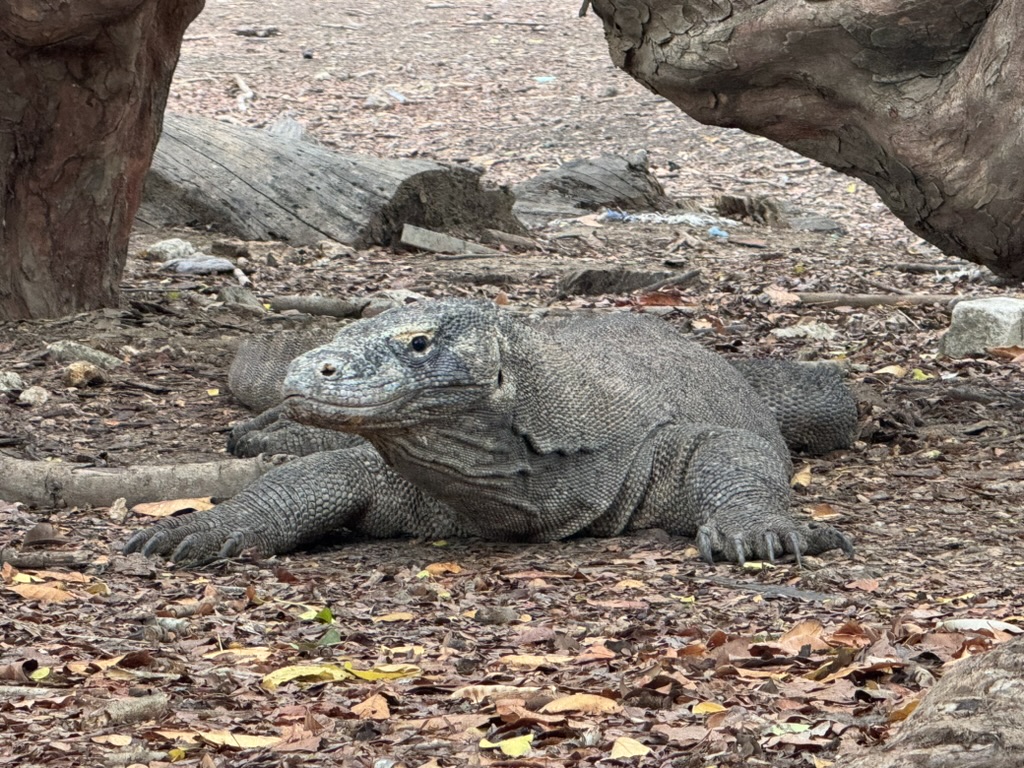
Varanus komodoensis — the Komodo dragon — is the park's apex terrestrial predator and the reason the national park boundary was drawn where it was. The population on Rinca runs higher density than Komodo Island itself. Adults reach three metres and are capable of moving at speed across uneven ground. The ranger visit is managed: forked stick, group together, matter-of-fact briefing. The animals near the ranger station are habituated but not tame.
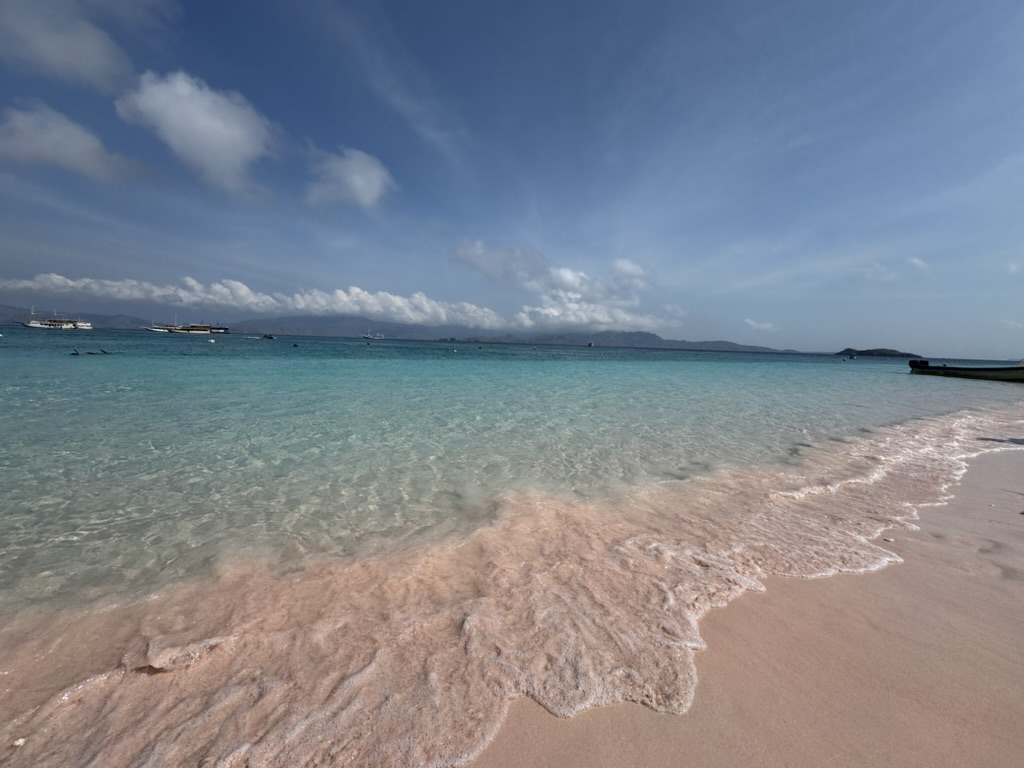
Indonesia in Pictures
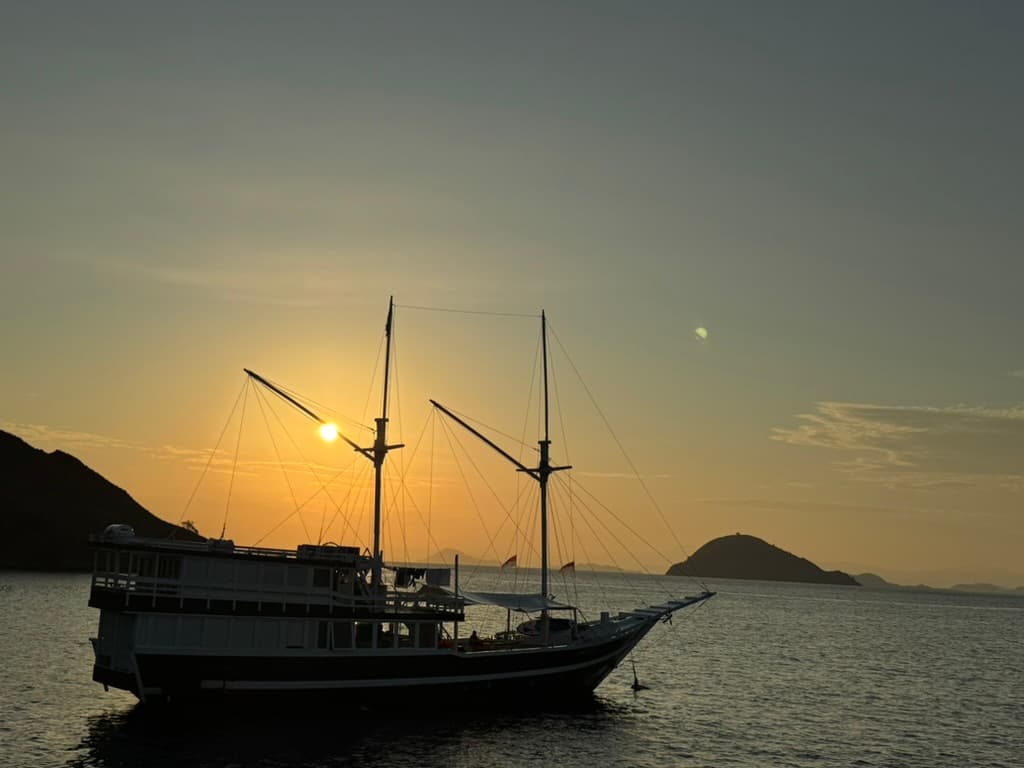
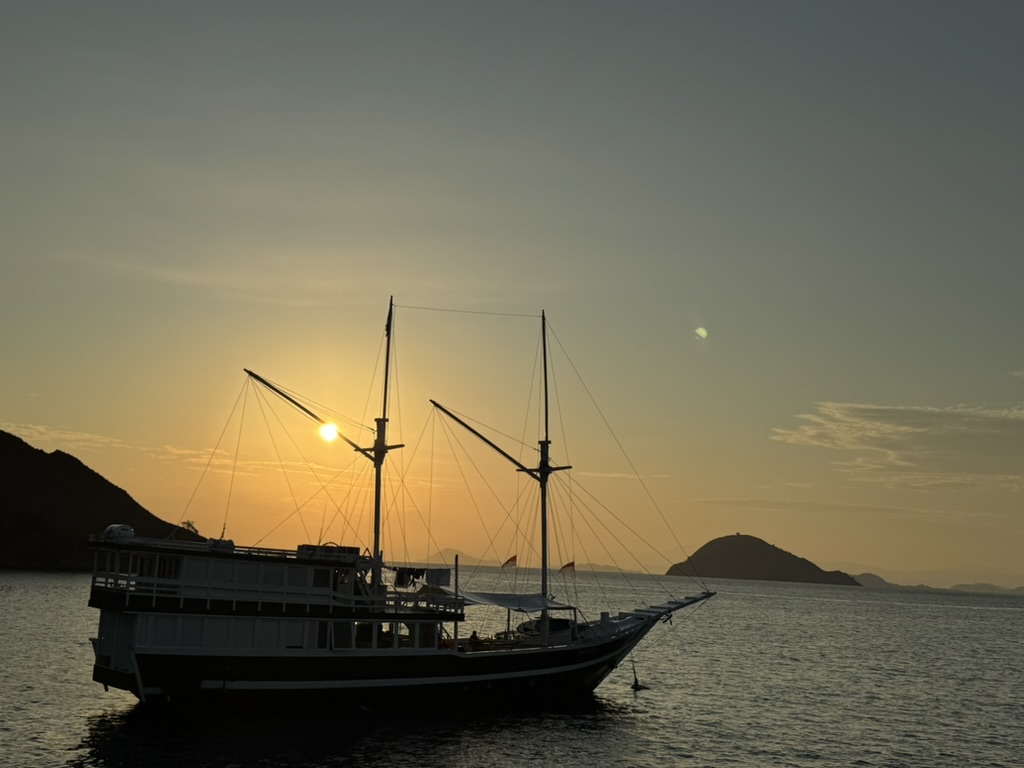
The liveaboard at anchor as the sun drops behind the Flores Sea islands
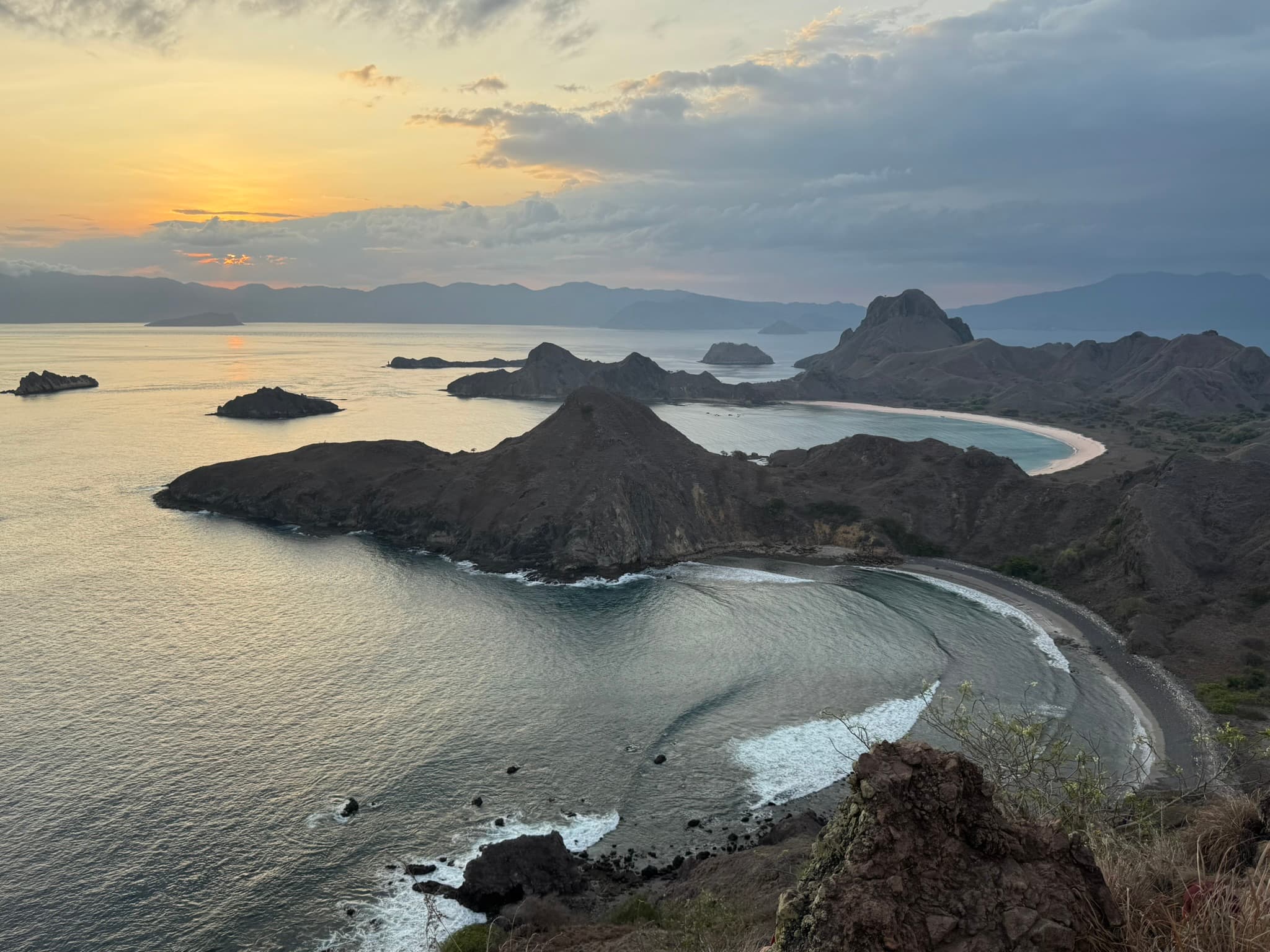
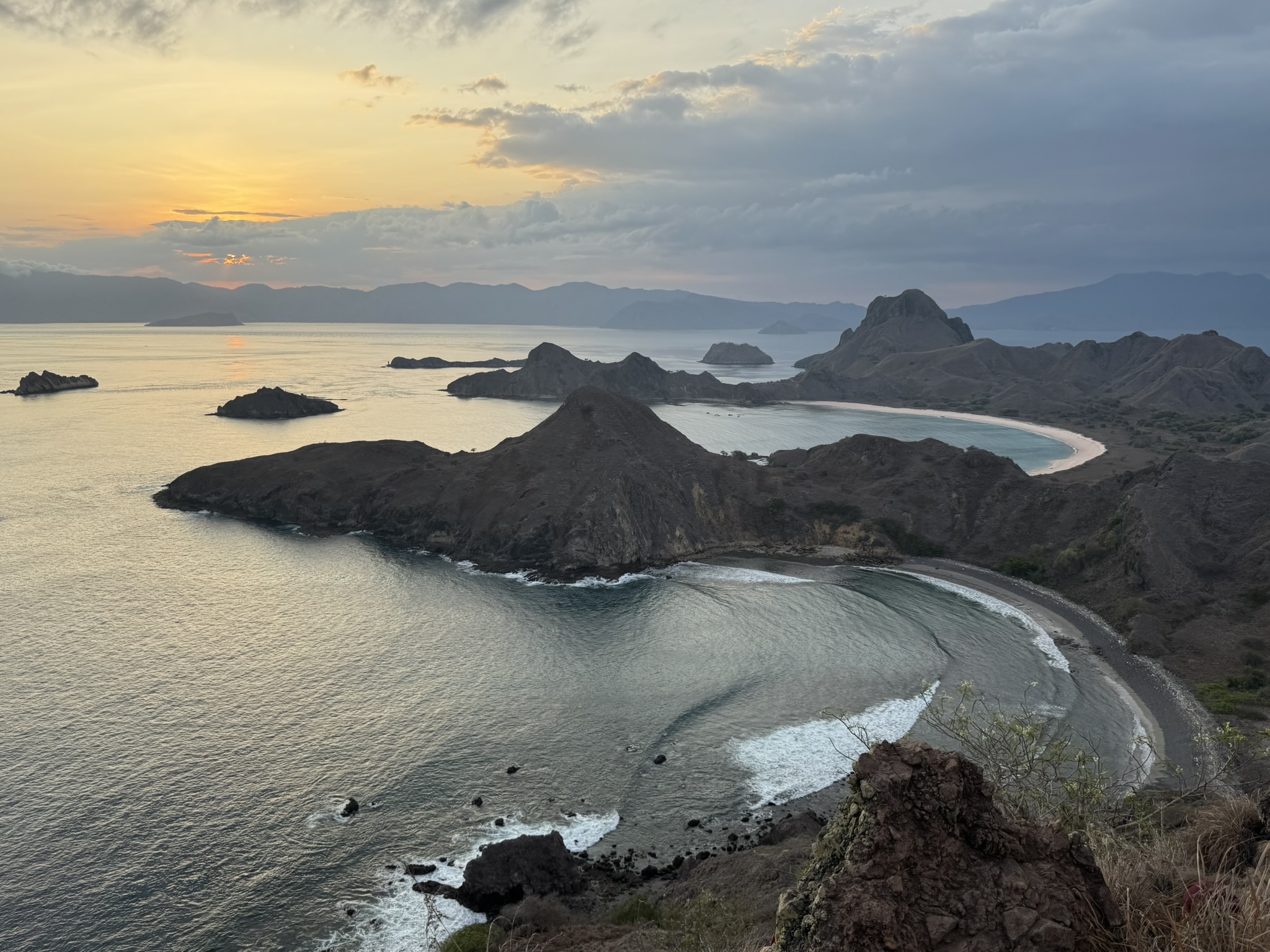
Sunset from Padar Island — three bays, one of the great views in the national park
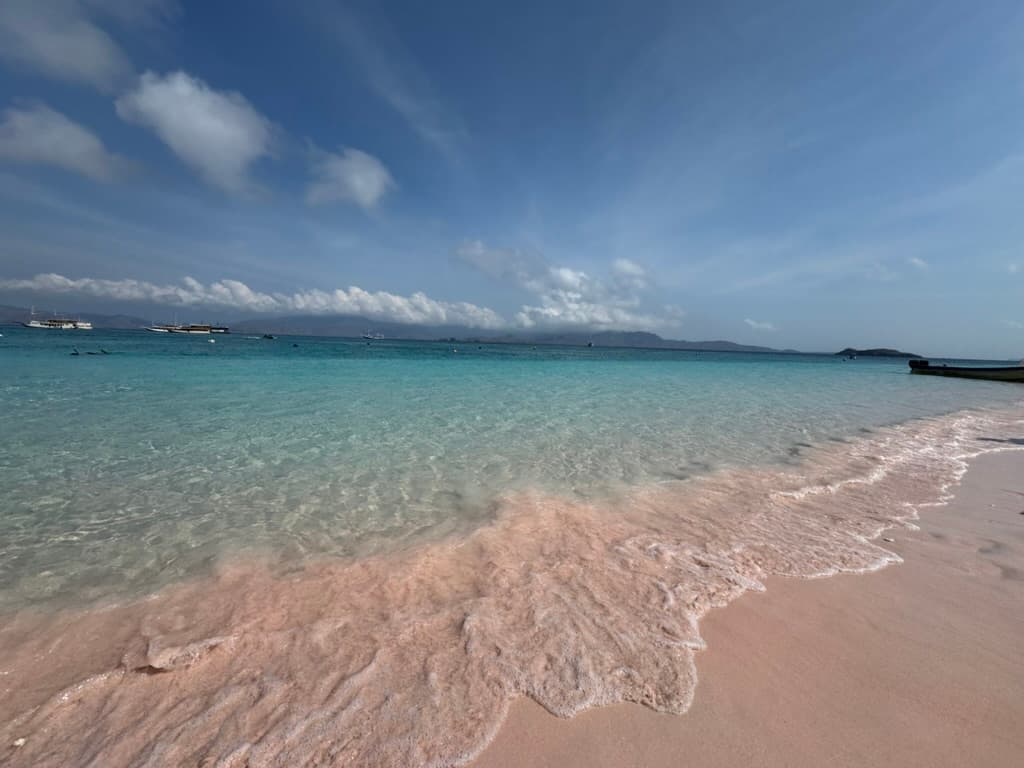
Pink Beach — the pink sand comes from red coral fragments mixed into the white sand
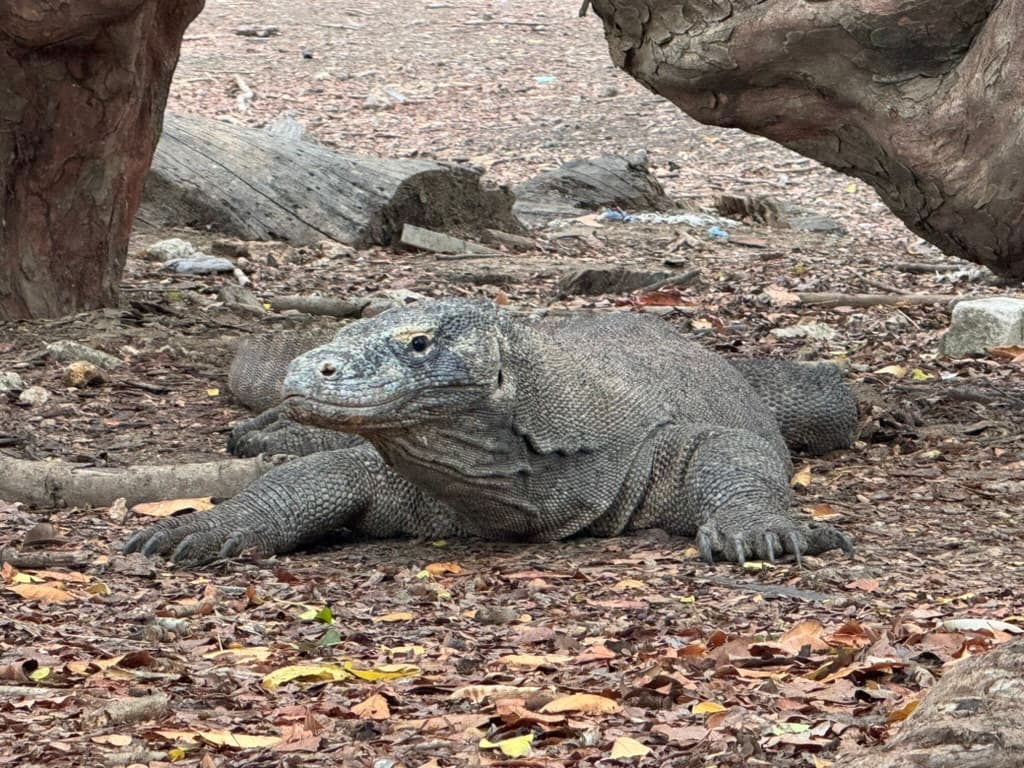
Komodo dragon at the ranger station — adults reach three metres and move faster than the footage suggests