The Philippines · December 2025
Dauin and Apo Island – Muck Diving and the Marine Sanctuary
Negros Oriental's southwest coast runs two entirely different dives in the same day: Dauin's volcanic black sand slopes where frogfish and pygmy seahorses occupy every square metre, and Apo Island's marine sanctuary where hawksbill turtles and walls of jackfish make the case for what protected reef looks like.
Negros Oriental and the Dumaguete coast
Dumaguete City is the capital of Negros Oriental and the operational base for diving this stretch of the Philippine coast. It is a small university city — Silliman University gives it an atmosphere different from the usual dive-resort towns — with a waterfront boulevard that runs the length of the bay and a handful of streets worth walking after a day in the water.
The dive infrastructure concentrates to the south, along the fifteen kilometres of coast between Dauin and the Masaplod marine sanctuaries. The dive shops are strung along the highway; the sites are directly offshore. From the Dauin resorts, Apo Island sits seven kilometres into the Mindanao Sea — visible from the beach on a clear morning, reachable in thirty minutes by banca.
Dauin: the muck
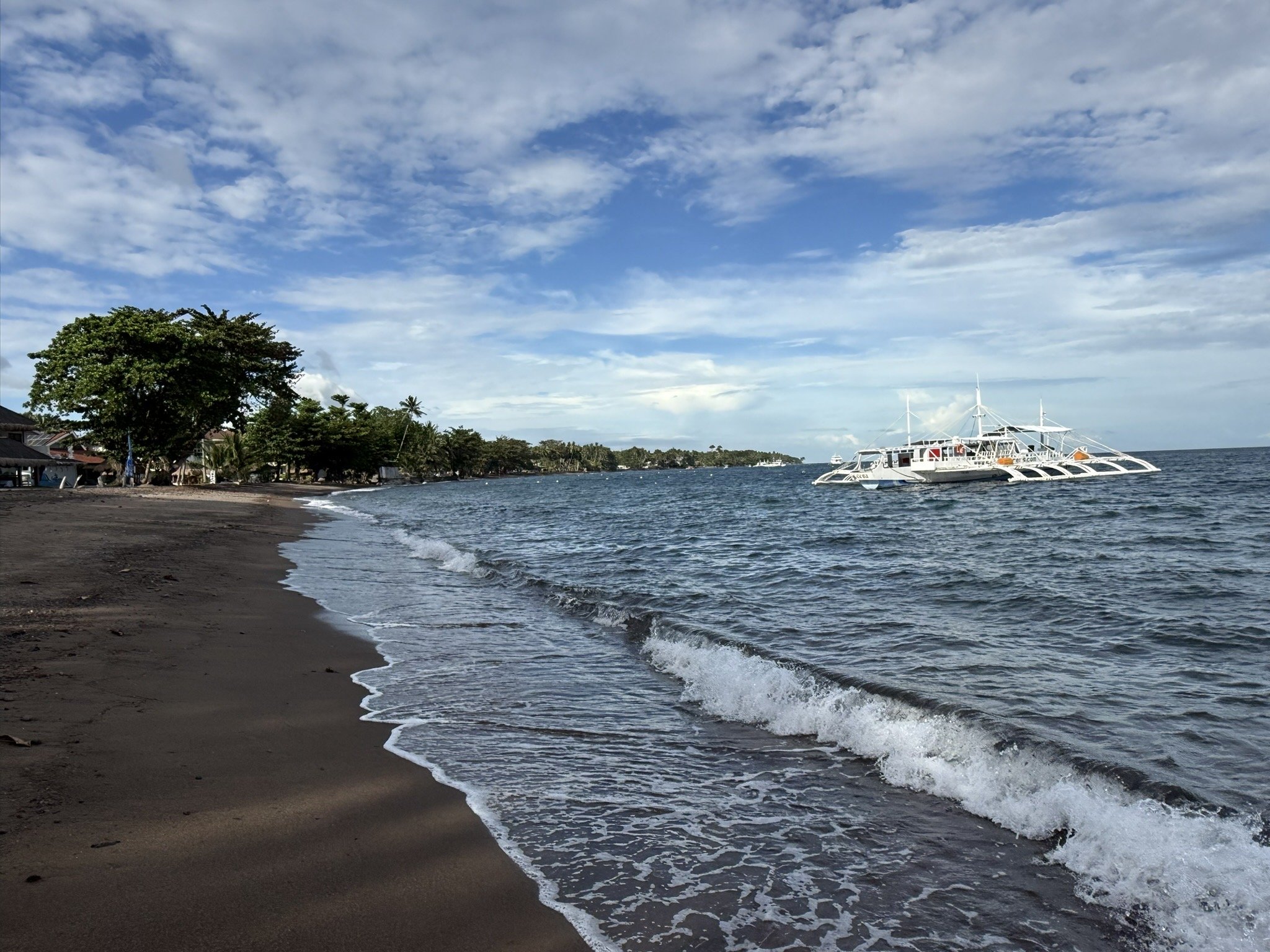
Dauin's underwater character comes from geology. The coast here sits on the flanks of an old volcanic system, and the substrate is black volcanic sand — fine-grained, dark, and seemingly empty until you look properly. The slope runs from three to twenty-five metres with very little coral structure; what lives here lives in, on, and among the sand itself.
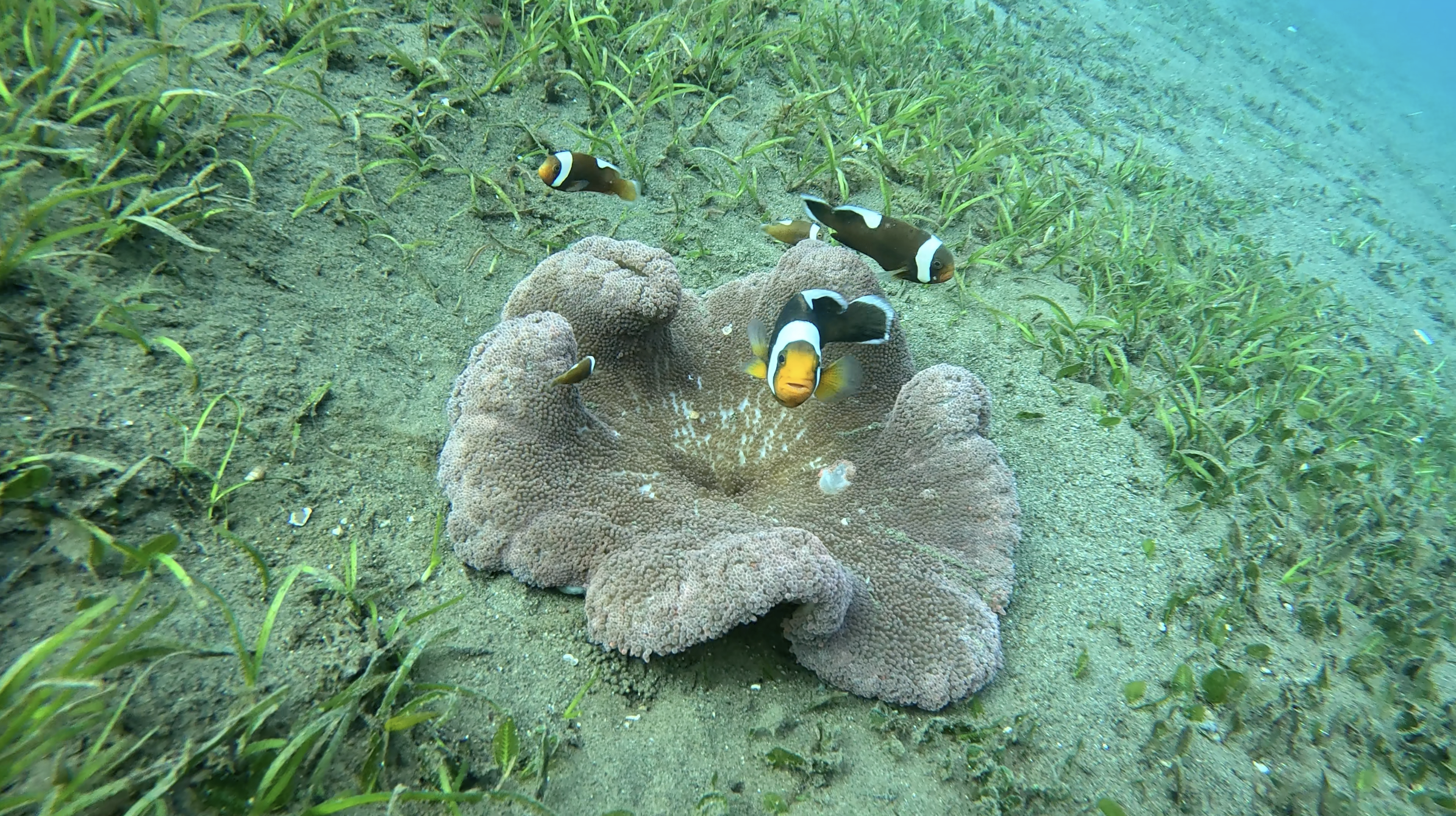
The shallower end of the slope is seagrass and rubble — anemonefish in their hosts, small wrasse and goby species working the sand between seagrass beds — before the substrate transitions to open volcanic sand and the muck proper begins.
The muck sites work as hunting grounds. Mainit — named for a warm-water vent that produces a faint thermal shimmer in the water column — is the most productive: hairy frogfish anchored to barrel sponges, their lures extended above their heads, waiting. Painted frogfish on rubble. Mimic octopus emerging from a burrow at the edge of a sand channel, cycling through shapes as it moves across open ground. Blue-ringed octopus in a coconut shell at six metres, the rings appearing and disappearing as it decides whether to be concerned.
The pygmy seahorses are the most asked-about find. Hippocampus bargibanti lives exclusively on Muricella sea fans, matching the fan's colour and texture so precisely that finding one requires knowing the approximate location beforehand. The dive guides at the Dauin shops know every fan on every site; a first-time visitor pointing a camera at a bare sea fan is the standard experience before someone puts a torch on the right polyp and the seahorse materialises.
Apo Island: the sanctuary
Apo Island's marine sanctuary was established in 1982 through an arrangement between the island's fishing community and Silliman University researchers — one of the earliest community-managed marine reserves in Southeast Asia. The no-take zone now covers roughly a third of the island's reef, and the spillover effect into the adjacent fishing areas has sustained the local catch for forty years. The reef shows it.
The sanctuary side of the island carries coral cover that is genuinely dense by any standard. Table corals stacked at depth, massive porites heads that suggest centuries of undisturbed growth, and the fish assemblage that follows from that structure. Surgeonfish in walls. Schools of bigeye trevally that tighten and open as a single organism. Humphead wrasse working the reef in pairs, slow and deliberate.
The turtles are the most consistent encounter. The hawksbill population at Apo Island is large enough and habituated enough that multiple individuals per dive is the expectation rather than the exception. They graze the reef, rest under coral heads, and surface to breathe without treating divers as anything requiring attention.
The Chapel site, on the southern tip, is the best evening dive: the jackfish school that holds position above the reef during the day compresses as the light fades, forming a solid column that rotates above the coral before dispersing into the water column at dark.
Two dives, one day
The standard day on this coast runs a morning banca to Apo Island — departure at seven, two dives on the sanctuary, back to the Dauin shore by noon — and afternoon muck dives on the sand slope directly in front of the resort. The Apo crossing takes thirty minutes each way and is straightforward in the dry season; the southwest monsoon from July to October makes the crossing rougher and occasionally impossible, though Dauin's shore dives remain diveable year-round.
The contrast between the two is worth noting as a matter of dive ecology: Apo Island demonstrates what a protected reef system looks like at equilibrium, and Dauin demonstrates what a protected sand system produces when the macro life has decades of undisturbed tenure. Both arguments are made by the species you find there.
Above water: Negros Oriental
Negros Oriental is larger than the dive corridor suggests. The interior is mountainous — the central spine of Negros running north to south, forested above 500 metres — and accessible by day trip. The Twin Lakes of Balinsasayao and Danao, thirty kilometres from Dumaguete, sit in a caldera that holds primary rainforest and a resident population of Philippine tarsiers. The market in Dumaguete, the rice wine villages of the interior, and the Silliman University anthropology museum are worth the time between dives.
The Philippines in Pictures
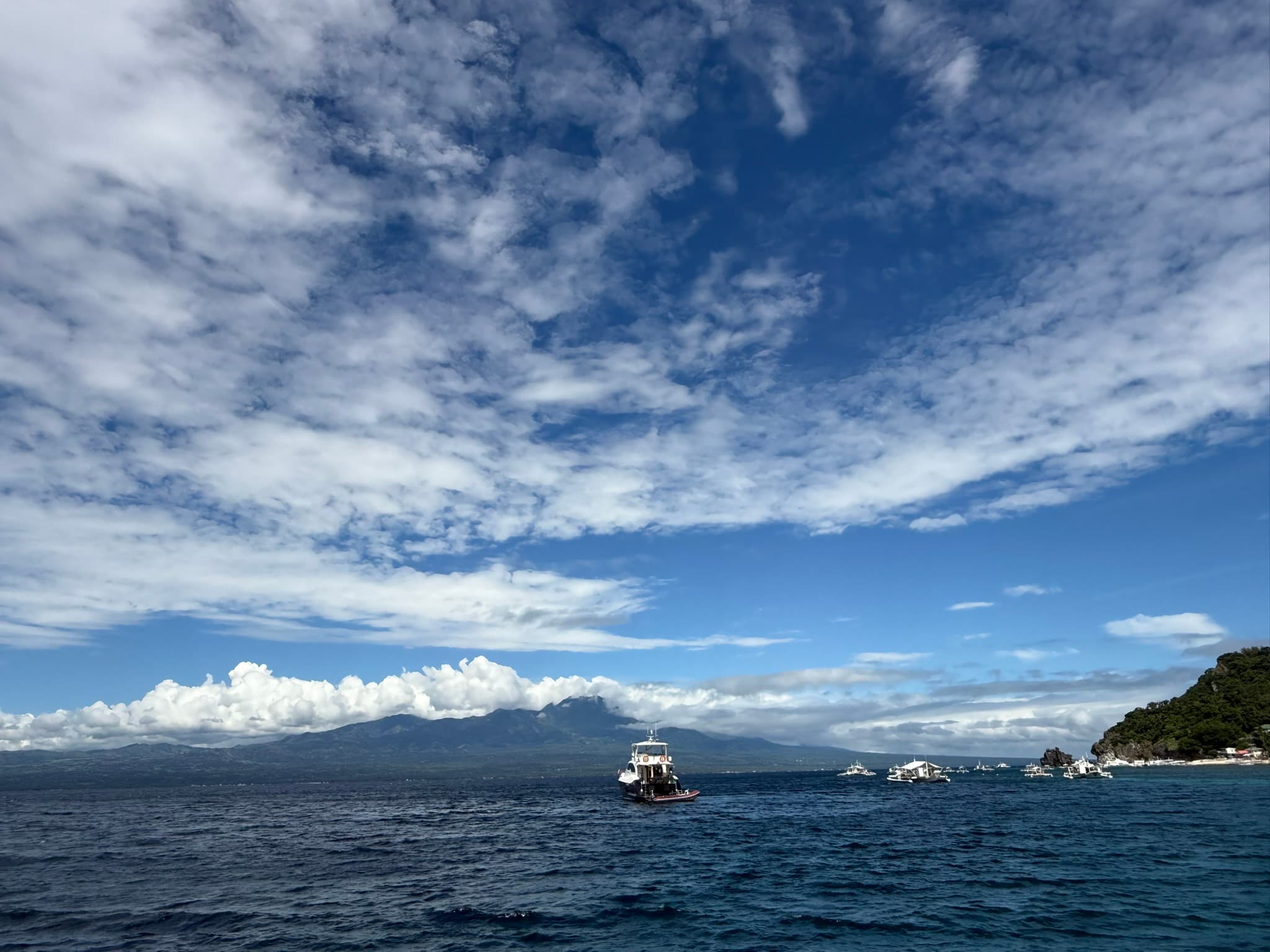
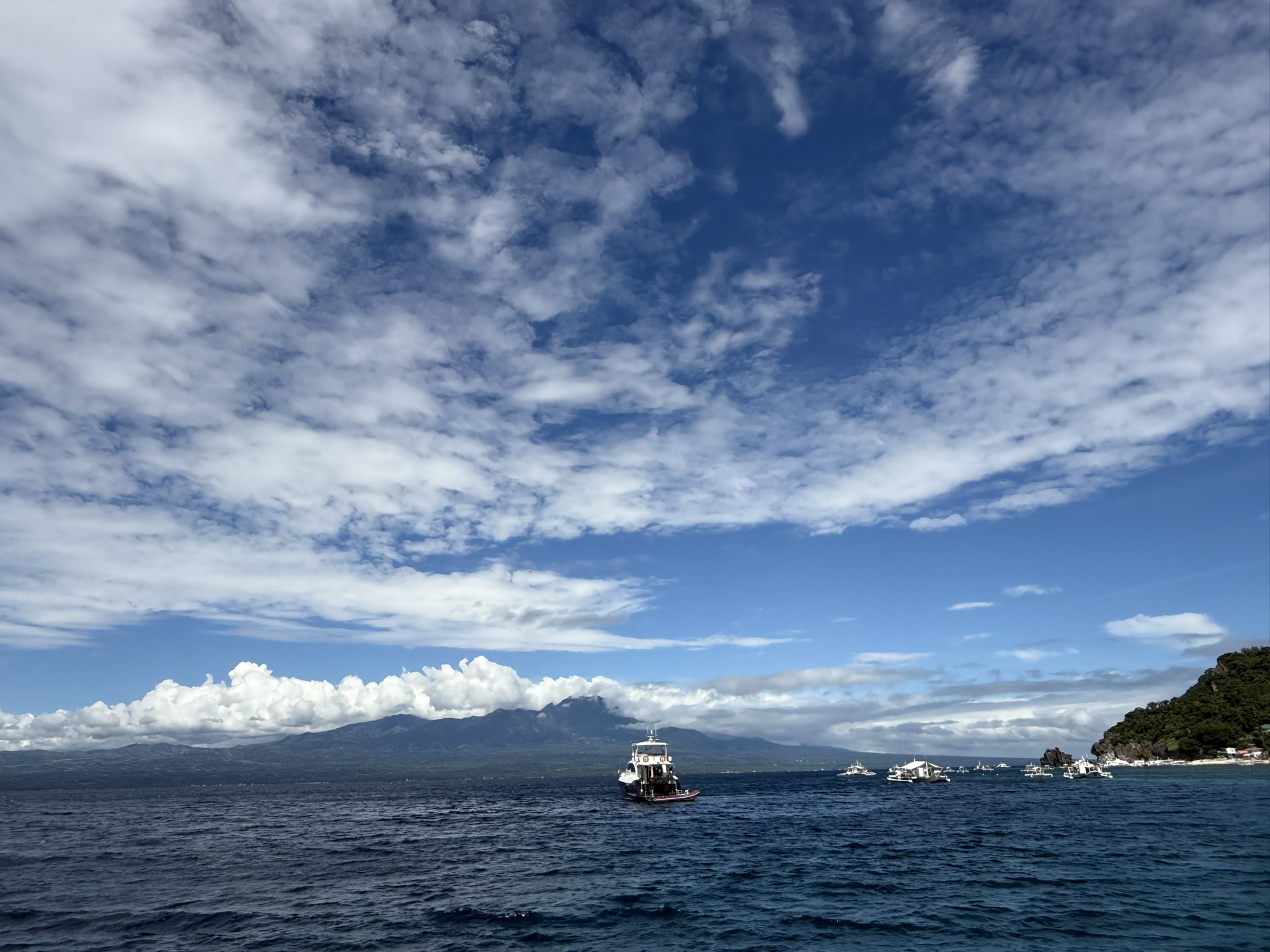
Apo Island from the crossing — dive boats moored off the rocky volcanic headland, the central mountains of Negros rising behind
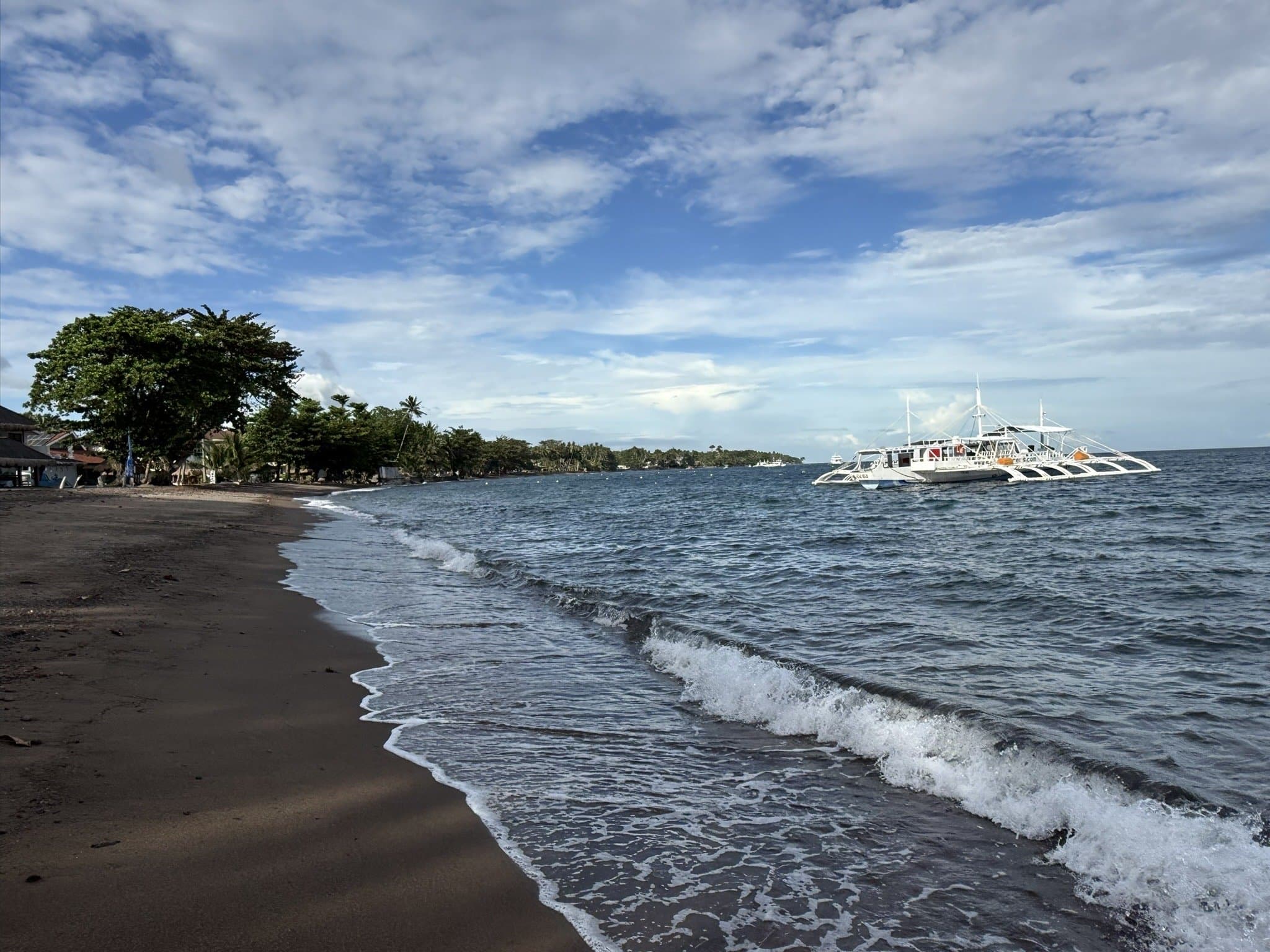
Dauin's black volcanic sand beach — a banca moored offshore, the dive sites directly below the surface in front of the resort
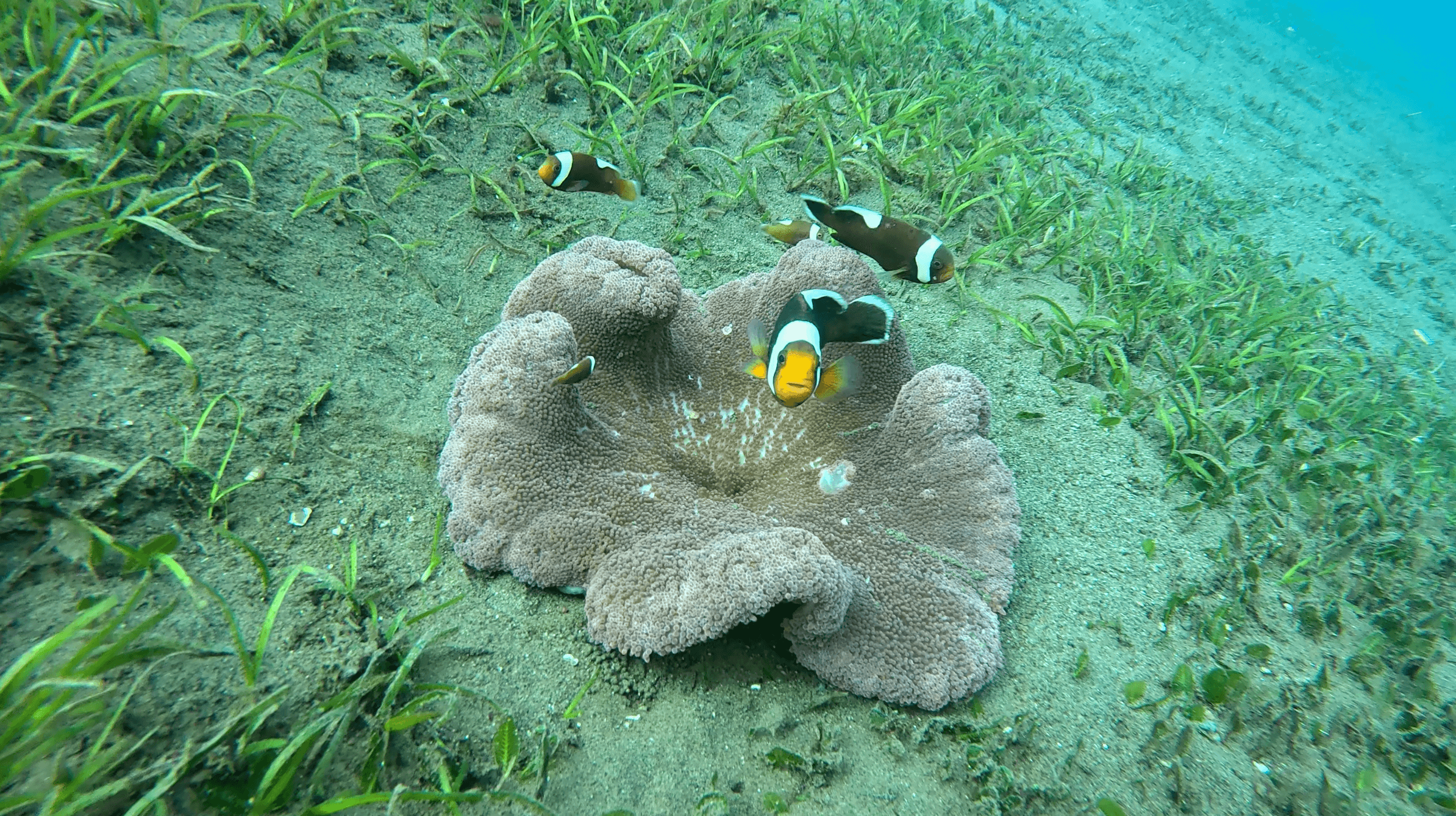
Clark's anemonefish in a sea anemone on the seagrass flat — the Dauin sand slope transitions from seagrass to volcanic sand before the muck begins
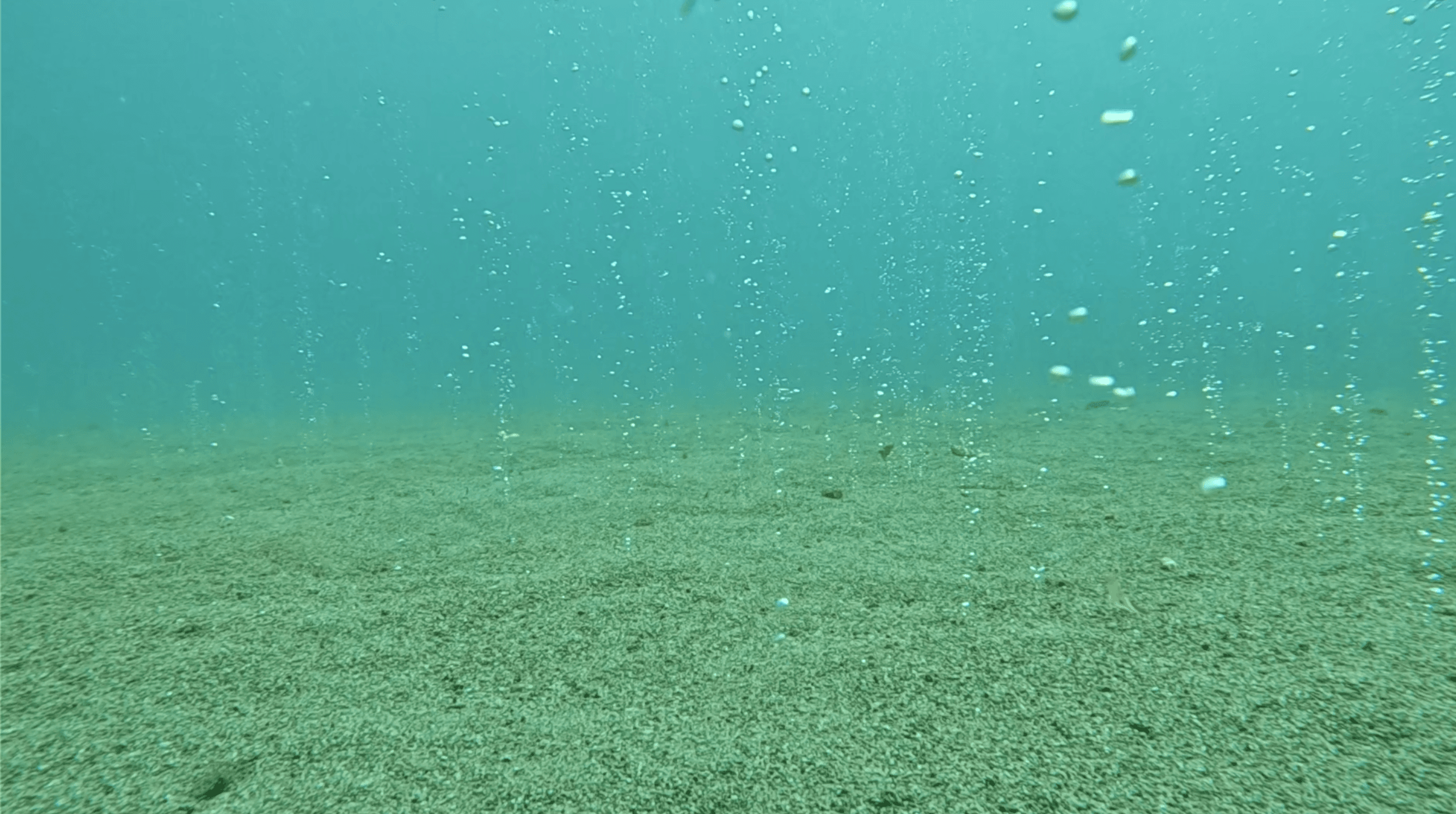
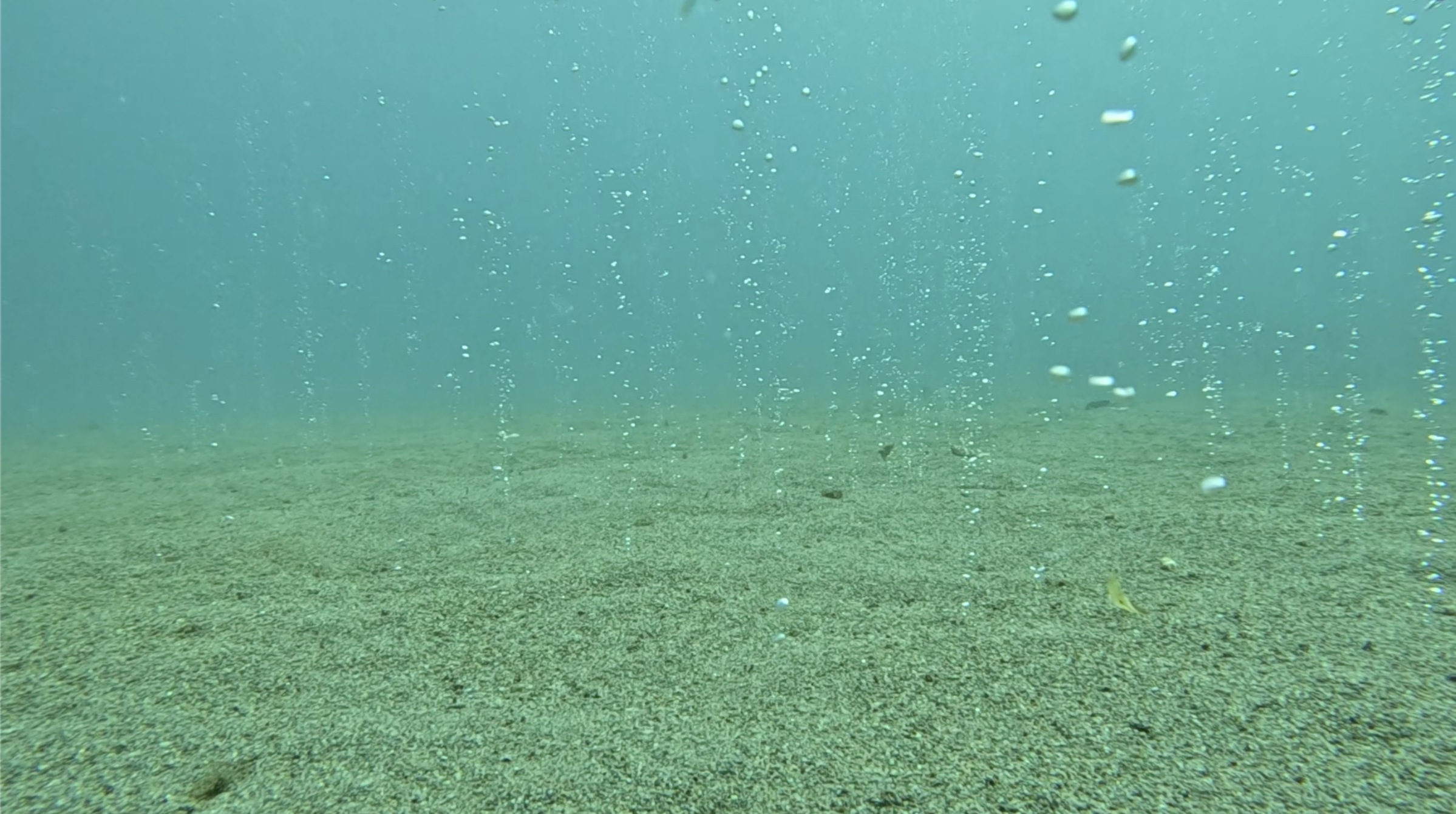
Volcanic gas bubbles rising through the sandy bottom at Apo Island — hydrothermal activity venting through the fine volcanic substrate of the sanctuary floor